
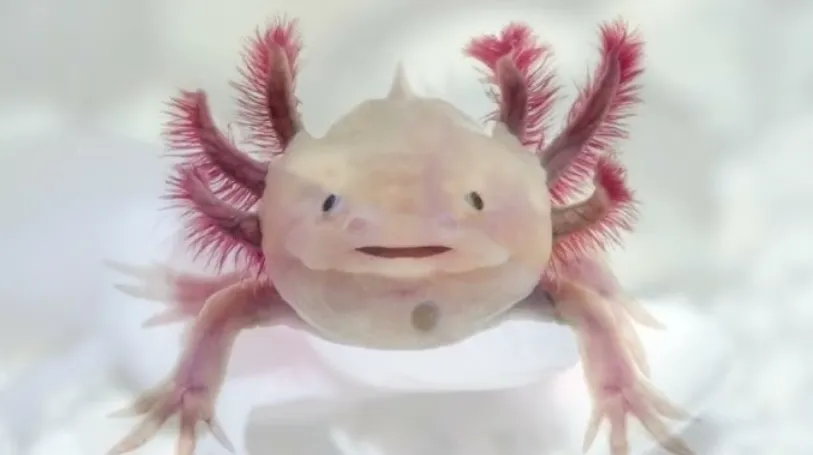
The axolotl life cycle is one of the most fascinating processes in the animal kingdom. Unlike most amphibians, axolotls remain in their juvenile aquatic form throughout their entire lives. This unique trait, called neoteny, makes them of great interest to scientists, nature lovers, and aquarium hobbyists alike.
Native to Mexico, the axolotl (Ambystoma mexicanum) is often called the “Mexican walking fish,” though it is actually a salamander, not a fish. These remarkable creatures are best known for their feathery external gills, adorable smiling faces, and their extraordinary ability to regenerate body parts.
Over the years, axolotls have gained global popularity. They appear in popular culture, toys, and even video games like Minecraft, where players can encounter and interact with axolotls. Their charm has also inspired axolotl drawings, plush toys such as the axolotl squishmallow, and educational resources, including axolotl coloring pages for children.
Despite their popularity, axolotls face serious threats in the wild. Their natural habitat, Lake Xochimilco in Mexico, has been heavily impacted by pollution, urbanization, and invasive species. As a result, the wild axolotl population has declined drastically, making conservation efforts more important than ever.
Understanding the axolotl life cycle, reproduction, and ecological role is essential for protecting this unique species. From baby axolotl larvae to fully mature adults, their development differs dramatically from other amphibians.
In this article, we will explore the origins of axolotls, their scientific classification, reproductive habits, survival strategies, and their importance to the ecosystem. By the end, you will have a complete understanding of why axolotls are considered one of nature’s most extraordinary amphibians.
Their Evolution And Their Origin
The evolutionary history of axolotls dates back millions of years. These unique amphibians belong to the Ambystomatidae family, which includes several species of mole salamanders found primarily in North America.
Scientists believe axolotls evolved from salamander ancestors that lived during the late Cretaceous period. Over time, some salamander species developed a remarkable adaptation known as neoteny, in which they retain larval characteristics even after reaching reproductive maturity.
Ancient Origins
The axolotl’s evolutionary lineage can be traced to salamanders that adapted to aquatic environments. These ancestors likely inhabited freshwater lakes and wetlands across what is now Mexico and the southern United States.
As environmental conditions changed over thousands of years, axolotls developed features that allowed them to remain fully aquatic. Unlike many salamanders, which undergo metamorphosis and move onto land, axolotls live in water throughout their lives.
Adaptation Through Neoteny
One of the most fascinating aspects of axolotl evolution is neoteny. While most amphibians undergo a metamorphosis from aquatic larvae to terrestrial adults, axolotls skip this stage entirely.
This adaptation allows them to:
- Keep their external gills
- Maintain an aquatic lifestyle
- Reproduce without undergoing metamorphosis
This evolutionary trait gives axolotls unique survival advantages in stable aquatic environments.
Habitat Evolution
Historically, axolotls lived in several lakes in the Valley of Mexico, including:
- Lake Xochimilco
- Lake Chalco
However, due to urban expansion in Mexico City, most natural habitats have disappeared. Today, Lake Xochimilco remains the primary natural environment where wild axolotls still survive.
Evolutionary Significance
Axolotls are extremely important to evolutionary biology because they demonstrate how developmental processes can change over time. Their ability to regenerate limbs, spinal cord tissue, and even parts of their brain has made them a valuable subject for scientific research.
Researchers worldwide study axolotls to understand regeneration and potential medical breakthroughs.
Their evolutionary history proves that sometimes, remaining “young forever” can be a powerful survival strategy.
The History of Their Scientific Naming
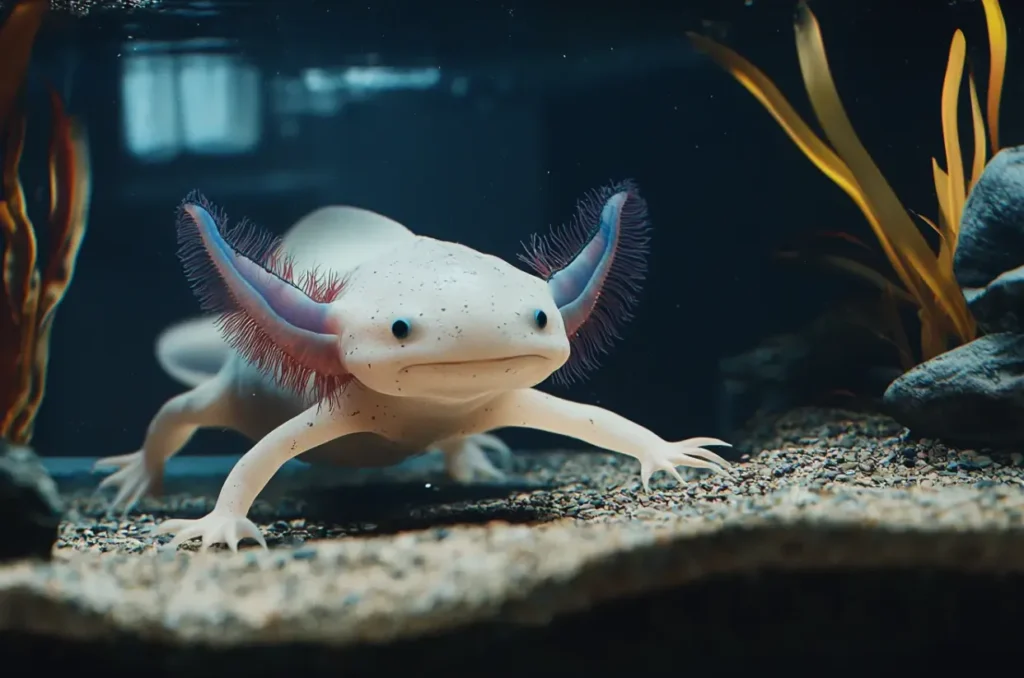
The axolotl has an interesting scientific naming history that reflects its unique biological characteristics and cultural significance.
1. Scientific Classification
The scientific name of the axolotl is Ambystoma mexicanum.
- Ambystoma – refers to a genus of mole salamanders
- mexicanum – highlights its origin in Mexico
This classification places axolotls within the amphibian family Ambystomatidae.
2. Origin of the Word “Axolotl”
The word axolotl comes from the Nahuatl language spoken by the Aztecs. It combines two words:
- Atl – meaning water
- Xolotl – the name of an Aztec god associated with transformation
According to Aztec mythology, the god Xolotl transformed into an axolotl to escape sacrifice.
3. Early Scientific Discovery
European scientists first documented axolotls in the 19th century. When explorers brought specimens from Mexico to Europe, researchers became fascinated by their unusual features.
French biologist Auguste Duméril played a major role in the study of axolotls and in describing their biology.
4. Confusion With Salamanders
Initially, scientists believed axolotls were simply the larval stage of another salamander species.
However, later research revealed that axolotls could reproduce while still in their larval form, proving they were a separate species with unique developmental traits.
5. Modern Scientific Importance
Today, Ambystoma mexicanum is one of the most studied amphibians in the world. Laboratories worldwide breed axolotls for research in:
- Genetics
- Tissue regeneration
- Developmental biology
Their scientific naming history reflects centuries of curiosity about these extraordinary amphibians.
Important Things That You Need To Know
Axolotls have become a global cultural phenomenon beyond their biological significance. Their appearance in pop culture, games, and merchandise has introduced them to millions of people worldwide.
Here are some fascinating facts and trends surrounding axolotls today.
The Popularity of Minecraft Axolotl
The Minecraft axolotl became extremely popular after being added to the game in recent updates. Players can find and tame axolotls underwater, making them helpful companions during aquatic adventures.
This digital representation helped introduce younger audiences to real-world axolotls.
Cute Axolotl Appeal
The cute axolotl is famous for its permanent smile and fluffy gills. These adorable features have made axolotls internet sensations and viral stars on social media.
Their friendly appearance makes them popular as aquarium pets.
Baby Axolotl Development
A baby axolotl looks very different from adults. Newly hatched larvae are extremely small and rely on microscopic food sources such as tiny crustaceans.
As they grow, they gradually develop their recognizable feathery gills and wide heads.
Blue Axolotl Myth
The blue axolotl is often seen in games and artwork, but it is extremely rare in nature. Most real axolotls come in colors such as:
- Wild type (dark green/brown)
- Leucistic (pink with black eyes)
- Albino
- Golden
Axolotl Diet
The axolotl diet mainly consists of:
- Worms
- Small fish
- Insects
- Crustaceans
In captivity, axolotls often eat pellets, bloodworms, and earthworms.
Because of their popularity in media and games, axolotls have become ambassadors for amphibian conservation worldwide.
Their life cycle and ability to survive in nature
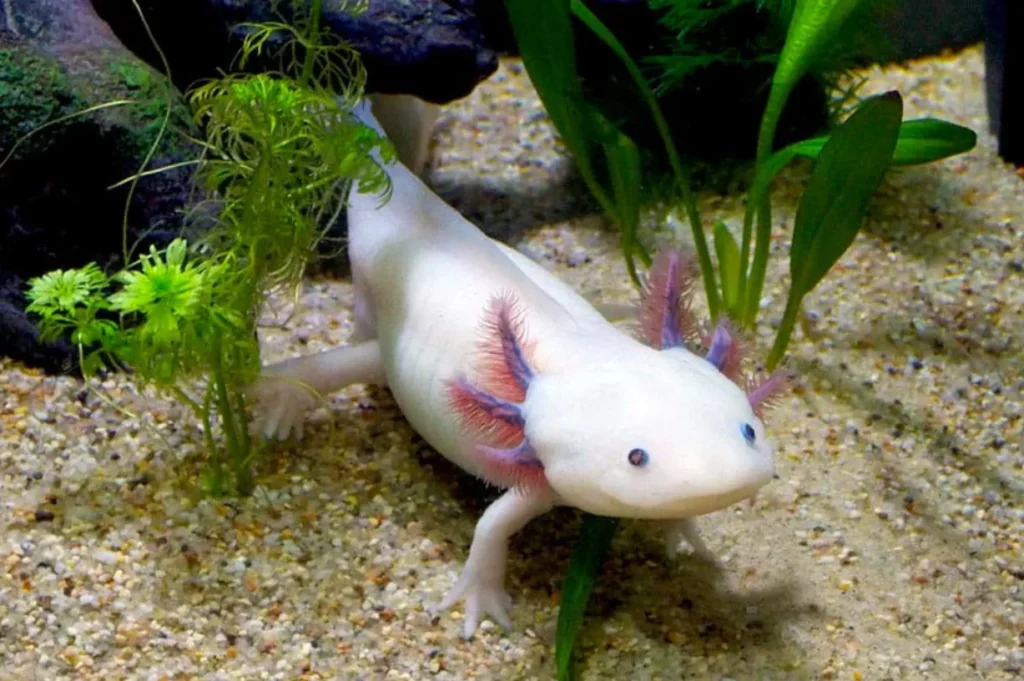
The axolotl life cycle is unique among amphibians because it lacks a full metamorphosis.
Instead, axolotls remain aquatic throughout their lives.
1. Egg Stage
The life cycle begins when female axolotls lay eggs. A female can produce hundreds of eggs at once.
These eggs are usually attached to aquatic plants or rocks in freshwater habitats.
2. Larval Stage
After about two weeks, the eggs hatch into larvae.
Larvae resemble tiny fish and begin feeding on small aquatic organisms.
3. Juvenile Stage
During this stage:
- Gills become more developed
- The body grows longer
- Hunting ability improves
Young axolotls start eating larger prey, such as worms and insect larvae.
4. Adult Stage
Adult axolotls typically reach maturity within 12–18 months.
Unlike frogs or most salamanders, they do not fully develop lungs for life on land. Instead, they keep their aquatic features.
5. Survival Abilities
Axolotls possess several extraordinary survival adaptations:
- Regeneration – they can regrow limbs, organs, and spinal tissue
- Camouflage – helps avoid predators
- Sensitive sensory system – detects prey in murky water
These traits help axolotls survive in challenging aquatic environments.
Their Reproductive Process and raising their children
Axolotls have a fascinating reproductive process that involves unique mating behaviors.
1. Courtship Behavior
Male axolotls initiate courtship by performing a dance-like movement in front of the female.
This behavior signals readiness for reproduction.
2. Spermatophore Transfer
Instead of direct fertilization, male axolotls deposit packets of sperm called spermatophores on the lake floor.
The female then collects these packets with her cloaca to fertilize her eggs.
3. Egg Laying
After fertilization, the female lays between 100 and 1,000 eggs.
These eggs attach to aquatic plants and objects.
4. Development Period
The eggs hatch in about 10–14 days, depending on temperature and water conditions.
Newly hatched larvae begin feeding immediately.
5. Raising Offspring
Unlike mammals, axolotls do not care for their young.
Baby axolotls must survive independently and avoid predators.
In captivity, breeders often separate larvae to prevent cannibalism.
Despite these challenges, axolotls can reproduce successfully in controlled environments.
The importance of them in the ecosystem
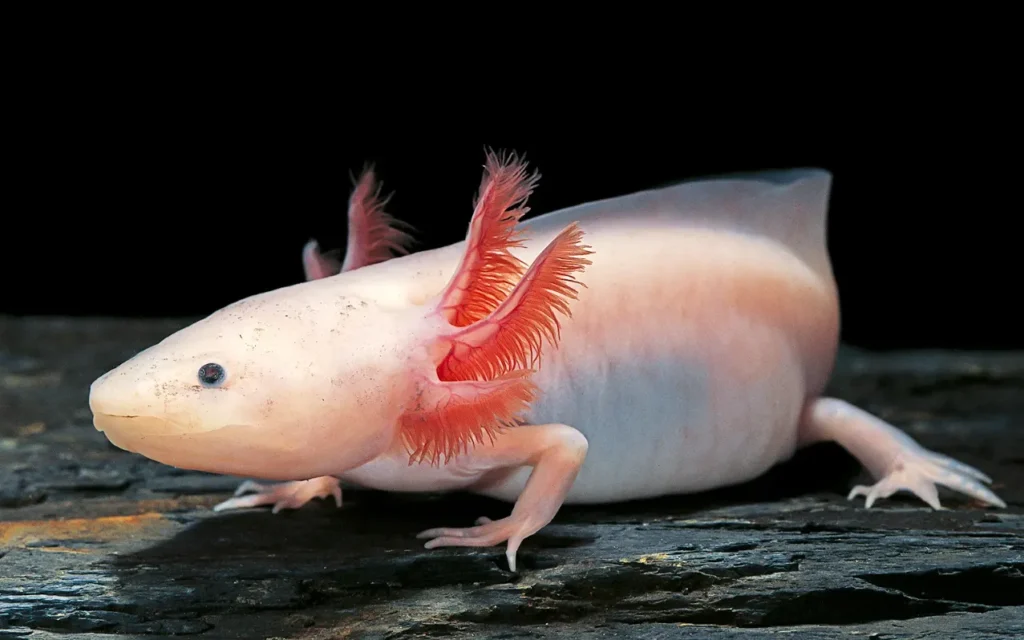
Axolotls play a crucial role in maintaining the balance of freshwater ecosystems.
1. Controlling Insect Populations
Axolotls feed on insects and larvae, helping regulate aquatic insect populations.
2. Part of the Food Chain
They serve as prey for birds and larger fish, making them an important part of the ecosystem.
3. Indicator Species
Because axolotls are sensitive to pollution, their presence indicates a healthy aquatic environment.
4. Scientific Research
Axolotls contribute to important medical research, especially in regenerative medicine.
5. Conservation Awareness
Their popularity has raised global awareness about endangered amphibians and wetland conservation.
Protecting axolotls helps preserve biodiversity in freshwater habitats.
Frequently Asked Questions (FAQs)
1. What is the axolotl life cycle?
The axolotl life cycle includes egg, larval, juvenile, and adult stages, with no full metamorphosis.
2. How long do axolotls live?
Axolotls can live 10–15 years in captivity with proper care.
3. Are axolotls endangered?
Yes, wild axolotls are critically endangered due to habitat destruction and pollution.
4. Can axolotls regenerate body parts?
Yes. Axolotls can regenerate limbs, spinal cords, and even parts of their heart and brain.
5. What do axolotls eat?
Their diet includes worms, insects, small fish, and aquatic invertebrates.
6. Are axolotls good pets?
Axolotls can be fascinating pets, but require proper aquarium care and stable water conditions.
7. Why do axolotls stay underwater?
Because of neoteny, they retain aquatic features and rarely transition to land.
8. What colors can axolotls be?
Common colors include wild type, leucistic, albino, golden, and melanoid varieties.
Conclusion
The axolotl life cycle represents one of the most unusual developmental processes in the animal kingdom. Unlike most amphibians, axolotls never fully transition into land-dwelling adults. Instead, they remain aquatic throughout their lives while retaining their larval characteristics.
From egg to adult, the journey of an axolotl highlights the fascinating concept of neoteny. This evolutionary adaptation allows them to keep their external gills, aquatic lifestyle, and youthful appearance while still reaching reproductive maturity.
Axolotls are not only biologically unique but also scientifically invaluable. Their extraordinary ability to regenerate limbs, organs, and spinal tissue has made them one of the most studied animals in regenerative medicine.
At the same time, their growing popularity in pop culture — including Minecraft axolotl, toys, artwork, and educational materials — has raised awareness of amphibian conservation.
Unfortunately, despite their global fame, wild axolotls remain critically endangered. Pollution, habitat destruction, and invasive species continue to threaten their survival in Lake Xochimilco.
Protecting axolotls requires conservation programs, habitat restoration, and responsible breeding practices. By understanding their life cycles, reproductive behavior, and ecological importance, we can help preserve this remarkable species.
The axolotl is a powerful reminder that even the smallest creatures can teach us valuable lessons about evolution, adaptation, and the resilience of life on Earth.

Leave a Reply