
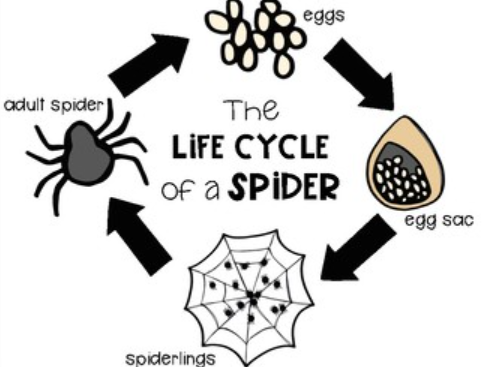
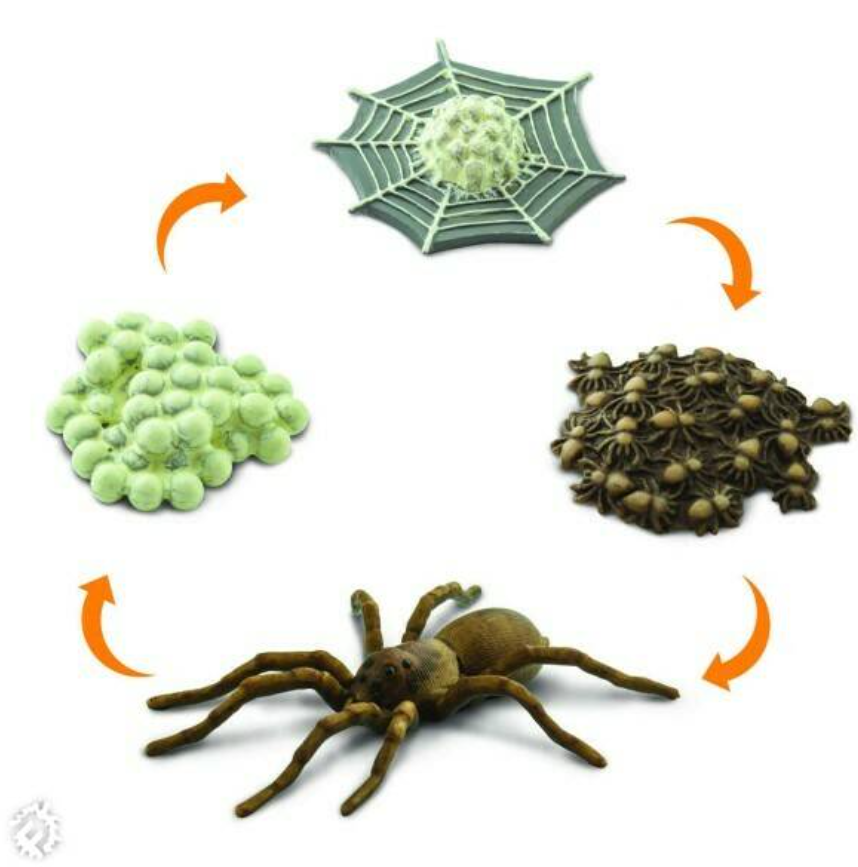
The spider life cycle is one of the most interesting natural processes in the animal world. A spider begins life as a tiny egg inside a soft silk egg sac, then hatches into a small spiderling, grows through several molts, becomes an adult, mates, and starts the cycle again. This simple but powerful cycle helps spiders survive in forests, fields, gardens, homes, deserts, wetlands, and many other habitats.
Spiders are not insects. They belong to the class Arachnida and the order Araneae. Unlike insects, spiders have eight legs, two main body parts, no wings, and no antennae. The World Spider Catalog currently lists 53,858 spider species, grouped into 4,510 genera and 138 families, highlighting the diversity of spiders worldwide.
Many people fear spiders because of spider bites, but most spiders are not aggressive toward humans. They usually bite only when trapped or threatened. In nature, spiders are valuable predators because they help control insects and support ecological balance.
Q: What are the main stages of the spider life cycle?
A: The main stages are egg, egg sac, spiderling, juvenile spider, and adult spider.
Q: How long does a spider live?
A: Many small spiders live for around one year, but some larger spiders, especially certain mygalomorph spiders, can live much longer. Britannica notes that some mygalomorph spiders’ females may live up to 25 years.
Q: Are baby spiders born alive?
A: No. Most spiders hatch from eggs protected inside a silk egg sac.
Quick Life Cycle Table
| Stage | What Happens | Key Detail |
| Egg | A female lays eggs | Eggs are soft and protected |
| Egg Sac | Eggs are wrapped in silk | Sac protects eggs from the weather and predators |
| Spiderling | Baby spiders hatch | They look like tiny adults |
| Juvenile Spider | Young spiders grow | They molt several times |
| Adult Spider | Spider becomes mature | It can mate and reproduce |
| New Cycle | The female lays eggs again | Life cycle continues |
The History of Their Scientific Naming
The scientific study of spiders is called araneology. The formal scientific order for true spiders is Araneae. This name is derived from old Latin and Greek words for ‘spider’ and is used for all true spiders in modern taxonomy.
Spiders are placed in the class Arachnida, along with scorpions, mites, ticks, and related animals. The word arachnid is often associated with Arachne, a figure from Greek mythology associated with weaving. This connection makes sense because spiders are famous for producing silk and weaving webs.
Modern spider naming follows the binomial system. Each species has a genus name and a species name. For example, a spider may have one scientific name but many local names in different countries.
Scientific naming is important because common names can be confusing. The name banana spider, for example, can refer to different spiders in different regions. Scientific names help researchers, students, farmers, doctors, and nature lovers identify spiders more accurately.
Today, updated taxonomic databases, such as the World Spider Catalog, help scientists track accepted spider families, genera, and species worldwide.
Their Evolution And Their Origin
Spiders are among the earliest land animals in Earth’s history. According to the Australian Museum, spiders probably evolved around 400 million years ago from early arachnid ancestors that had recently moved from water-based life to land.
The earliest definite spiders had important features that modern spiders still have today. These included a narrow waist, silk-producing structures, and body forms suited for life on land. Fossils such as Attercopus fimbriungus show that spider-like animals existed around 380 million years ago, long before dinosaurs appeared.
At first, spider silk may not have been used mainly for catching prey. Early spiders likely used silk to protect eggs, line burrows, or make simple shelters. Later, as insects became more diverse, spiders also evolved more advanced ways to use silk for hunting.
Over time, spiders developed many survival styles. Some became web builders, while others became active hunters. Orb-weaver spiders made circular aerial webs to catch flying insects. Wolf spiders became ground hunters. Jumping spiders developed excellent vision and quick movements.
This long evolutionary history explains why spiders are so successful today. They can survive in deserts, rainforests, grasslands, caves, gardens, farms, and even inside human buildings.
Important Things That You Need To Know
When learning about the spider life cycle, it is also useful to understand some related terms. These terms often appear in searches, articles, and nature guides.
A spider is a true arachnid with eight legs, two body sections, fangs, and silk-producing spinnerets. Spiders differ from insects because spiders have eight legs and three body segments.
A banana spider is a common name, not one exact scientific species. In some places, people use this name for large golden orb-weavers. In other cases, it may refer to different spiders found near banana plants or banana shipments. Some banana spider bites may feel like a bee sting and cause mild redness or stinging, but common banana spiders are usually not life-threatening.
A camel spider is often misunderstood. Despite the name, it is not a true spider. National Geographic explains that camel spiders are actually solpugids, arachnids that are different from true spiders. They are not deadly to humans, although their bite can be painful.
Spider bites are another important topic. Most spiders do not want to bite people. Bites normally happen when a spider feels trapped or threatened. Serious bites are uncommon, but medical help is needed if symptoms become severe, such as breathing difficulty, strong muscle cramps, spreading wounds, or serious swelling.
Their main food and its collection process
Spiders are mainly carnivores, meaning they eat other animals. Their common food includes insects, such as flies, mosquitoes, moths, beetles, grasshoppers, and ants, as well as other small arthropods. Some larger spiders may catch small frogs, lizards, or tiny birds, but most spiders survive on insects.
Spiders collect food in different ways depending on their species.
- Web-building spiders make sticky silk webs to trap flying insects. When prey touches the web, the spider senses vibration and quickly moves toward it.
- Jumping spiders do not depend on large webs for catching food. They use keen eyesight, slowly approach prey, and then jump suddenly.
- Wolf spiders run on the ground and chase prey. They are active hunters and often search in leaf litter, grass, and soil surfaces.
- Trapdoor spiders wait inside silk-lined burrows. When prey passes close to the entrance, they rush out and grab it.
- Crab spiders often hide among flowers and wait for insects such as bees or flies. Their body color may help them blend with petals.
Spiders do not chew their food as humans do. Many spiders inject venom and digestive fluids into prey. This breaks the prey down into liquid form, which the spider then sucks in.
This feeding method makes spiders strong natural pest controllers. By eating many insects, they reduce pest pressure in gardens, farms, and natural habitats.
Their life cycle and ability to survive in nature
Egg stage
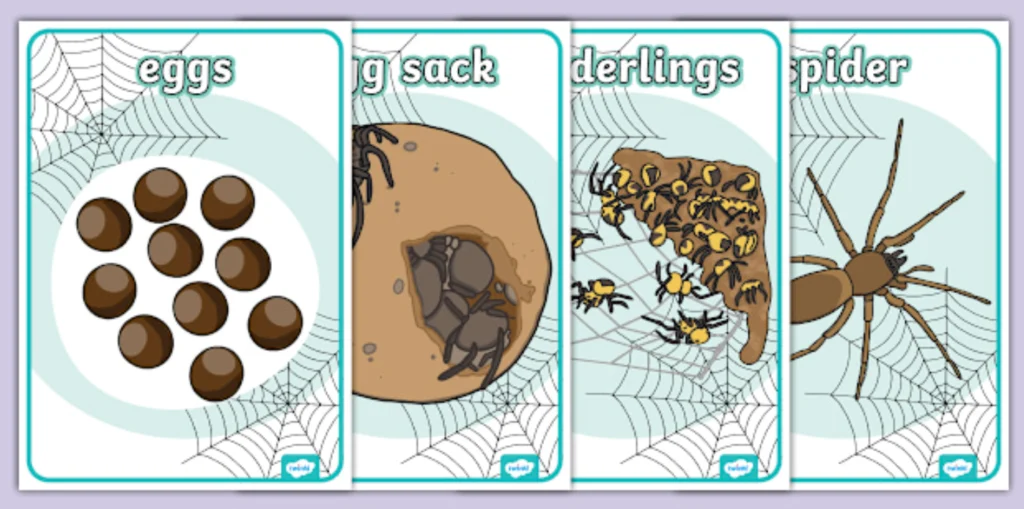
The spider life cycle begins when a female spider lays eggs. These eggs are usually placed on a silk pad, then covered with additional silk to form a protective egg sac. Some sacs are round, while others are flat, oval, or hidden inside leaves, bark, soil, or webs.
Britannica explains that female spiders may produce one egg sac with several to a thousand eggs, or several egg sacs with fewer eggs in each.
Spiderling stage
After development, baby spiders hatch as spiderlings. They look like tiny versions of adult spiders, but are weaker and smaller. Many spiderlings stay near the egg sac for a short time before moving away.
Some spiderlings disperse through ballooning. In this process, they release silk threads into the air, letting the wind carry them to new places. This helps them spread to new habitats and avoid competition with siblings.
Juvenile stage
As spiderlings grow, their outer body covering becomes too tight. They shed it in a process called molting. After each molt, the spider grows larger and approaches adulthood.
This stage is dangerous because young spiders are easy prey for birds, lizards, wasps, frogs, and larger spiders.
Adult stage
When a spider matures, it can reproduce. Some adults build webs, some hunt actively, and some hide in burrows or plants.
Their survival depends on camouflage, venom, fast movement, silk, strong senses, and the ability to live in many different habitats.
Their Reproductive Process and raising their children
Spider reproduction is complex and differs from that of many other animals.
- Male spiders search for females.
- Males often move more than females because they need to find a mate. Some males follow silk threads and chemical signals left by females. Britannica notes that pheromones in female silk can help males recognize suitable mates.
- Males use pedipalps for mating.
- Male spiders have modified pedipalps that hold and transfer sperm. Before mating, the male may create a small sperm web, place sperm on it, and then load the sperm into his pedipalps.
- Courtship protects the male.
- In many species, the male performs careful courtship. He may tap the web, wave his legs, vibrate silk, or show visual signals. This helps the female understand that he is a mate, not prey.
- Females lay eggs in silk sacs.
- After mating, the female lays eggs and protects them inside an egg sac. The silk covering helps protect the eggs from dryness, predators, and temperature changes.
- Some mothers guard or carry eggs.
- Some female spiders guard their egg sacs. Wolf spiders carry egg sacs attached to their spinnerets, and after hatching, the spiderlings may climb onto the mother’s back for a short time.
- Most spiderlings become independent early.
- In many species, baby spiders leave soon after hatching. They must find food, shelter, and safe places on their own.
Spider parenting varies across species. Some provide almost no care, while others show strong protective behavior.
The importance of them in this Ecosystem
Natural pest control
Spiders are important predators. They eat many insects that can damage crops, spread disease, or disturb homes and gardens. This makes them useful on farms, in forests, and in urban spaces.
Because they feed on many insect species, spiders can reduce the need for chemical pest control in some environments. Recent ecological research also highlights spiders as useful providers of pest-suppression services in agricultural systems.
Food for other animals
Spiders are also food for birds, frogs, reptiles, small mammals, fish, and other insects. If spiders disappear, many animals lose an important food source.
This means spiders are both predators and prey. They connect different parts of the food chain.
Biodiversity support
Spiders live in many habitats and respond to environmental changes. A healthy spider population can indicate a balanced ecosystem with enough insects, plants, shelter, and moisture.
Soil and plant health
By controlling insects, spiders indirectly protect plants. Fewer plant-eating pests can mean healthier leaves, flowers, crops, and forests.
Balance in nature
Spiders help stop some insect populations from becoming too large. Without spiders, many ecosystems would face more pest pressure and a weaker natural balance.
For this reason, spiders should not be seen only as scary creatures. They are quiet workers who help maintain nature’s stability.
What to do to protect them in nature and save the system for the future
Spiders need safe habitats, clean environments, and balanced ecosystems. Protecting them also helps protect insects, birds, plants, soil, and the whole food web.
- Avoid killing spiders unnecessarily.
- If a spider is not dangerous, move it outside gently instead of killing it.
- Reduce chemical pesticide use.
- Strong pesticides can kill spiders and their food sources. Use natural pest control methods when possible.
- Protect gardens and green spaces.
- Native plants, leaf litter, shrubs, and small wild areas give spiders places to hide, hunt, and lay eggs.
- Keep some natural corners in your garden.
- A perfectly clean garden may look neat, but spiders need small shelters like dry leaves, stones, bark, and plant stems.
- Do not destroy webs outdoors without reason.
- Webs help spiders catch insects. They are part of the natural pest-control system.
- Teach children about spiders.
- Many people fear spiders because they do not understand them. Simple education can reduce fear and increase respect.
- Seal homes carefully instead of using poison.
- If you do not want spiders inside, seal cracks, clean dark corners, and reduce insect entry points.
- Protect forests, wetlands, and grasslands.
- Habitat loss is a major threat to many small creatures, including spiders.
- Support biodiversity-friendly farming.
- Farms with hedges, mixed plants, and fewer chemicals can support spiders and other helpful predators.
Saving spiders is not just about saving one animal group. It is about protecting the natural system that keeps pests, plants, and food chains in balance.
Frequently Asked Questions (FAQs)
Q1: What is the spider life cycle?
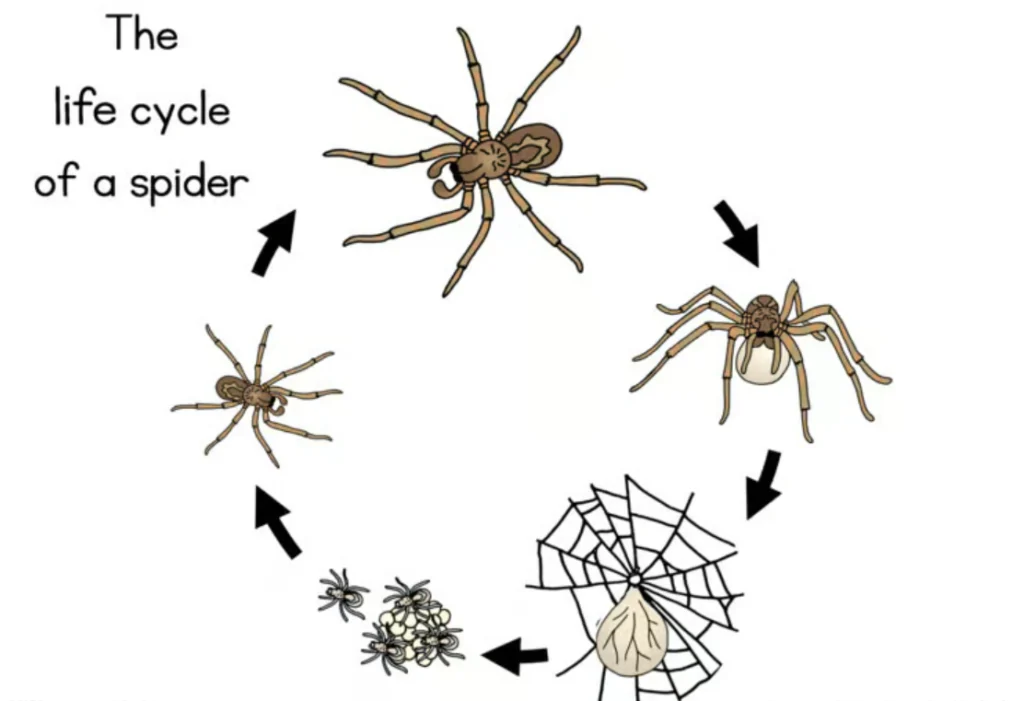
A: The spider life cycle includes egg, egg sac, spiderling, juvenile spider, adult spider, mating, and egg-laying again.
Q2: How many eggs does a spider lay?
A: It depends on the species. Some spiders lay a few eggs, while others can produce egg sacs containing hundreds or even up to a thousand eggs.
Q3: What is a baby spider called?
A: A baby spider is called a spiderling.
Q4: Do all spiders make webs?
A: No. Many spiders make webs, but some hunt by jumping, chasing, hiding, or ambushing prey.
Q5: Are spiders insects?
A: No. Spiders are arachnids, not insects. They have eight legs and two main body parts.
Q6: What do spiders eat?
A: Most spiders eat insects and other small arthropods. Some larger species may eat small vertebrates, but this is less common.
Q7: Are spider bites dangerous?
A: Most spider bites are mild, but some venomous spiders can cause serious symptoms. Seek medical help if there is severe pain, breathing trouble, spreading swelling, muscle cramps, or a worsening wound.
Q8: Is a camel spider a real spider?
A: No. A camel spider is not a true spider. It is a solpugid, an arachnid, but belonging to a different group.
Conclusion
The spider life cycle shows how small creatures can play a big role in nature. From tiny eggs inside silk sacs to active spiderlings and skilled adult hunters, every stage helps spiders survive and continue their species.
Spiders are often misunderstood due to fear, myths, and concerns about bites. But most spiders are not harmful to humans. Instead, they help control insects, support food chains, protect plants, and maintain ecosystem balance.
Learning about spiders helps us see them more clearly. They are not just web makers or scary animals in dark corners. They are ancient, useful, and highly adapted creatures with a life cycle shaped by millions of years of evolution.
Protecting spiders means protecting biodiversity. When we reduce unnecessary pesticide use, preserve natural habitats, and respect small wildlife, we help keep the natural world healthier for the future.
Also Read: life cycle of ladybird





Leave a Reply