
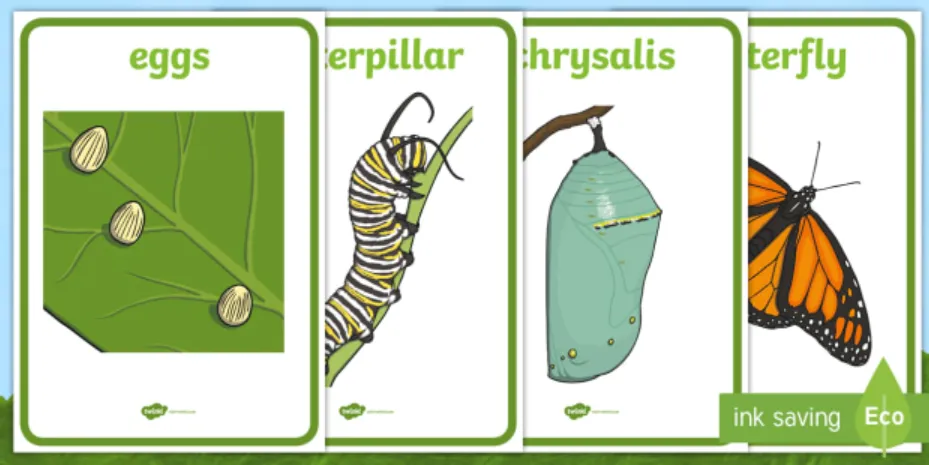
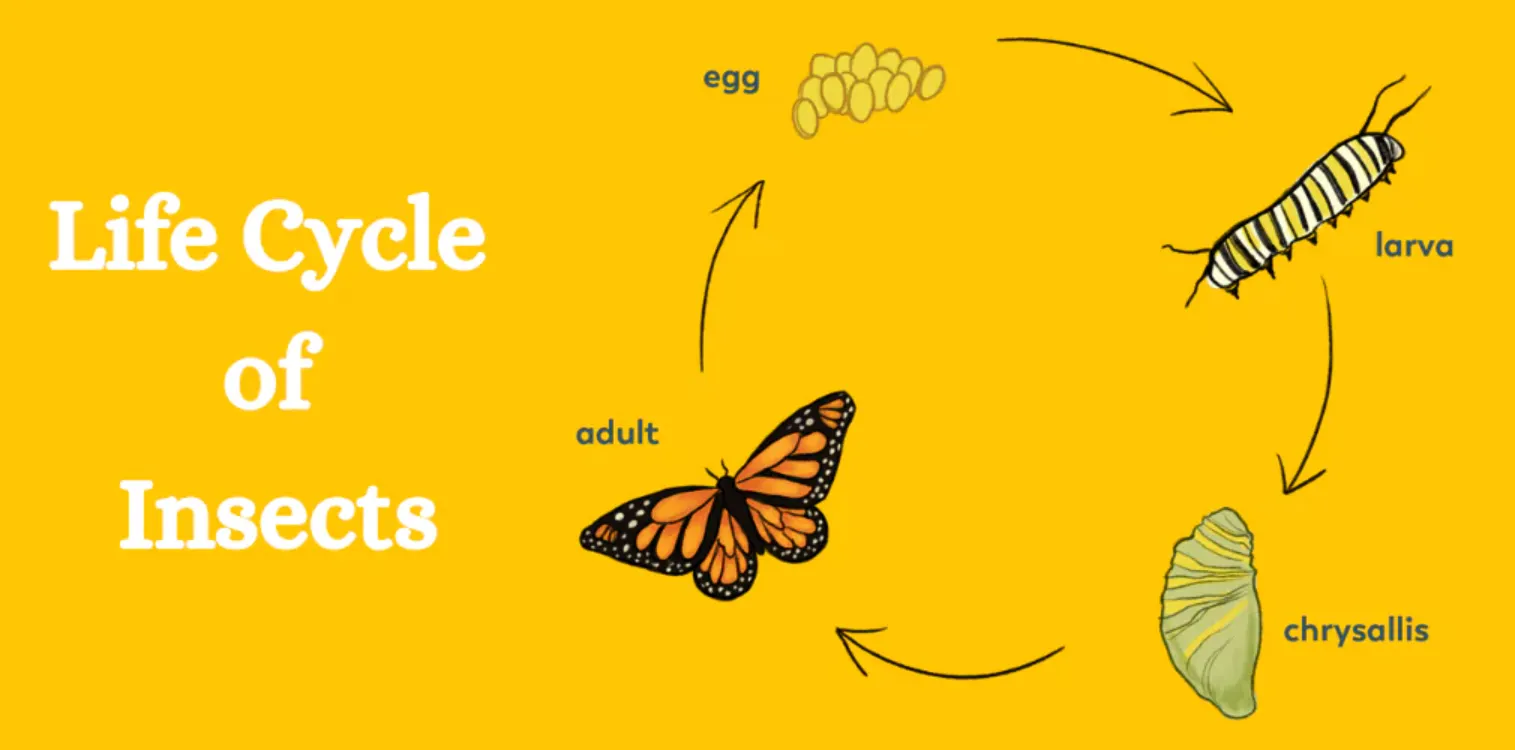
The stages of the butterfly life cycle describe one of the most beautiful natural transformations in the insect world. A butterfly does not begin life with wings. It starts as a tiny egg, becomes a hungry caterpillar, changes inside a protective chrysalis, and finally emerges as an adult butterfly. This process is called complete metamorphosis because the early stage looks completely different from the adult stage. Butterflies and moths go through four main stages: egg, larva, pupa, and adult.
Although timing varies by species, temperature, food quality, and season, many well-studied butterflies, such as the monarch butterfly, complete development from egg to adult in a few weeks under warm conditions. For monarchs, eggs are laid on milkweed, larvae pass through five growth stages called instars, and the adult emerges from the chrysalis after about one to two weeks.
Quick Answers
Q: What are the 4 stages of the butterfly life cycle?
A: The four stages are egg, larva/caterpillar, pupa/chrysalis, and adult butterfly.
Q: How long does a butterfly’s life cycle take?
A: It depends on species and climate. A monarch butterfly may complete egg-to-adult development in about 22–37 days in warm conditions.
Q: What does a caterpillar turn into?
A: A caterpillar turns into a pupa, usually inside a chrysalis, and then emerges as an adult butterfly.
Quick Life Cycle Table
| Stage | Simple Name | What Happens | Common Time Range |
| 1 | Egg | A female butterfly lays eggs on a suitable host plant. | A few days to 2 weeks |
| 2 | Larva | A caterpillar hatches and eats leaves to grow fast. | About 1–3 weeks |
| 3 | Pupa | A caterpillar forms a chrysalis and transforms inside it. | About 1–2 weeks or longer |
| 4 | Adult | Butterfly emerges, feeds, mates, and lays eggs. | Days to months, depending on species |
Important Things That You Need To Know
When people search for a butterfly, they may be looking for different things, so it is important to understand the meaning clearly. In this article, the focus is on the real insect and the stages of the butterfly life cycle, not on symbolic or entertainment meanings.
A monarch butterfly is one of the best-known examples because of its orange-and-black wings, long migration, and dependence on milkweed, which makes it easy to study. Monarchs need milkweed for their caterpillars, while adults feed on flower nectar from many blooming plants.
A blue butterfly is not one single species. Many butterflies can look blue because of microscopic wing scales that reflect light. These scales are part of the reason butterflies belong to the order Lepidoptera, meaning “scaly-winged.”
Butterfly weed is a common name for a type of milkweed plant, often valued in pollinator gardens for supporting butterflies and other insects. However, search terms like butterfly effect, butterfly cut, and butterfly TV show are different topics. The butterfly effect is a scientific idea about how small changes can cause large outcomes, while the butterfly cut and the butterfly TV show are beauty or entertainment searches.
For nature lovers, gardeners, students, and parents, the most useful meaning is the living butterfly itself: a pollinator, a food source for other animals, and a strong indicator of healthy habitats.
The History of Their Scientific Naming, Evolution, and Origin
Scientific Naming of Butterflies
Butterflies belong to the insect order Lepidoptera, along with moths and skippers. The name comes from Greek words meaning “scaly winged”, referring to the tiny overlapping scales that cover butterfly wings and create their colors and patterns.
Evolutionary Background
Modern scientific research suggests that butterflies evolved from moth-like ancestors. A major evolutionary study reported that butterflies likely originated around 101 million years ago, during the mid-Cretaceous period, when flowering plants were also diversifying.
Origin and Spread
Butterflies are now found across most of the world, especially in warmer regions with abundant flowering plants. Their success is closely connected to host plants, nectar plants, climate, and the ability of larvae and adults to use different food sources during different life stages.
Their Reproductive Process, Giving Birth And Rising Their Children
Mating and Egg Production
Adult butterflies reproduce by mating. After mating, the female searches for the correct host plant where her caterpillars can survive. This is very important because many butterfly larvae can eat only specific plant species.
For example, the monarch butterfly lays eggs on milkweed because monarch caterpillars depend on milkweed leaves for food and development.
Do Butterflies Give Birth?
Butterflies do not give live birth like mammals. Instead, they lay eggs. These eggs are usually placed on leaves, stems, or other parts of suitable host plants.
Each egg contains a developing embryo. When conditions are right, the egg hatches into a tiny caterpillar.
Do Butterflies Raise Their Children?
Butterflies generally do not raise their young after laying eggs. The mother’s main care is choosing the correct plant. Once the egg is laid, the young caterpillar must feed, grow, avoid predators, and survive environmental challenges on its own.
Why Host Plant Choice Matters
Host plant selection is one of the most important parts of butterfly reproduction. A female that lays eggs on the wrong plant may leave her caterpillars without food. That is why plant diversity is directly connected to butterfly survival.
Stages of Butterfly Life Cycle
Stage 1: Egg
The first stage of the butterfly life cycle is the egg. Female butterflies usually lay eggs on or near a plant that the future caterpillar can eat. The eggs may be round, oval, ribbed, smooth, pale, yellowish, greenish, or species-specific in shape.
Inside the egg, a tiny larva develops. The egg stage is short in many butterflies, but the exact time depends on temperature, humidity, and species. In monarchs, eggs commonly hatch after 2–5 days.
Stage 2: Larva or Caterpillar
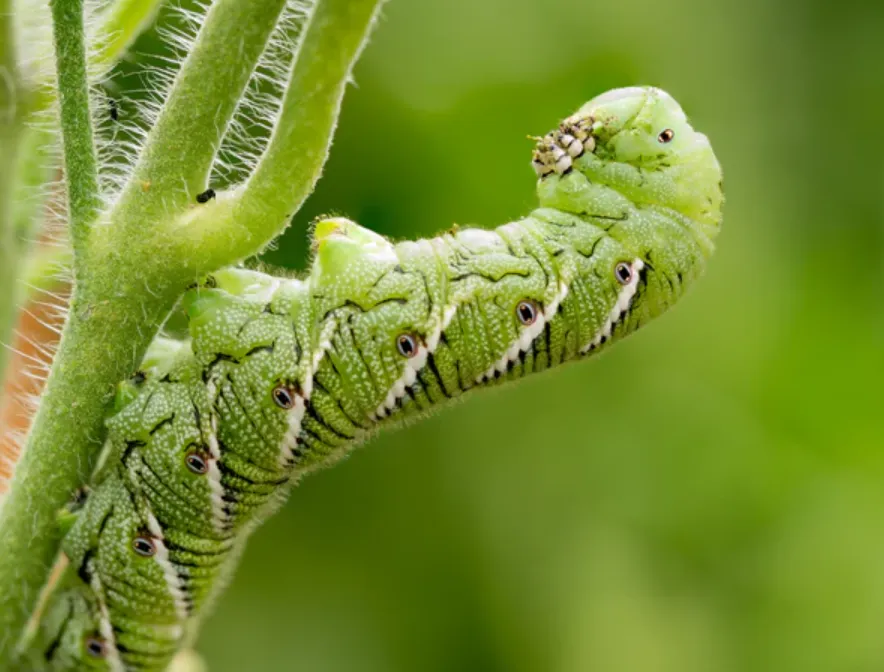
The second stage is the larva, commonly called a caterpillar. This is the main feeding and growing stage. Caterpillars eat leaves using their chewing mouthparts and grow quickly.
Because their outer skin cannot stretch forever, caterpillars shed their skin several times. These growth phases are called instars. Monarch caterpillars pass through five instars before pupating.
Stage 3: Pupa or Chrysalis
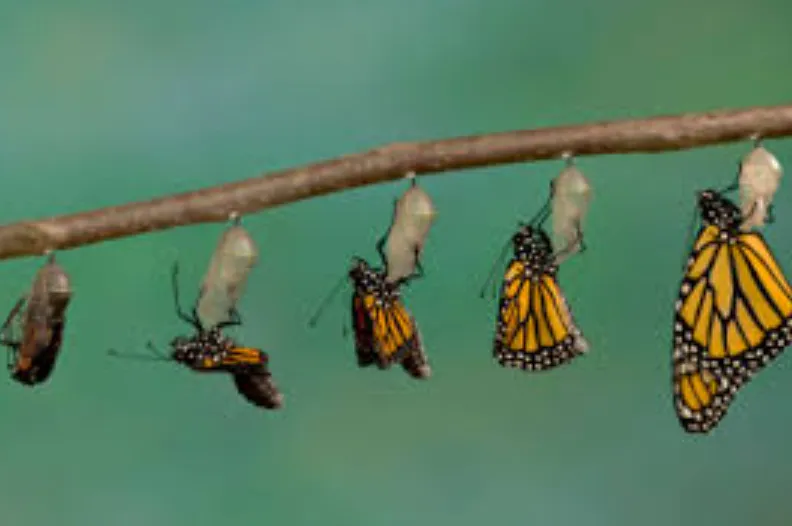
The third stage is the pupa, often called a chrysalis in butterflies. During this stage, the caterpillar does not eat. Its internal organs reorganize, and adult structures such as wings, legs, antennae, and reproductive organs develop.
This transformation is one of the most dramatic examples of complete metamorphosis. The pupa may look still from outside, but inside it is undergoing major biological change.
Stage 4: Adult Butterfly
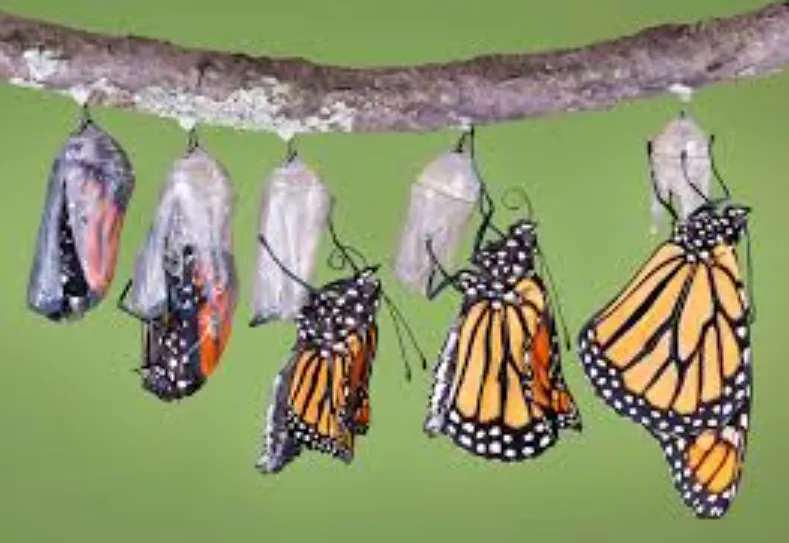
The final stage is the adult butterfly. When development is complete, the adult emerges from the chrysalis. At first, its wings are soft and folded. The butterfly pumps fluid into the wings, lets them expand and dry, and then becomes ready to fly.
The adult stage focuses on feeding, finding mates, moving between habitats, pollinating flowers, and producing the next generation.
Their main diet, food sources, and collection process are explained
Caterpillar Diet
The diet of a butterfly changes across its life cycle. In the larval stage, the caterpillar mostly eats leaves. However, not all leaves are suitable. Many caterpillars are highly selective and depend on specific host plants.
For example, monarch butterfly caterpillars eat milkweed leaves. Other species may feed on grasses, vines, shrubs, trees, herbs, or wildflowers. This is why butterfly conservation must protect both nectar plants and host plants.
Adult Butterfly Diet
Adult butterflies mainly drink nectar from flowers. They use a long, tube-like mouthpart called a proboscis. When not feeding, the proboscis stays coiled. When feeding, the butterfly uncoils its proboscis and sips liquid food.
Some butterflies also feed on tree sap, overripe fruit, moisture from soil, animal droppings, or mineral-rich puddles. This behavior helps them collect salts and nutrients that are not always present in nectar.
Food Collection Process
Butterflies locate food using vision, smell, and taste. Many can taste with sensory organs on their feet. When they land on a plant, they can detect whether it is suitable for feeding or egg-laying.
A strong butterfly habitat should include nectar flowers for adults and host plants for caterpillars. Smithsonian Gardens recommends pollinator-friendly plants such as bee balm, salvia, goldenrod, verbena, lantana, and lobelia for butterfly gardening.
How Long Does A Butterfly Live During the Stages of the Butterfly Life Cycle
The lifespan of a butterfly depends on species, temperature, predators, food availability, season, and whether it migrates or overwinters. Some adult butterflies live only a few days, while others may live for several months.
For the monarch butterfly, the ordinary summer adult stage is often much shorter than the special migratory generation. Monarchs may pass through several generations during the year, and the long-lived migratory generation can survive much longer than summer generations.
- Egg stage: This is often the shortest stage. In monarchs, eggs may hatch in about 2–5 days, depending on conditions.
- Caterpillar stage: This stage is focused on eating and growth. Monarch caterpillars usually pass through five instars over roughly two weeks.
- Chrysalis stage: In many butterflies, this stage lasts around one to two weeks, but it can be longer in cool weather or in species that pause development.
- Adult stage: Many adult butterflies live from a few days to several weeks. Their main jobs are feeding, mating, dispersing, and laying eggs.
- Seasonal difference: Warm weather can speed up development, while cooler weather can slow it down.
- Species difference: A small local butterfly, a tropical butterfly, and a migrating monarch may have very different lifespans.
- Predation risk: Eggs, caterpillars, and adults are eaten by birds, spiders, wasps, ants, reptiles, and other predators.
- Food quality: Good host plants help caterpillars grow stronger, while nectar-rich flowers support adult survival.
- Migration factor: Migratory monarchs can live for months because their biology shifts toward travel and overwintering instead of immediate reproduction.
Stages of Butterfly Life Cycle: Lifespan in the Wild vs. in Captivity
Lifespan in the Wild
In the wild, butterflies face natural challenges every day. Eggs can dry out, caterpillars can be eaten, pupae can be parasitized, and adults can die from storms, predators, pesticides, or lack of food.
Wild butterflies also depend heavily on seasonal timing. If flowers bloom too early or host plants dry out, the life cycle may be disrupted. This is one reason climate change and habitat loss create serious pressure on butterfly populations.
Lifespan in Captivity
In captivity, butterflies may be protected from predators and severe weather. This can sometimes help them survive longer, especially in educational butterfly houses or carefully managed breeding programs.
However, captivity is not automatically better. Poor ventilation, overcrowding, disease, weak plants, incorrect humidity, and unsafe handling can harm butterflies. Captive rearing should be done carefully and ethically.
Main Difference
The wild offers natural behavior, migration, mating, and ecological roles. Captivity offers protection but may limit natural selection and movement. For conservation, the best long-term solution is not simply keeping butterflies indoors; it is protecting healthy outdoor habitats.
Importance of Stages of Butterfly Life Cycle in this Ecosystem
Butterflies as Pollinators
Adult butterflies visit flowers for nectar and can carry pollen between plants. They are not always as efficient as bees, but they still support pollination networks, especially in wildflower-rich habitats.
Caterpillars as Food
The caterpillar stage is extremely important in food chains. Birds, wasps, spiders, beetles, reptiles, amphibians, and small mammals eat caterpillars. Many baby birds rely heavily on caterpillars as a soft, protein-rich food source.
Butterflies as Environmental Indicators
Butterflies respond quickly to changes in climate, habitat quality, plant diversity, and pesticide exposure. A decline in butterflies can indicate broader environmental stress.
Plant-Butterfly Relationships
Many butterflies depend on specific host plants. This creates strong links between insect life cycles and plant communities. When native plants disappear, the butterflies that depend on them may also decline.
Biodiversity Value
Butterflies add beauty, genetic diversity, ecological balance, and educational value to ecosystems. Their complete life cycle teaches people about transformation, adaptation, survival, and the connection between plants and animals.
What to do to protect them in nature and save the system for the future
Plant Native Host Plants
- Grow native host plants that caterpillars can eat.
- For monarchs, plant regionally appropriate milkweed.
- Avoid planting only nectar flowers; caterpillars need food too.
Grow Nectar-Rich Flowers
- Plant flowers that bloom in different seasons.
- Choose native wildflowers when possible.
- Include plants such as goldenrod, bee balm, salvia, verbena, and other pollinator-friendly flowers.
Reduce Pesticide Use
- Avoid broad-spectrum insecticides in gardens and farms.
- Do not spray flowers when butterflies and bees are active.
- Use natural pest control methods when safe and practical.
Protect Natural Habitats
- Preserve meadows, woodland edges, grasslands, wetlands, and roadside wildflower areas.
- Avoid removing all “wild” plants, because many are important for larvae.
- Support local habitat restoration projects.
Support Climate-Smart Conservation
- Plant diverse native species that can survive local weather extremes.
- Provide shade, shelter, water sources, and continuous blooms.
- Teach children and communities why butterflies matter.
Fun & Interesting Facts About Stages of Butterfly Life Cycle
- Butterflies taste with their feet, helping them identify food and host plants.
- A caterpillar may eat many times its body weight as it grows.
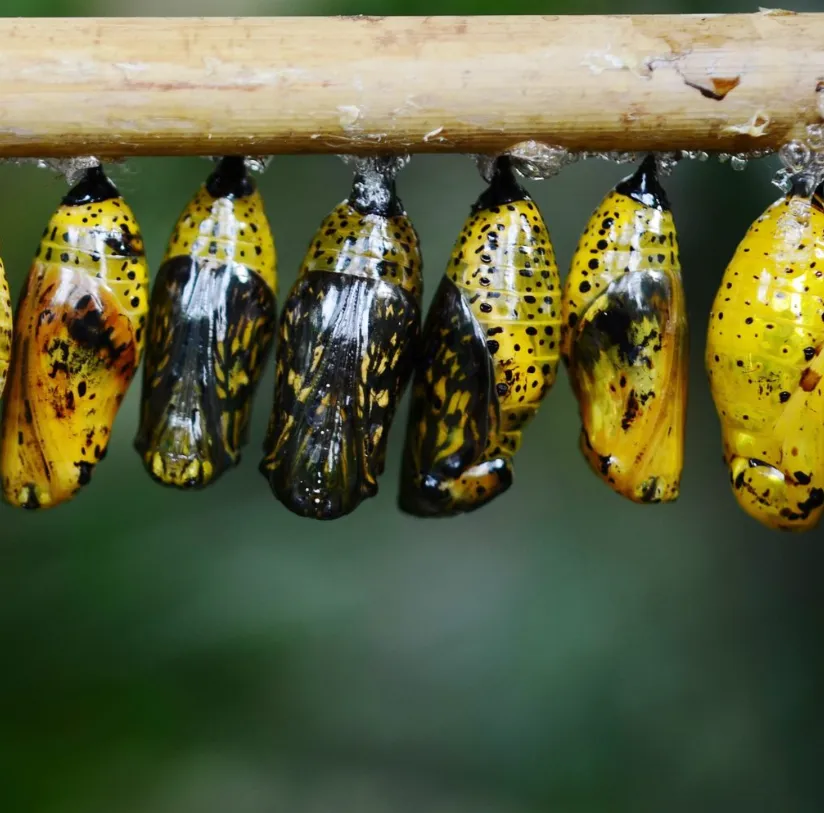
- The chrysalis stage looks quiet, but a major transformation is happening inside.
- Butterfly wings are covered with tiny scales, which create color patterns.
- Some blue butterflies look blue because of light reflection, not only pigment.
- A newly emerged butterfly cannot fly immediately; its wings must expand and dry first.
- The monarch butterfly is famous for its long-distance migration across North America.
- Not all butterflies live for the same length of time; lifespan varies widely by species.
- Butterflies and moths are related, but many butterflies are active during the day.
- A butterfly’s life cycle helps students understand complete metamorphosis in a simple, visual way.
Frequently Asked Questions (FAQs)
Q: What are the stages of the butterfly life cycle?
A: The stages are egg, larva/caterpillar, pupa/chrysalis, and adult butterfly. This process is known as complete metamorphosis.
Q: Which stage of the butterfly life cycle eats the most?
A: The caterpillar stage eats the most. Caterpillars feed heavily on host plant leaves so they can grow before becoming a chrysalis.
Q: Is a chrysalis the same as a cocoon?
A: Not exactly. A chrysalis is the pupal form of a butterfly. A cocoon is usually a silk covering made by many moth larvae around their pupa.
Q: How long does the butterfly life cycle take?
A: It depends on species and temperature. Some butterflies complete the cycle in a few weeks, while others take longer due to seasonal pauses or cooler conditions.
Q: Why are host plants important for butterflies?
A: Host plants are essential because female butterflies lay eggs on plants that their caterpillars can eat. Without the right host plant, the caterpillars may not survive.
Conclusion
The stages of the butterfly life cycle show how nature turns a tiny egg into a flying adult through complete metamorphosis. Each stage has a different purpose. The egg begins life, the caterpillar feeds and grows, the chrysalis transforms the body, and the adult butterfly reproduces and supports pollination.
Butterflies are more than colorful insects. They are part of food chains, plant reproduction, habitat health, and biodiversity. Their survival depends on clean environments, native host plants, nectar flowers, and reduced pesticide pressure.
By protecting butterfly habitats, planting pollinator-friendly gardens, and understanding their life cycle, people can help maintain healthier ecosystems for the future. The butterfly’s journey from egg to adult is not only beautiful; it is a powerful reminder of how closely all living systems are connected.
Also Read: panda life cycle





Leave a Reply