
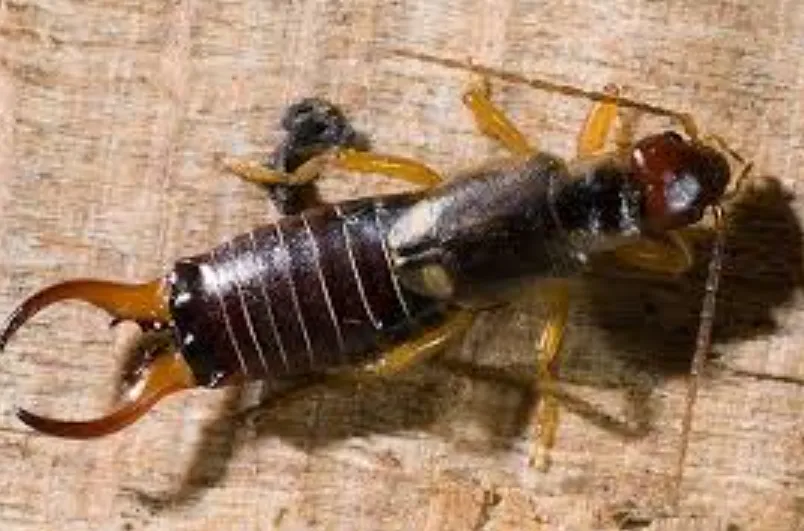
The earwig life cycle is one of the most interesting insect life cycles because earwigs show a rare behavior among insects: motherly care. Unlike many insects that lay eggs and leave, female earwigs protect, clean, and guard their eggs and young nymphs. This makes the earwig bug more advanced in family behavior than many people expect.
An earwig is a small, flat-bodied insect from the order Dermaptera. The pair of forceps-like pincers easily recognizes it at the end of its abdomen. These pincers may look dangerous, but earwigs are not naturally aggressive toward humans. They are mostly nocturnal, meaning they hide during the day and become active at night. They prefer dark, cool, and moist places such as under leaves, mulch, stones, flowerpots, logs, and garden debris.
Most earwigs develop through incomplete metamorphosis, which means their life cycle has three main stages: egg, nymph, and adult. There is no pupal stage like butterflies or beetles. The young earwig, often called a baby earwig or nymph, looks like a smaller, lighter version of the adult. Earwigs can be garden pests when they damage seedlings, flowers, soft fruit, and corn silk, but they are also useful because they feed on aphids, insect eggs, decaying matter, and small pests.
Q: What is an earwig?
A: An earwig is a nocturnal insect with a flat body, chewing mouthparts, short wings, and forceps-like pincers called cerci at the end of its abdomen.
Q: What are the stages of the earwig life cycle?
A: The earwig life cycle includes three main stages: egg, nymph, and adult. Earwigs develop through incomplete metamorphosis, not complete metamorphosis.
Q: Do earwigs bite humans?
A: An earwig bite is uncommon. Earwigs do not attack humans, but they may pinch with their pincers if trapped or handled roughly. They are not poisonous and are not known to spread disease.
Quick Life Cycle Table
| Stage | What Happens | Time/Season | Key Details |
| Mating | Adult males and females mate | Usually fall | Pairs may overwinter together in soil nests |
| Egg | Females lay eggs in underground cells | Winter to early spring | Often 30 or more eggs; some sources report about 50 or more |
| Maternal Care | Mother guards and cleans eggs | Before hatching | She protects eggs from fungi, drying, and predators |
| Baby Earwig / Nymph | Eggs hatch into small nymphs | Spring | Nymphs look like adults but are smaller and lighter |
| Molting | Nymphs shed skin several times | Spring to early summer | European earwigs usually pass through four nymphal stages |
| Adult | Fully grown earwigs become reproductive | Late June to July onward | Adults feed, hide by day, and reproduce again |
| Overwintering | Adults survive cold periods in shelters | Fall to winter | Many hide in soil cells, cracks, mulch, or protected debris |
Earwigs generally have one generation per year, though in some climates females may produce two broods. Timing depends on temperature, moisture, habitat, and species.
The History of Their Scientific Naming
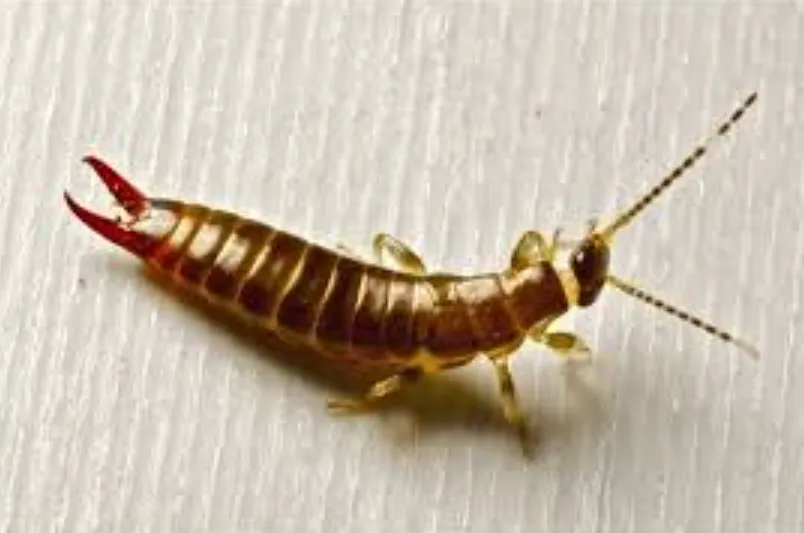
The scientific history of earwigs begins with their order name, Dermaptera. The word comes from Greek roots: derma, meaning skin, and ptera, meaning wings. This name refers to their short, leathery forewings that cover the folded hindwings. North Carolina State University’s entomology material describes Dermaptera as “skin wings,” which directly matches the appearance of their protective forewings.
The common European earwig is scientifically known as Forficula auricularia. According to GBIF taxonomy, Forficula auricularia Linnaeus, 1758 belongs to the kingdom Animalia, phylum Arthropoda, class Insecta, order Dermaptera, family Forficulidae, and genus Forficula.
The common name earwig has an older cultural background. Britannica explains that the name is linked to an old belief that earwigs crawl into human ears. Modern science does not support this myth. The name may also refer to the insect’s unusual, folded wings, which can resemble a human ear when opened.
Important points:
- Dermaptera means “skin wings.”
- Forficula auricularia is the common European earwig.
- Linnaeus formally described the species in 1758.
- The word earwig is connected with old folklore, not real behavior.
- Earwigs do not purposely enter ears or lay eggs in human ears.
Their Evolution And Their Origin
The earwig bug belongs to an old insect group with a long evolutionary history. Earwigs are part of the insect order Dermaptera, a smaller but distinct order compared with beetles, flies, butterflies, and ants. Britannica states that there are approximately 1,800 species of earwigs, while some modern biodiversity sources estimate more than 2,000 described species worldwide. The exact number may vary because taxonomy changes as researchers describe new species and revise old classifications.
Earwigs are classified within Polyneoptera, a larger group of insects that also includes grasshoppers, crickets, stick insects, cockroaches, and related orders. Their body plan shows strong adaptation for life in narrow shelters: a flattened body, chewing mouthparts, flexible abdomen, and protective pincers. These traits help them hide in cracks, move under bark or stones, and defend themselves when disturbed.
Fossil research suggests that the evolutionary history of Dermaptera may trace back to the Late Triassic to Early Jurassic period. A fossil study indexed by PubMed notes that early Dermaptera may have originated around that ancient time and later diversified into different evolutionary groups.
Modern earwigs are found worldwide, especially in tropical, subtropical, and temperate regions. They are absent from Antarctica. Their success comes from their flexible diet, secretive lifestyle, ability to survive in moist microhabitats, and unusual maternal care. Unlike many insects that depend only on high egg numbers, earwigs increase survival by protecting eggs and early nymphs.
The common European earwig, Forficula auricularia, originated in Europe and nearby regions, then spread to North America and other areas through human transport, trade, soil, plants, lumber, and garden materials. Today, it is one of the most familiar earwig species in gardens, homes, farms, and landscapes.
Their main food and its collection process
Earwigs are mostly omnivorous scavengers, which means they eat both plant and animal materials. Their diet varies with season, habitat, food availability, and species. In gardens, they often feed at night and hide during the day. This makes it harder to notice their feeding damage until leaves, blossoms, or soft fruits show irregular holes.
Their main food sources include:
- Decaying plant material: Earwigs feed on dead leaves, rotting stems, fallen petals, and decomposing organic matter.
- Soft-bodied insects: They can eat aphids, mites, insect eggs, and weakened insects.
- Fresh plant tissue: When populations are high, they may chew seedlings, flowers, leaves, and soft fruits.
- Corn silk and tender crops: European earwigs can damage sweet corn silk and young vegetable plants.
- Fungi and organic debris: Moist places often contain fungal growth and decomposing matter that earwigs may use as food.
UC IPM notes that earwigs can damage seedlings, flowers, soft fruits, and corn silks, but they also have a beneficial role as predators of aphids and other insects. This makes them both a garden pest and a natural helper, depending on population size and crop type.
Earwigs collect food mainly through nighttime foraging. They leave their hiding places after dark, search the soil surface, mulch, flowers, fruit, and plant bases, then return to their hidden shelters before daylight. Their flattened bodies allow them to enter tight spaces that many predators cannot easily reach.
Their chewing mouthparts help them scrape, bite, and tear food. The pincers are not used like a mouth, but they may help in defense, grooming, courtship, and handling prey. Because earwigs prefer moist environments, overwatered gardens, thick mulch, dense weeds, boards, pots, and plant debris can create perfect feeding and hiding zones.
A balanced garden should not always destroy every earwig. Small numbers can help recycle organic matter and control some pests. Problems begin when earwig numbers become high around seedlings, flowers, fruit crops, or vegetables.
Important Things That You Need To Know
Many people search for the earwig life cycle because they find an earwig bug in the garden, bathroom, basement, kitchen, or under a flowerpot. The first important thing to know is that what an earwig is often misunderstood. An earwig is not a dangerous household parasite. It is a nocturnal insect that prefers damp, dark shelters and usually enters homes by accident.
The second thing is the fear of an earwig bite. Earwigs have pincers, but they do not hunt people. If handled roughly, trapped in clothing, or pressed against skin, an earwig may pinch. The pinch may feel sharp, but it is not venomous. Most indoor earwig problems are nuisances, not health concerns.
For homeowners and gardeners, earwig control should focus first on habitat management. Remove wet leaves, excess mulch, stacked boards, garden clutter, and moisture near walls. Seal cracks around doors, windows, foundations, and pipes. Indoors, vacuuming or sweeping is usually better than spraying chemicals.
Simple earwig traps can work well. Rolled newspaper, bamboo tubes, short hoses, or low cans with vegetable oil can attract earwigs overnight. In the morning, trapped earwigs can be removed from problem areas. UC IPM recommends daily trapping when earwig numbers are high.
One LSI term, “earwig and the witch,” refers to a movie/book title and is not connected to the biology of the real insect. For an SEO article, it is better to clarify this rather than mix entertainment meaning with scientific information.
Their life cycle and ability to survive in nature
Egg Stage
The earwig life cycle begins when the female lays eggs in a protected underground chamber or hidden soil cell. Many earwig species choose moist, dark, safe places where eggs are less likely to dry out. Female European earwigs often lay eggs in winter or early spring.
Unlike many insects, the mother does not simply abandon the eggs. She stays with them, turns them, cleans them, and protects them from fungi and predators. This behavior improves egg survival in damp soil environments.
Nymph Stage
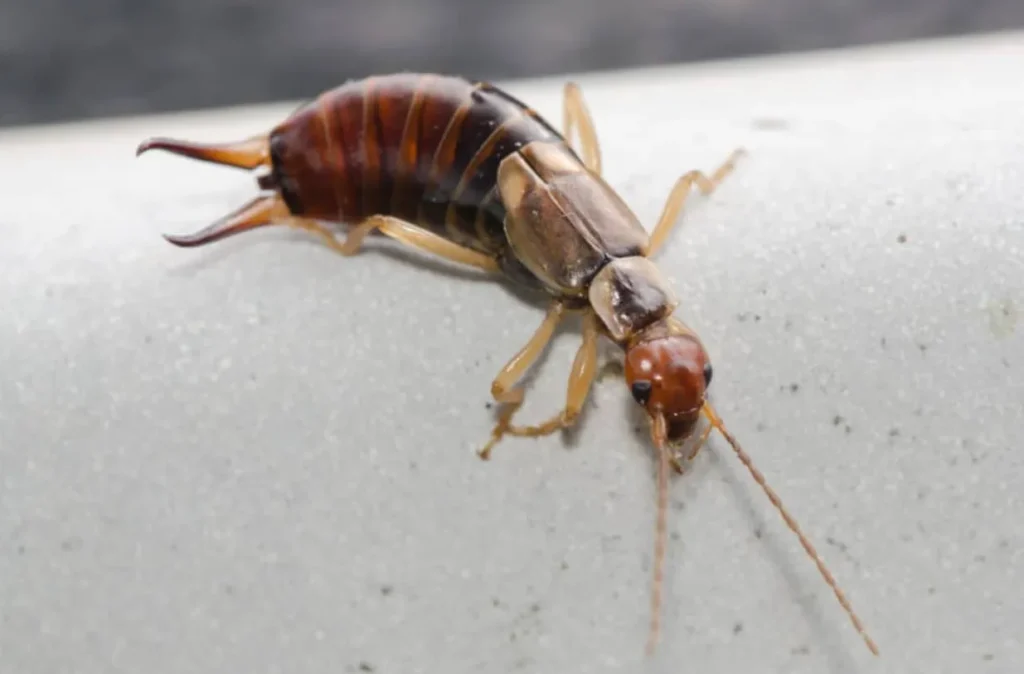
After hatching, the young earwigs are called nymphs. A baby earwig looks similar to an adult, but it is smaller, lighter in color, and does not yet have fully developed wings. Nymphs grow by molting, shedding their outer skin as they grow larger.
European earwigs commonly pass through four nymphal stages. Early nymphs may stay close to the mother, while older nymphs begin to forage independently. UC IPM notes that second-instar nymphs may forage at night but return to the nest during the day, while later instars forage more independently.
Adult Stage
Adult earwigs are active mainly at night. They hide in cool, damp, dark places during the day and search for food after sunset. Adults can survive in gardens, soil cracks, mulch, debris, and sometimes inside buildings.
Their survival depends on three major abilities: hiding effectively, eating a wide range of foods, and reproducing in protected spaces. Their flexible diet allows them to live in forests, gardens, farms, lawns, compost areas, and urban landscapes.
Natural Survival Skills
Earwigs survive by using their flattened body to escape into narrow cracks. Their pincers help them defend themselves and interact with other earwigs. Their nocturnal lifestyle reduces exposure to birds, heat, dryness, and human disturbance.
They also survive seasonal changes by overwintering in protected soil cells or sheltered areas. In colder regions, adults may become less active during winter. In milder climates, some earwigs can remain active for much of the year.
Their Reproductive Process and raising their children
Earwig reproduction is one of the most remarkable aspects of their biology because it involves true parental care. In many insects, females lay eggs and leave immediately. Earwigs are different. Female earwigs invest time and energy in protecting the next generation.
Key steps in reproduction:
- Mating usually occurs in the fall: Many adult earwigs mate before winter. In European earwigs, males and females may spend part of the winter together in underground nests.
- Nest preparation: The female prepares a small underground chamber or soil cell. This protected place keeps the eggs moist and hidden.
- Egg laying: Females lay clusters of eggs. UC IPM reports masses of 30 or more eggs, while other extension sources report higher numbers depending on species and conditions.
- Male removal: In early spring, the female may force the male out of the nest before focusing on egg care.
- Egg cleaning: The mother cleans the eggs with her mouthparts. This helps reduce fungal growth and infection.
- Egg guarding: She stays near the eggs and protects them from predators, dryness, and disturbance.
- Nymph care: After hatching, young nymphs may stay in or near the nest. The mother continues to guard them for a short while.
- Independence: After one or more molts, nymphs begin foraging more independently and gradually leave the nest.
This parenting behavior gives earwigs an advantage in damp soil environments, where fungi, mites, or predators easily attack their eggs. Research on European earwigs has shown that maternal care includes egg grooming, protection, and continued attention after hatching.
However, maternal care does not last forever. As nymphs grow, they must leave the nest and find food. In some earwig species, if nymphs remain too long, family conflict may increase. This shows that earwig parenting is helpful but temporary.
The importance of them in this Ecosystem
Natural Waste Recyclers
Earwigs help break down decaying leaves, dead plant material, rotting flowers, and organic debris. By feeding on decomposing matter, they support nutrient recycling in soil. This makes them part of the natural cleanup system in gardens, forests, compost areas, and landscapes.
When organic matter breaks down more quickly, nutrients are returned to the soil and become available to plants. Earwigs are not the only decomposers, but they work alongside fungi, bacteria, worms, mites, beetles, and other soil organisms.
Pest Predators
Earwigs can also act as predators of soft-bodied insects. UC IPM notes that European earwigs feed on aphids, insect eggs, mites, and other small organisms, and under some conditions, they can provide biological control.
This means a small earwig population may actually help reduce pests in gardens. They may feed on aphids that damage roses, vegetables, fruit trees, and ornamental plants.
Food for Other Animals
Earwigs are also prey for birds, reptiles, amphibians, spiders, centipedes, beetles, and small mammals. Their presence supports food webs. If all small insects disappeared from a habitat, many insect-eating animals would lose important food sources.
Soil and Garden Balance
In a balanced ecosystem, earwigs are neither fully “good” nor fully “bad.” Their role depends on population size and plant sensitivity. A few earwigs can support decomposition and pest control. Too many earwigs can damage seedlings, flowers, soft fruits, and vegetables.
Indicator of Moist Microhabitats
The presence of earwigs often indicates damp, hidden spaces. In nature, this is normal. Around homes, too many earwigs may signal excess mulch, poor drainage, wet debris, or moisture near the foundation.
What to do to protect them in nature and save the system for the future
Earwigs should not be treated only as pests. They are part of the Ecosystem, so the best approach is balanced management. Protect them in natural areas while controlling them responsibly when they damage crops or enter homes.
- Avoid unnecessary pesticide use: Broad-spectrum insecticides can kill earwigs along with bees, butterflies, beetles, and other beneficial insects.
- Use habitat-based control first: If earwigs are causing problems near the house, remove wet leaves, thick mulch, boards, unused pots, and debris before spraying.
- Keep natural zones in gardens: A small wild corner with leaves, logs, and native plants can support decomposers and predators without letting them invade your home.
- Improve drainage: Earwigs love moisture. Fix overwatering, blocked gutters, and wet soil near foundations.
- Use traps instead of chemicals: Rolled newspaper, cardboard, bamboo tubes, or oil traps can reduce high earwig numbers in a targeted way.
- Protect seedlings physically: Use collars, raised beds, or clean planting areas when young plants are vulnerable.
- Encourage natural predators: Birds, frogs, lizards, spiders, and ground beetles help keep earwig populations balanced.
- Do not destroy every earwig: A small number can help recycle organic matter and eat pests.
- Seal homes, not ecosystems: Close cracks, gaps, and entry points around houses so earwigs remain outdoors.
- Educate people about the myth that earwigs crawl into ears or lay eggs in them. Reducing fear helps people choose smarter control methods.
This approach protects biodiversity while preventing earwig damage in sensitive areas.
Frequently Asked Questions (FAQs)
Q1: What is an earwig?
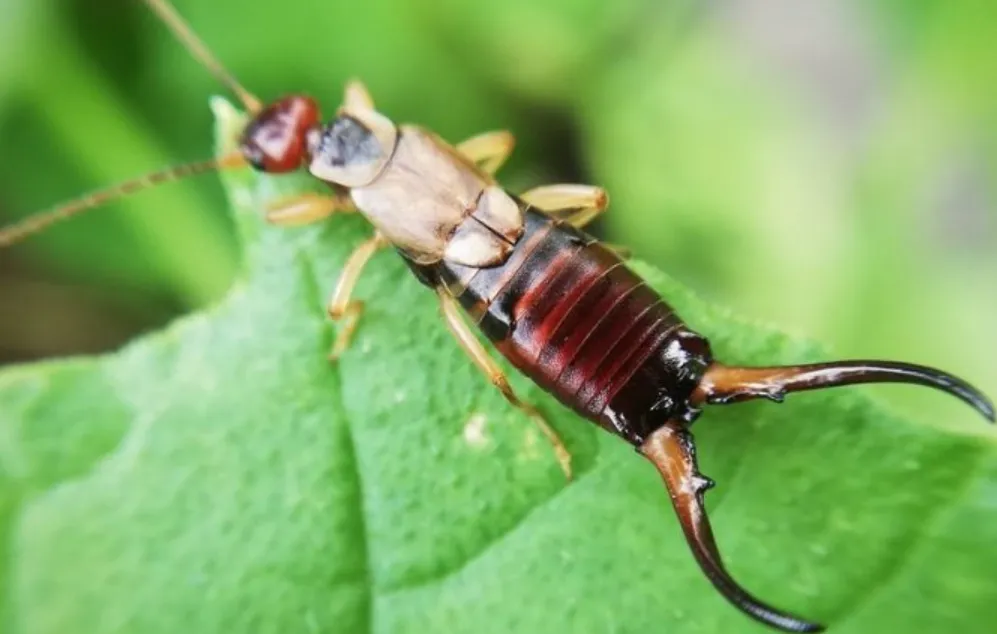
A: An earwig is an insect from the order Dermaptera. It has a flat body, chewing mouthparts, short leathery wings, and forceps-like pincers at the end of its abdomen.
Q2: What are the main stages of the earwig life cycle?
A: The earwig life cycle has three main stages: egg, nymph, and adult. Earwigs develop through incomplete metamorphosis, so they do not have a pupal stage.
Q3: What does a baby earwig look like?
A: A baby earwig, or nymph, looks like a smaller and lighter version of the adult. It has a similar body shape but lacks fully developed wings.
Q4: Do earwigs bite?
A: An earwig bite is rare. Earwigs do not naturally attack humans. They may pinch if trapped or handled, but they are not venomous.
Q5: Are earwigs harmful to gardens?
A: Earwigs can damage seedlings, flowers, soft fruit, and corn silk when populations are high. However, they can also help by eating aphids, insect eggs, and decaying matter.
Q6: What is the best natural earwig control method?
A: The best natural earwig control method is to reduce moisture and hiding places. Remove debris, thin mulch, improve drainage, and use simple earwig traps such as rolled newspaper or oil traps.
Q7: Do earwigs live inside houses?
A: Earwigs may enter houses accidentally, especially during hot, dry, cold, or very wet weather. They usually do not reproduce indoors and are mainly a nuisance.
Q8: How long does it take for earwigs to become adults?
A: Timing depends on climate and species. In many temperate areas, eggs hatch in spring, nymphs develop through several molts, and adults appear by late June or July.
Conclusion
The earwig life cycle shows that even small insects can have complex and meaningful roles in nature. Earwigs begin as eggs, hatch into baby earwigs or nymphs, molt several times, and finally become adults. Their life cycle is simple in structure but advanced in behavior because female earwigs protect and care for their eggs and young.
Although many people fear earwigs because of their pincers, earwigs are not dangerous to humans. They may become pests when they damage seedlings, flowers, fruits, or vegetables, but they also help ecosystems by recycling organic matter and eating smaller pests such as aphids.
The smartest approach is not destruction, but balanced management. Use earwig traps, reduce moisture, remove hiding places, and protect vulnerable plants. At the same time, allow earwigs to play their natural role in soil health, decomposition, and food webs.
Also Read: strawberry life cycle






Leave a Reply