
The thrips life cycle is one of the main reasons these tiny insects can become serious pests on houseplants, flowers, vegetables, fruits, and greenhouse crops. Thrips are very small, slender insects belonging to the order Thysanoptera, a name that means “fringed wings” because many adult thrips have narrow wings edged with long hairs. Most pest thrips are only about 1–2 mm long, making them difficult to notice until thrips damage appears on leaves, buds, flowers, or fruits.
Thrips feed mainly by scraping plant surfaces and sucking out cell contents. This causes silvery streaks, pale speckling, distorted leaves, scarred flowers, black fecal spots, and sometimes poor plant growth. Some species are also important because they can spread plant viruses, including serious crop diseases. However, not all thrips are harmful. Some species feed on fungi, pollen, mites, or other small insects, and some may even help pollination in certain plants.
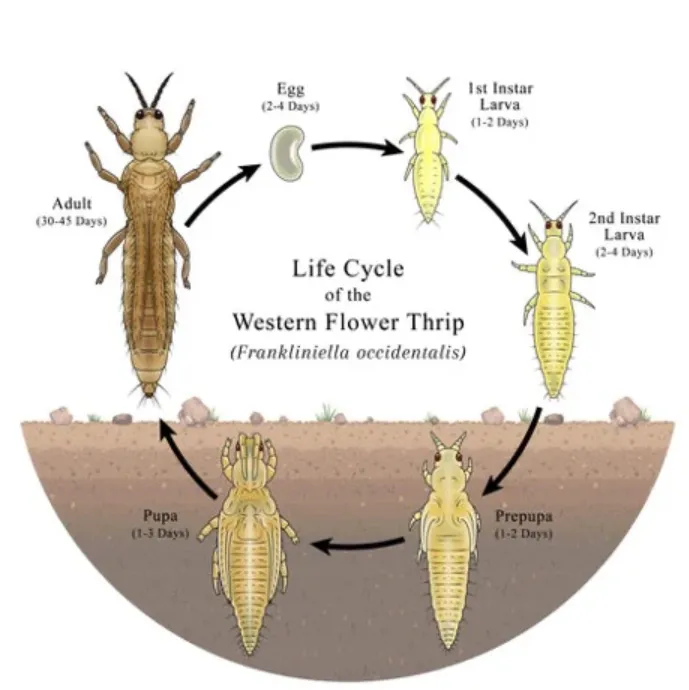
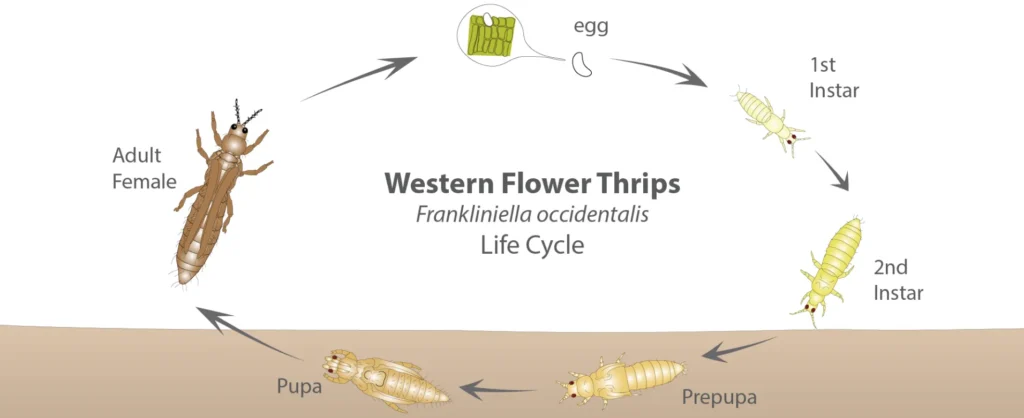
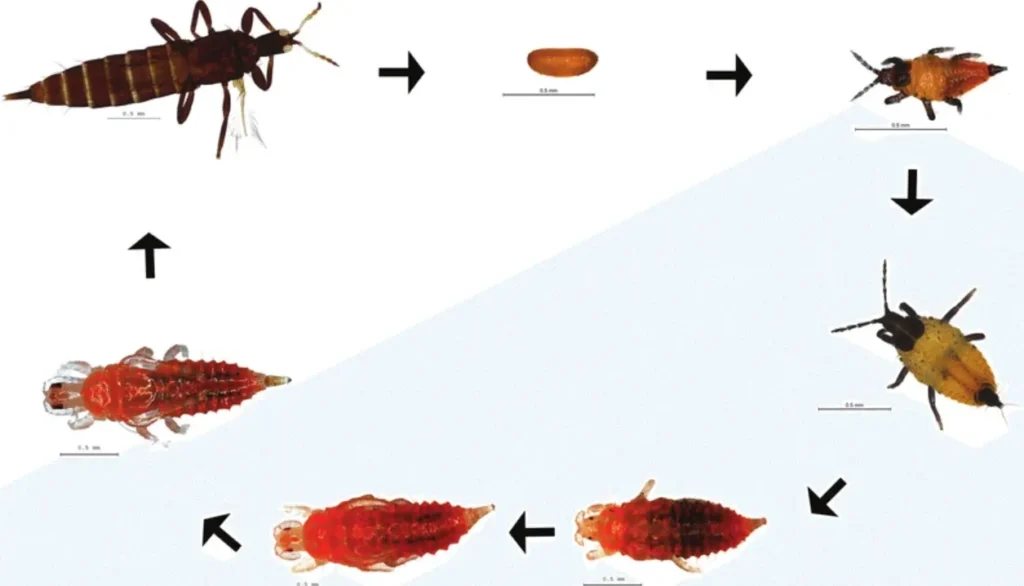
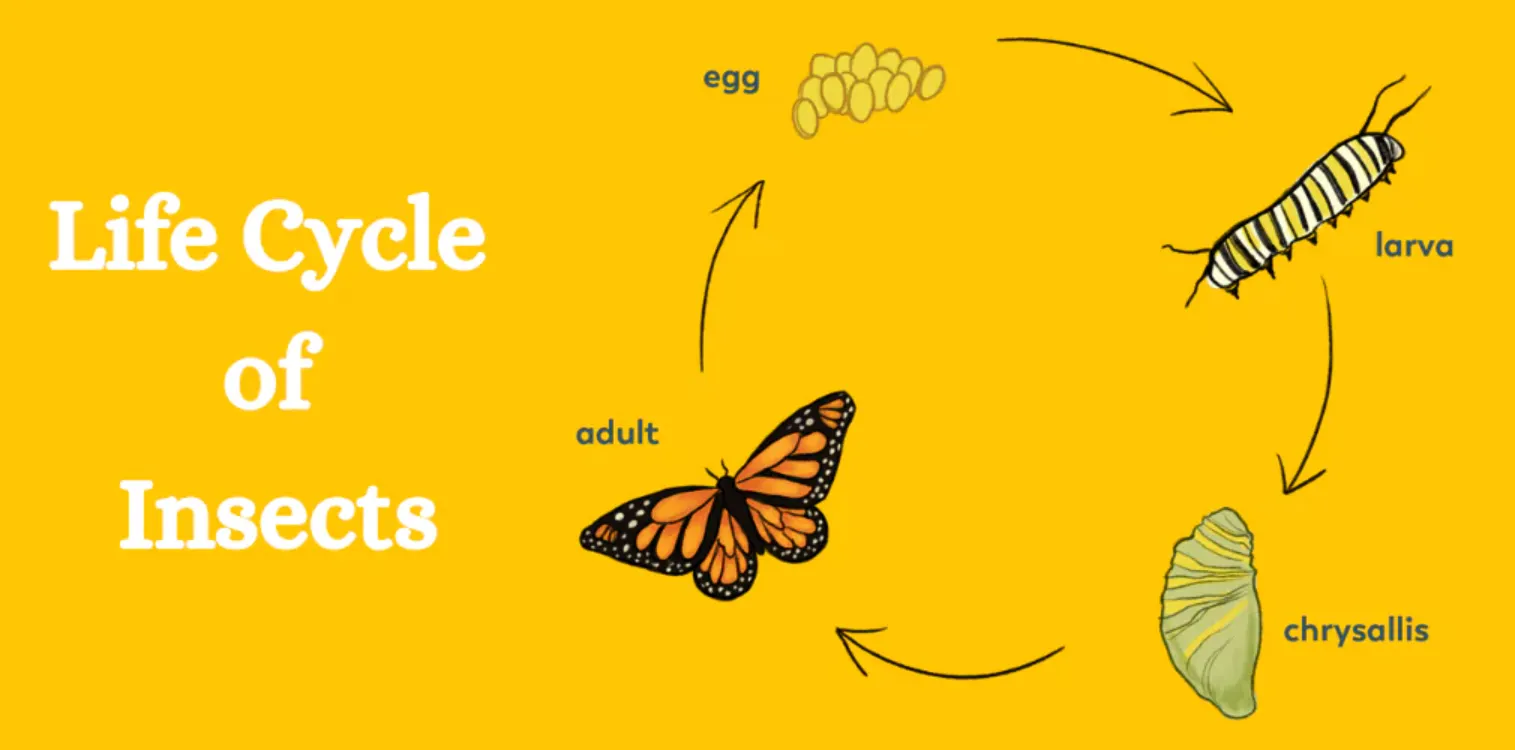
The typical thrips life cycle includes egg, larval or nymphal feeding stages, prepupal and pupal resting stages, and adult stages. Under warm conditions, the cycle can be very fast. In greenhouse-like temperatures, some thrips may complete development in about 7–14 days, which explains why infestations can spread quickly if not monitored early.
Quick Answers: Most Common Questions
Q: What are thrips?
A: Thrips are tiny, slender insects from the order Thysanoptera. Many species feed on plants by scraping plant tissue and sucking out cell fluids.
Q: What does thrips damage look like?
A: Thrips damage often appears as silver or bronze streaks, pale speckles, curled leaves, deformed buds, scarred flowers, and small black fecal spots on leaves or petals.
Q: How long is the thrips life cycle?
A: The thrips life cycle may take about 1–3 weeks, depending on species, temperature, humidity, and host plant. Warm conditions usually make development faster.
Quick Life Cycle Table
| Stage | What Happens | Approximate Duration |
| Egg | A female inserts eggs into soft plant tissue such as leaves, stems, buds, or flowers. | About 2–7 days |
| Larva/Nymph | Young thrips feed actively on plant cells, causing visible damage. | About 4–7 days |
| Prepupa/Pupa | Thrips stop feeding and often move to soil, leaf litter, or protected plant parts. | About 2–5 days |
| Adult | Adults feed, fly or disperse, mate or reproduce, and lay eggs. | Several days to weeks |
The timing above is a practical estimate for a garden and greenhouse. Exact development depends on the thrips species, temperature, host plant, and growing conditions. Virginia Tech Extension describes egg hatch in about three days, nymphal feeding for four to five days, and pupation around two days under favorable conditions, while Wisconsin Extension notes that greenhouse life cycles may be as short as 7–14 days in warm temperatures.
Important Things That You Need To Know
Before discussing the full thrips life cycle, it is important to understand some related search terms and real-life plant problems. Many gardeners search for thrips, thrips damage, thrips on plants, how to get rid of thrips, and thrips on skin because these insects are small, fast-moving, and confusing to identify.
Thrips on plants are usually found on the undersides of leaves, inside flower buds, along new growth, or hidden in folded plant tissue. Because they are tiny, they are often noticed only after leaves become silvered, curled, or scarred. A simple way to check for them is to shake flowers or leaves over a white sheet of paper and look for tiny moving insects. Sticky traps, especially blue or yellow ones, are also used to monitor flying adults.
Thrips damage is not the same as fungal disease, nutrient deficiency, spider mites, or sunburn, although symptoms may look similar. Thrips scrape the surface and remove plant cell contents, leaving pale, silvery, or rough-looking patches. On flowers, the damage may appear as brown edges, streaks, or distorted petals.
The phrase how to get rid of thrips should not mean killing every insect in the garden. A better approach is Integrated Pest Management, which includes inspection, pruning heavily damaged parts, washing plants, using sticky traps, protecting natural predators, and applying selective treatments only when necessary. Broad pesticide spraying can harm beneficial insects and may make pest problems worse.
For thrips on skin, these insects do not live on humans like lice or fleas. Some thrips may land on people outdoors and cause mild irritation or tiny bites, but they are primarily plant-associated insects, not human parasites.
The History Of Their Scientific Naming, Evolution, and Their Origin
Scientific Naming of Thrips
The word thrips is unusual because it is used both as a singular and a plural noun. One insect is a thrips, and many insects are also thrips. Their scientific order is Thysanoptera, derived from Greek words meaning “fringe” and “wing.” This refers to their narrow wings with long hair-like fringes.
Classification and Diversity
Thrips belong to the class Insecta and order Thysanoptera. Different sources list thousands of described species worldwide, with many agricultural references commonly mentioning around 5,000–6,000 described species, while broader taxonomic summaries may list more depending on classification updates. Only a small portion are major crop pests, while others feed on fungi, pollen, or small arthropods.
Evolutionary Origin
Thrips are ancient insects with a long evolutionary background. Their small size, fringed wings, and specialized mouthparts helped them survive in flowers, leaves, bark, fungi, and protected plant tissues. Fossil and evolutionary studies show that thrips-like insects have existed for millions of years, and some ancient thrips were likely associated with plant reproduction and pollen movement.
Why Their Evolution Matters
Their evolution explains why thrips are difficult to control. They are tiny, hide in plant tissue, reproduce quickly, and can disperse by wind or plant movement. Their body shape allows them to enter buds, flowers, leaf folds, and greenhouse spaces where sprays may not reach easily.
Their Reproductive Process, Giving Birth And Rising Their Children
Egg-Laying Process
Most thrips reproduce by laying eggs. Female thrips commonly insert eggs directly into soft plant tissue, such as leaves, stems, buds, or flower parts. This protects the eggs from drying out and from many predators. Because the eggs are hidden inside the plant, they are difficult to see and difficult to control with surface sprays.
Sexual and Asexual Reproduction
Thrips can reproduce in more than one way. In many species, females may reproduce sexually after mating. Some species can also reproduce through parthenogenesis, where females produce offspring without fertilization. This is one reason a small number of thrips can quickly establish a population when conditions are favorable.
No Parental Care
Thrips do not “raise” their young like birds or mammals. After eggs are placed inside plant tissue, young larvae hatch and begin feeding on their own. There is no parental feeding, guarding, or teaching. Their survival depends on the safety of the egg location, suitable plant tissue, warm temperature, and access to food.
Fast Population Growth
Because the thrips life cycle can be short, several generations may occur in a single growing season. In greenhouses or warm indoor conditions, they can continue breeding for long periods. This is why early monitoring is more effective than waiting until damage becomes severe.
Stages of the Thrips Life Cycle
1. Egg Stage
The egg stage begins when a female thrips inserts eggs into soft plant tissue. Eggs are usually tiny, pale, and hidden, so gardeners rarely see them. This hidden egg-laying habit gives thrips a strong survival advantage.
Eggs may hatch within a few days under warm conditions. In cooler conditions, development slows. Since eggs are protected inside plant tissue, removing badly infested leaves or buds can reduce the next generation.
2. Larval or Nymphal Stage
The larval stage is the most damaging stage for many plant-feeding thrips. Young thrips are usually wingless, pale yellow, cream, or light green. They move across leaves, buds, and flowers, scraping plant cells and sucking out their contents.
This stage causes visible thrips damage, such as silvering, speckling, rough patches, curled leaves, and scarred petals. Larvae often hide in flowers, under leaves, and near growing tips where tissue is tender.
3. Prepupal and Pupal Stage
After feeding, thrips enter a less active stage called prepupa, followed by pupa. During this time, they usually stop feeding. Many species drop to the soil, potting mix, plant debris, or protected cracks near the plant.
This stage is important for control because surface sprays on leaves may miss thrips that are pupating in the soil or debris. Cleaning plant debris, replacing heavily infested potting media, and interrupting the life cycle can help reduce reinfestation.
4. Adult Stage
Adult thrips are slender, fast-moving insects. Many have fringed wings and can disperse by flying short distances or by being carried by the wind. Adults feed, mate, and lay eggs, beginning the cycle again.
Adult females are especially important because they continue the infestation. Some species can reproduce without mating, so even a few females on a new plant may create a larger population. This is why newly purchased plants should be inspected before being placed near healthy plants.
Their Main Diet, Food Sources, and Collection Process Explained
Plant Cell Contents
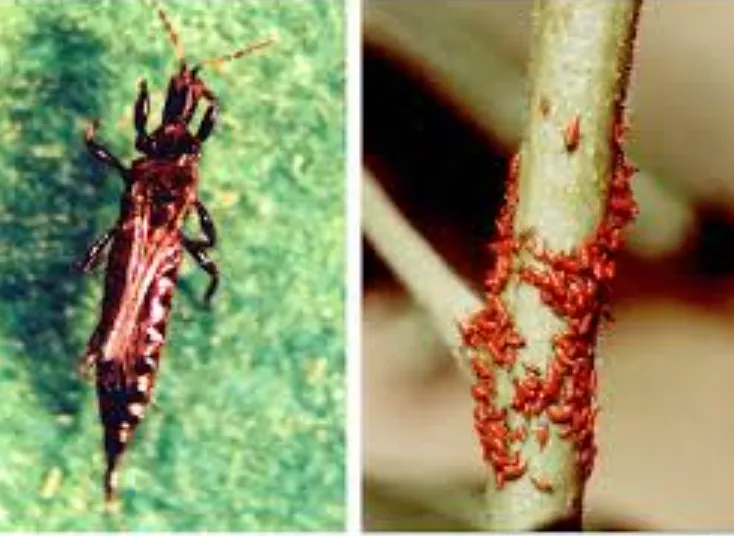
The main diet of pest thrips on plants consists of plant cell contents. Thrips do not chew large holes like caterpillars. Instead, they use specialized mouthparts to scrape or puncture the plant surface and suck out liquid from damaged cells. This feeding style creates pale, silvery, or bronze scars.
Flowers, Buds, and Young Leaves
Thrips prefer tender plant parts because these tissues are easier to feed on. They commonly attack flower buds, petals, new leaves, shoots, and developing fruits. On ornamentals, the biggest problem is cosmetic damage. On vegetables and fruit crops, feeding may reduce quality, market value, or plant vigor.
Pollen and Fungi
Not all thrips feed only on plant cells. Some species feed on pollen, fungal spores, or decaying organic matter. Flower-dwelling thrips may move between blossoms while feeding, which can sometimes help pollen transfer.
Predatory Thrips
Some thrips are beneficial predators. These species may feed on mites, insect eggs, or other tiny arthropods. This makes the order Thysanoptera ecologically diverse. Some members are pests, while others are part of natural biological control.
Food Collection Process
Thrips collect food through a scraping-and-sucking method. They rupture the outer layer of plant cells and drink the released contents. This is why the damage looks like streaks, scarring, or silvery patches rather than large bite marks.
How Long Does A Thrips Live
The lifespan of a thrips depends strongly on species, temperature, humidity, food quality, and whether it lives outdoors, indoors, or in a greenhouse. In warm conditions, many pest thrips develop quickly and may produce multiple generations in a short period. In cooler weather, development slows, and survival may depend on sheltered places such as soil, weeds, bark, crop debris, or greenhouse structures.
Key lifespan points include:
- The egg stage is short but protected: eggs are usually hidden within plant tissue, making them difficult to detect. Depending on temperature and species, eggs may hatch within a few days.
- Young thrips feed quickly: Larvae or nymphs often feed for several days before moving into the resting stage. This is when much of the visible plant damage begins.
- Pupal stage is brief but strategic: Prepupal and pupal stages may last only a few days under favorable conditions, but they are often protected in soil, debris, or hidden plant parts.
- Adults may live from days to weeks: Adult thrips can continue feeding and laying eggs. In protected environments, adults may survive longer than they would outdoors.
- Warm temperatures speed up the life cycle: Greenhouse conditions can allow some thrips to complete development in about 7–14 days, making repeated monitoring essential.
- Cool temperatures slow reproduction: Thrips may survive cool periods, but development can be reduced or stopped when temperatures are too low.
- Host plant quality matters: Tender, healthy, nitrogen-rich plant growth may support faster feeding and reproduction.
- Indoor plants can support year-round populations: Houseplants and greenhouses provide stable temperature, shelter, and continuous food, allowing thrips to remain active outside the normal outdoor growing season.
- Outdoor populations fluctuate naturally: Rain, wind, predators, humidity, and seasonal plant growth all influence survival.
- Infestation length is longer than individual lifespan: Even if one adult lives only a few weeks, overlapping generations can make the infestation seem continuous.
In practical terms, gardeners should think of thrips control as life-cycle management, not just adult insect removal. If eggs and pupae remain, adults may reappear after treatment.
Thrips Lifespan in the Wild vs. in Captivity
Lifespan in the Wild
In the wild, thrips face many natural pressures. Rain can wash them from plants, predators may feed on them, and plant quality can change with the season. Outdoor thrips may live shorter lives because they are exposed to heat, cold, wind, dehydration, and natural enemies.
However, wild environments also provide many hiding places. Thrips can survive on weeds, grasses, flowers, crop residues, and alternative host plants. This allows populations to return to gardens or farms when conditions improve.
Lifespan in Captivity or Controlled Conditions
For thrips, “captivity” usually means laboratory colonies, greenhouses, indoor plant collections, or protected growing spaces. In these environments, temperature and food may remain stable. Because there are fewer predators and less weather stress, thrips may reproduce rapidly.
Greenhouses are especially favorable because they provide warmth, humidity, and a continuous supply of plant material. This is why greenhouse thrips problems can be persistent if monitoring, sanitation, and biological control are not maintained.
Main Difference
The main difference is environmental stability. In the wild, thrips face more natural limits. In controlled conditions, they may complete their life cycle more quickly and form larger populations if not managed early.
Importance of Thrips in this Ecosystem
Part of the Food Web
Although many gardeners know thrips as pests, they are also part of the food web. Predatory mites, minute pirate bugs, lacewing larvae, spiders, and other small predators eat them. These predator-prey relationships help maintain ecological balance.
Pollination Role
Some thrips visit flowers and carry pollen. Recent research highlights that thrips can contribute to pollination in certain plant groups, especially where they are abundant in flowers. They are not as famous as bees or butterflies, but in some ecosystems, they may support seed or fruit production.
Decomposition and Fungal Feeding
Some thrips feed on fungi or decaying material. These species may help break down organic matter indirectly by interacting with fungi and plant debris.
Natural Population Balance
Thrips also help support populations of beneficial predators. If all small insects are removed from an ecosystem through heavy pesticide use, predator populations may decline. Later, pest outbreaks can become worse because natural control has been weakened.
Agricultural Importance
From an agricultural view, thrips are important because they can damage crops and transmit viruses. Understanding their life cycles helps farmers and gardeners design more effective control programs without harming beneficial insects unnecessarily.
What to Do to Protect Them in Nature and Save the System for the Future
1. Avoid Unnecessary Broad-Spectrum Pesticides
- Do not spray chemicals unless you confirm that pest thrips are present.
- Broad-spectrum pesticides can kill beneficial insects that naturally control thrips.
- Use selective, low-impact options only when needed.
2. Support Natural Predators
- Encourage minute pirate bugs, lacewings, predatory mites, and spiders.
- Grow diverse flowering plants that provide pollen, nectar, and habitat.
- Avoid destroying every insect in the garden.
3. Maintain Plant Diversity
- A diverse garden supports a stronger ecosystem.
- Mixed planting reduces the risk of a single pest spreading rapidly.
- Native plants can support local beneficial insects.
4. Use Integrated Pest Management
- Inspect plants regularly.
- Remove badly infested leaves or flowers.
- Use blue or yellow sticky traps for monitoring.
- Wash plants with water before using stronger treatments.
5. Keep Soil and Plant Debris Healthy
- Remove heavily infested debris.
- Compost responsibly.
- Avoid leaving diseased or pest-filled plant material near healthy crops.
- Maintain soil health so plants can better tolerate minor pest pressure.
The goal is not to protect harmful outbreaks, but to protect the ecosystem balance. Thrips should be managed carefully, not with unnecessary destruction of all insect life.
Fun & Interesting Facts About Thrips
- Thrips is both singular and plural. You can say “one thrip” and “many thrips.”
- Their scientific order, Thysanoptera, means fringed wings.
- Most thrips are so small that many people only notice them after plant damage appears.
- Some thrips can reproduce without mating through parthenogenesis.
- Thrips do not usually make large holes in leaves. Their damage looks like silver streaks, scars, or pale speckles.
- Some species are serious plant pests, but others are predators or fungal feeders.
- Adult thrips may be carried by wind, helping them spread between plants and gardens.
- Blue sticky traps are often useful for monitoring flying thrips.
- Thrips often hide inside flowers and buds, which makes them difficult to remove.
- Some thrips may help pollinate certain plants, showing that even tiny insects can have ecological importance.
Frequently Asked Questions (FAQs)
Q: What are thrips?
A: Thrips are tiny, slender insects from the order Thysanoptera. Many species feed on plants by scraping plant tissue and sucking out cell contents. Some are pests, while others feed on fungi, pollen, or small insects.
Q: What are the main stages of the thrips life cycle?
A: The main thrips life cycle stages are egg, larva or nymph, prepupa/pupa, and adult. The larval stage usually causes much of the visible plant damage, while adults spread and lay eggs.
Q: What does thrips damage look like?
A: Thrips damage may look like silvery streaks, white or bronze speckles, curled leaves, rough scars, deformed flowers, brown petal edges, and tiny black fecal spots.
Q: How do I know if I have thrips on plants?
A: Look under leaves, inside flowers, and around new growth. Shake the plant over white paper and check for tiny moving insects. Blue or yellow sticky traps can also help detect adult thrips.
Q: How to get rid of thrips naturally?
A: Start by isolating infested plants, pruning damaged parts, washing leaves, using sticky traps, removing plant debris, and encouraging natural predators. If needed, use low-impact treatments carefully and repeat according to the life cycle.
Q: Can thrips live on human skin?
A: No, thrips on skin do not live or reproduce on humans. Some may land on people outdoors and cause mild irritation, but they are plant-associated insects, not human parasites.
Q: Why do thrips come back after treatment?
A: Thrips often return because eggs are hidden inside plant tissue, and pupae may be protected in soil or debris. Successful control must target multiple life stages, not only visible adults.
Conclusion
The thrips life cycle is fast, hidden, and highly adaptable, which makes thrips one of the most challenging pests for gardeners, farmers, and indoor plant owners. From eggs inserted inside plant tissue to feeding larvae, protected pupae, and mobile adults, each stage helps thrips survive and spread. Understanding this cycle is key to recognizing thrips damage, managing thrips on plants, and choosing safer ways to get rid of thrips without harming the entire ecosystem.
Although many thrips are plant pests, they are not useless insects. Some support food webs, feed on fungi, prey on tiny pests, or even contribute to pollination. The best approach is balanced management: monitor early, protect beneficial insects, keep plants healthy, and use targeted control only when needed. By understanding thrips deeply, we can protect plants while also respecting the natural systems that sustain gardens and farms.
Also Read: stages of butterfly life cycle





Leave a Reply