
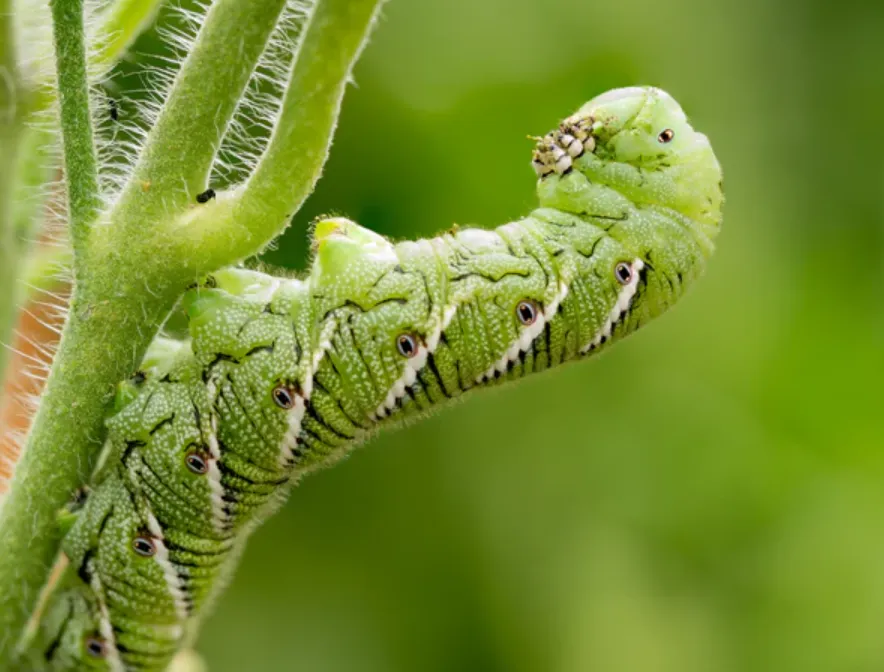
The tomato caterpillar life cycle usually refers to the development of the tomato hornworm, the large green caterpillar often found feeding on tomato plants. Scientifically, the true tomato hornworm is Manduca quinquemaculata, the larval stage of the five-spotted hawk moth. A closely related species, Manduca sexta, known as the tobacco hornworm, is also commonly found on tomato plants and is often mistaken for the tomato hornworm. Both belong to the moth family Sphingidae.
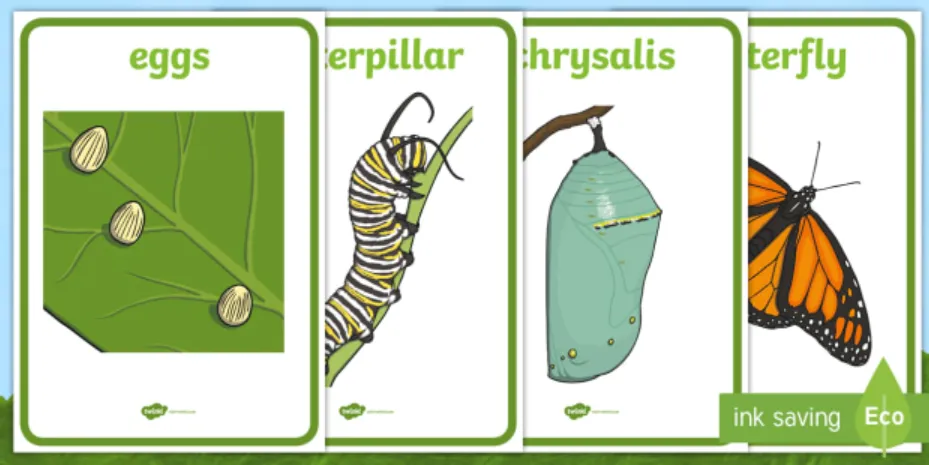
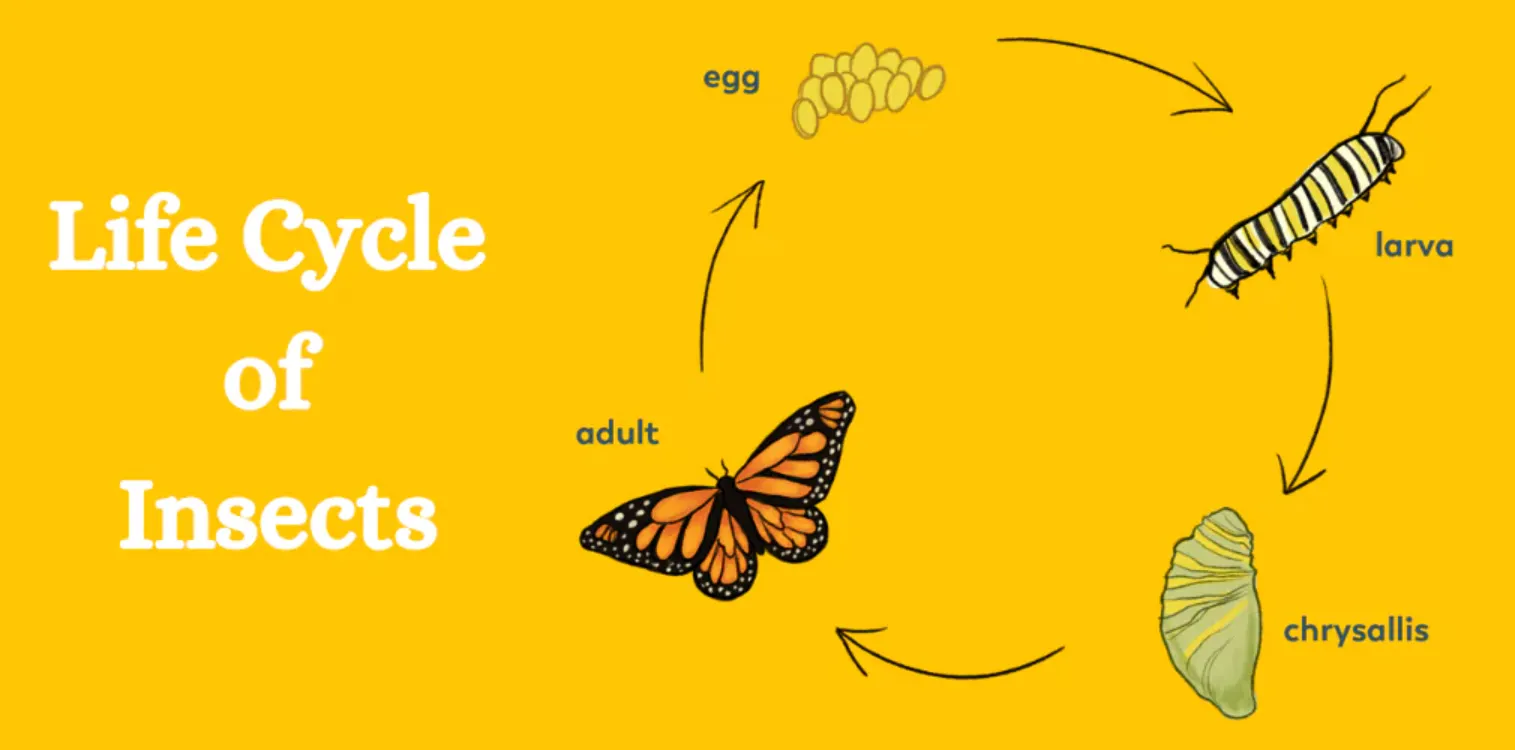
This insect passes through a complete four-stage life cycle: egg, larva, pupa, and adult moth. The larval stage is the one gardeners notice most because the caterpillar feeds heavily on tomato leaves, stems, flowers, and sometimes fruit. Young larvae are small and difficult to see, but mature caterpillars can become 3–4 inches long and may defoliate tomato plants quickly if present in large numbers.
Although the green tomato caterpillar is usually considered a garden pest, its adult moth form also plays a role in nature by feeding on nectar. Understanding the tomato caterpillar life cycle helps gardeners manage plant damage while still respecting the insect’s place in the ecosystem.
Quick Answers: Most Common Questions
Q: What does a tomato caterpillar turn into?
A: A tomato caterpillar turns into a large hawk moth or sphinx moth, commonly called the five-spotted hawk moth when it is the true tomato hornworm.
Q: How many stages are in the tomato caterpillar life cycle?
A: The tomato caterpillar life cycle has four stages: egg, larva, pupa, and adult moth.
Q: Are tomato caterpillars harmful to tomato plants?
A: Yes. The caterpillar stage can damage tomato plants by eating leaves, stems, blossoms, and sometimes fruit, especially when several larvae are present on the same plant.
Quick Life Cycle Table
| Life Stage | What Happens | Typical Location | Key Point |
| Egg | Adult moth lays small eggs, usually on leaf undersides | Tomato or other nightshade leaves | Eggs hatch into tiny larvae |
| Larva | Caterpillar feeds heavily and grows fast | Leaves, stems, flowers, fruit | Most damaging stage |
| Pupa | Mature larvae burrow into the soil and transform | Soil, often a few inches deep | Overwintering stage in many areas |
| Adult Moth | Hawk moth emerges, mates, and lays eggs | Garden, field, flowers | Adult feeds on nectar |
Important Things That You Need To Know
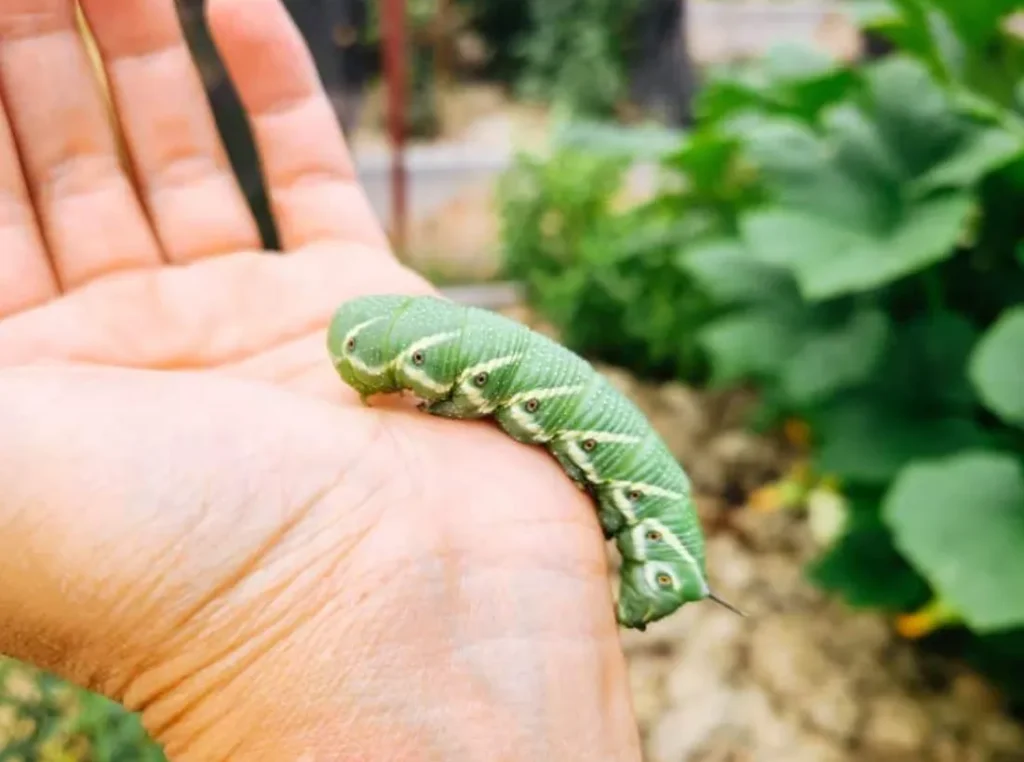
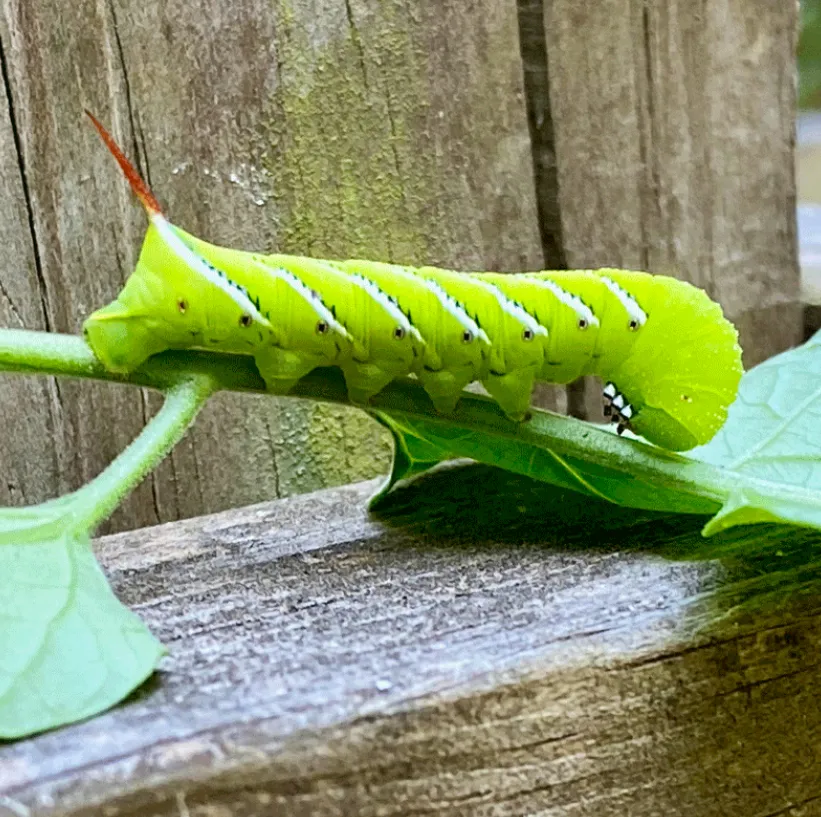
The term “tomato caterpillar” is a general gardening term, but the insect most people mean is the tomato hornworm. This caterpillar is famous for its bright green body, white diagonal markings, and rear horn. Because it blends almost perfectly with tomato leaves, many gardeners first notice the damage before they see the insect itself.
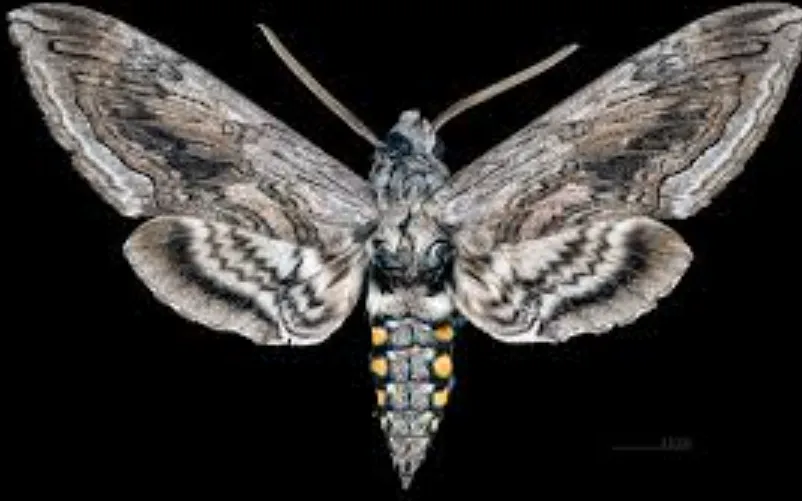
The term tomato caterpillar moth refers to the adult stage. The caterpillar becomes a large moth known as a hawk moth or sphinx moth. These moths are strong flyers and often feed at dusk or night by hovering near flowers and drinking nectar through a long proboscis.
A horned tomato caterpillar, or horn tomato caterpillar, is simply another common name for the larval stage. The “horn” is located at the back end of the caterpillar. It may look scary, but it is not a stinger and does not poison people.
A green tomato caterpillar can refer to either the tomato hornworm or the tobacco hornworm. Both are green, large, and found on tomato plants. One practical difference is their markings: tomato hornworms usually have V-shaped side marks and a darker horn, while tobacco hornworms often show diagonal white stripes and may have a reddish horn. However, both feed on plants in the nightshade family, including tomato, pepper, eggplant, and potato.
The History of Their Scientific Naming, Evolution, and Origin
Scientific naming of the tomato caterpillar
The true tomato hornworm is scientifically named Manduca quinquemaculata. The word Manduca is the genus name, while quinquemaculata refers to the five-spotted pattern associated with the adult moth. It belongs to the order Lepidoptera, the insect order that includes butterflies and moths, and the family Sphingidae, known for powerful flying moths.
Relationship with tobacco hornworm
The tobacco hornworm, Manduca sexta, is closely related and is often confused with the tomato hornworm. In many gardens, people may call both insects’ tomato caterpillars‘ because they feed on tomato plants. Agricultural extension sources frequently discuss these two species together because their appearance, feeding behavior, and control methods are very similar.
Evolution and origin
The tomato caterpillar evolved as a plant-feeding larva of a night-flying moth group. Its green color, strong chewing mouthparts, and leaf-like camouflage help it survive on host plants. The species is native to North America and has developed a close ecological connection with Solanaceae plants such as tomato, nightshade, and related crops.
Their Reproductive Process, Giving Birth And Rising Their Children
Adult moth mating
The reproductive process begins when adult hawk moths emerge from the soil after completing the pupal stage. They fly mainly during evening, night, or early morning hours. After mating, female moths search for suitable host plants where young larvae will have enough food after hatching.
Egg laying on host plants.
Female moths do not give birth to live young. Instead, they lay eggs, usually one at a time, on the undersides of host plant leaves. These host plants include tomato, pepper, eggplant, potato, and some wild nightshade plants. Oklahoma State Extension notes that adult moths deposit eggs at night and may lay many eggs during their reproductive period.
No parental care after egg laying
Unlike mammals or birds, tomato caterpillar moths do not raise their young. After the eggs are placed on a suitable host plant, the mother moth neither feeds, protects, nor trains the larvae. Survival depends on egg placement, camouflage, food availability, and the ability of young caterpillars to avoid predators.
Larvae grow independently
Once the eggs hatch, the tiny larvae begin feeding immediately. They grow through several molts, shedding their outer skin as their bodies expand. This rapid growth is why even a few larvae can create visible plant damage in a short time. The caterpillars later drop to the ground, burrow into the soil, and begin the pupal stage.
Stages of the Tomato Caterpillar Life Cycle
Stage 1: Egg stage
The egg stage begins when an adult female moth lays eggs on host plants. Eggs are usually placed on the undersides of leaves, where they are somewhat protected from direct sunlight and predators. Tomato plants are preferred, but eggs may also be placed on other nightshade plants.
This stage is shorter than the larval and pupal stages. When temperature and environmental conditions are suitable, the embryo develops inside the egg and hatches into a tiny caterpillar. Because the eggs are small and often hidden, gardeners rarely notice this stage.
Stage 2: Larva stage
The larva stage is the familiar tomato caterpillar stage. At first, the larva is small and easy to overlook. As it feeds, it grows rapidly and becomes the large green tomato caterpillar known as a hornworm.
This is the most destructive stage for tomato plants. The caterpillar feeds on leaves, stems, blossoms, and sometimes fruit. It often starts feeding near the upper parts of plants, leaving dark droppings below the feeding area.
Stage 3: Pupa stage
After feeding for several weeks, the mature larva leaves the plant and moves into the soil. There, it forms a pupa. During this stage, the body reorganizes internally and changes from a crawling caterpillar into a winged adult moth.
In many regions, hornworms overwinter as pupae in the soil. This means the insect may remain hidden underground until conditions become warm enough for adult emergence.
Stage 4: Adult moth stage
The adult is a strong-flying sphinx moth or hawk moth. It does not chew tomato leaves like the larva. Instead, it feeds on nectar from flowers using a long mouthpart.
Adult moths mate and lay eggs, restarting the life cycle. This adult stage is important because it spreads the population to new plants and gardens.
Their main diet, food sources, and collection process are explained
The main diet of the tomato caterpillar is plant tissue from members of the Solanaceae, or nightshade family. Tomato is the most common host, but the caterpillar may also feed on potato, eggplant, pepper, tobacco, petunia, and wild plants such as jimsonweed, horsenettle, and nightshade.
Main food sources
The caterpillar feeds on:
- Tomato leaves, especially tender upper leaves
- Soft stems and growing shoots
- Tomato blossoms
- Green or ripening tomato fruit, especially when larvae are larger
- Other nightshade crops, including pepper, eggplant, and potato
- Wild Solanaceae weeds, which may support populations outside gardens
How do they find and collect food
The green tomato caterpillar does not store food. Instead, it stays directly on or near the host plant and feeds continuously. Its green body helps it remain hidden among tomato leaves while it eats.
Young larvae usually begin with soft leaf tissue. As they grow larger, they can consume bigger sections of leaves and may leave bare stems behind. Mature larvae need more energy before pupation, so their feeding becomes more intense.
Adult moths have a different diet. They feed on nectar from flowers and are often active from dusk to dawn. This difference between the caterpillar diet and adult moth diet is a key feature of complete metamorphosis.
How Long Does A Tomato Caterpillar Live
The lifespan of a tomato caterpillar depends on temperature, climate, food supply, predators, and whether it is considered only the caterpillar stage or the full insect life cycle from egg to adult moth.
- Egg stage: This is usually the shortest stage. Eggs hatch when conditions are warm and suitable. They are often hidden on the undersides of leaves, so this stage may pass unnoticed by gardeners.
- Larval stage: The caterpillar stage commonly lasts around three to four weeks under favorable conditions. During this time, the larva feeds heavily and grows through several molts. Oklahoma State Extension describes larvae feeding for about three weeks before entering the soil to pupate.
- Pupal stage: The pupal stage may last a few weeks in warm seasons, but in cooler climates or late-season generations, the insect can overwinter as a pupa in the soil. This makes the pupal stage highly variable.
- Adult moth stage: Adult moths live long enough to feed, mate, and lay eggs. Their main role is reproduction and dispersal.
- Full life cycle: In warm conditions, the active life cycle can move from egg to adult in several weeks. In areas with winter, the cycle may stretch across seasons because the insect remains underground as a pupa.
- Number of generations: Depending on region and climate, there may be one or more generations per year. Warmer regions can support faster development and more activity.
- Survival challenges: Many tomato caterpillars do not reach adulthood. Predators eat eggs and small larvae, parasitic wasps attack larvae, and garden control methods can remove them before pupation.
- Garden observation period: Gardeners usually notice the caterpillar for only a short part of its life because it becomes visible mainly when it is large and already causing damage.
Tomato Caterpillar Lifespan in the Wild vs. in Captivity
Lifespan in the wild
In the wild, the tomato caterpillar life cycle is shaped by weather, predators, parasites, food quality, and seasonal timing. Eggs may be eaten before hatching. Small larvae are vulnerable to predation by insects and birds, as well as to environmental stress. Larger larvae are still at risk from parasitic wasps, especially braconid wasps, which lay eggs inside or on the caterpillar.
Wild caterpillars may live only a few days if predators find them early. Those that survive can feed for several weeks, pupate underground, and later emerge as adult moths.
Lifespan in captivity
In captivity, such as in controlled educational rearing, the insect may survive more reliably if provided with fresh host leaves, clean conditions, a suitable temperature, and a safe pupation space. However, captivity does not always mean a longer life. Poor ventilation, unsuitable food, overcrowding, or a lack of soil for pupation can reduce survival.
Captive observation is useful for learning, but it should be handled responsibly. Since hornworms are plant pests, they should not be released into gardens where they may damage crops.
Importance of the Tomato Caterpillar in this Ecosystem
Food source for natural enemies
The tomato caterpillar is part of the food web. Eggs and young larvae can be eaten by beneficial insects such as lady beetles and lacewings. Parasitic wasps may attack larger caterpillars. These natural enemies help balance pest populations in gardens and farms.
Adult moths as nectar feeders
The adult tomato caterpillar moth feeds on nectar. Hawk moths are known for hovering near flowers and drinking nectar with a long proboscis. This behavior can contribute to flower visitation, especially during evening and nighttime hours.
Role in plant-insect balance
Although tomato hornworms can damage crops, they also show how plant-insect relationships work in nature. Their dependence on nightshade plants connects them to both wild habitats and cultivated gardens.
Indicator of garden ecology
A garden with hornworms, parasitic wasps, predators, and host plants is part of a living system. The goal is not always total elimination. A balanced approach protects crops while allowing beneficial insects and ecological processes to continue.
What to do to protect them in nature and save the system for the future
Protect native habitats
- Keep some natural areas with native plants where moths, beneficial insects, and birds can live.
- Avoid destroying all wild vegetation around gardens, but manage invasive or harmful weeds carefully.
Use careful pest management
- Hand-pick tomato caterpillars from crop plants when damage is serious.
- Avoid broad-spectrum pesticides that kill beneficial insects along with pests.
Leave parasitized caterpillars when possible.
- If a hornworm has small white cocoons on its back, it has likely been parasitized by beneficial wasps.
- Leaving it in place helps more natural enemies emerge and control future hornworms.
Grow pollinator-friendly flowers
- Adult hawk moths feed on nectar.
- Night-blooming or evening-fragrant flowers can support moth activity while keeping food gardens monitored.
Keep soil health balanced
- Since pupae develop in soil, soil disturbance affects their survival.
- In vegetable beds, light post-harvest cultivation can reduce pest pressure, while separate natural areas can support broader biodiversity.
Fun & Interesting Facts About Tomato Caterpillar
- The horned tomato caterpillar has a rear horn, but the horn is not a dangerous stinger.
- The caterpillar’s green body provides excellent camouflage on tomato plants.
- Many gardeners first notice the damage, then discover the caterpillar hiding nearby.
- The adult moth is much less damaging to tomato plants than the larva because it feeds on nectar, not leaves.
- Tomato hornworms can grow very quickly when food is abundant.
- The caterpillar belongs to the same broad insect order as butterflies and moths: Lepidoptera.
- The adult moth is sometimes mistaken for a hummingbird because it can hover near flowers.
- Tomato hornworms and tobacco hornworms look very similar, so gardeners often confuse them.
- Their droppings, called frass, are often easier to notice than the caterpillar itself.
- A hornworm covered with white wasp cocoons should usually be left alone because it helps beneficial wasps multiply.
Frequently Asked Questions (FAQs)
Q: What is the tomato caterpillar’s life cycle?
A: The tomato caterpillar life cycle includes four stages: egg, larva, pupa, and adult moth. The larva is the green caterpillar stage that feeds on tomato plants.
Q: What is a tomato caterpillar moth?
A: A tomato caterpillar moth is the adult stage of the tomato hornworm. The true tomato hornworm becomes the five-spotted hawk moth, a large sphinx moth.
Q: Is a horned tomato caterpillar poisonous?
A: No. The horned tomato caterpillar may look intimidating, but the rear horn is not a stinger and is not poisonous to humans.
Q: What do green tomato caterpillars eat?
A: Green tomato caterpillars mainly eat tomato leaves, but they may also feed on stems, blossoms, fruit, pepper, eggplant, potato, and wild nightshade plants.
Q: How can I find tomato caterpillars on my plants?
A: Look for missing leaves, bare stems, chewed fruit, and dark droppings on lower leaves. The caterpillar is usually nearby but may be hidden by camouflage.
Q: Should I kill every tomato caterpillar?
A: Not always. If it is damaging your crop, hand removal is practical. But if it has white parasitic wasp cocoons on its back, leaving it can help natural biological control.
Q: How long does the tomato caterpillar stage last?
A: The larval stage commonly lasts around three to four weeks in favorable conditions, but the full life cycle varies with climate and season.
Conclusion
The tomato caterpillar life cycle is a fascinating example of complete metamorphosis. From a tiny egg hidden under a leaf, it grows into a powerful green tomato caterpillar, enters the soil as a pupa, and finally emerges as a large hawk moth. For gardeners, the larval stage is important because it can quickly damage tomato plants, especially when several caterpillars feed simultaneously.
However, the tomato caterpillar is more than just a pest. It is also part of a wider ecosystem involving host plants, predators, parasitic wasps, soil life, and nectar-feeding moths. The best approach is balanced management: protect tomato plants, encourage beneficial insects, avoid unnecessary chemical use, and understand the insect’s natural role. By learning about its stages, diet, lifespan, and ecological importance, gardeners can make smarter, more nature-friendly decisions.
Also Read: pantry moth life cycle





Leave a Reply