
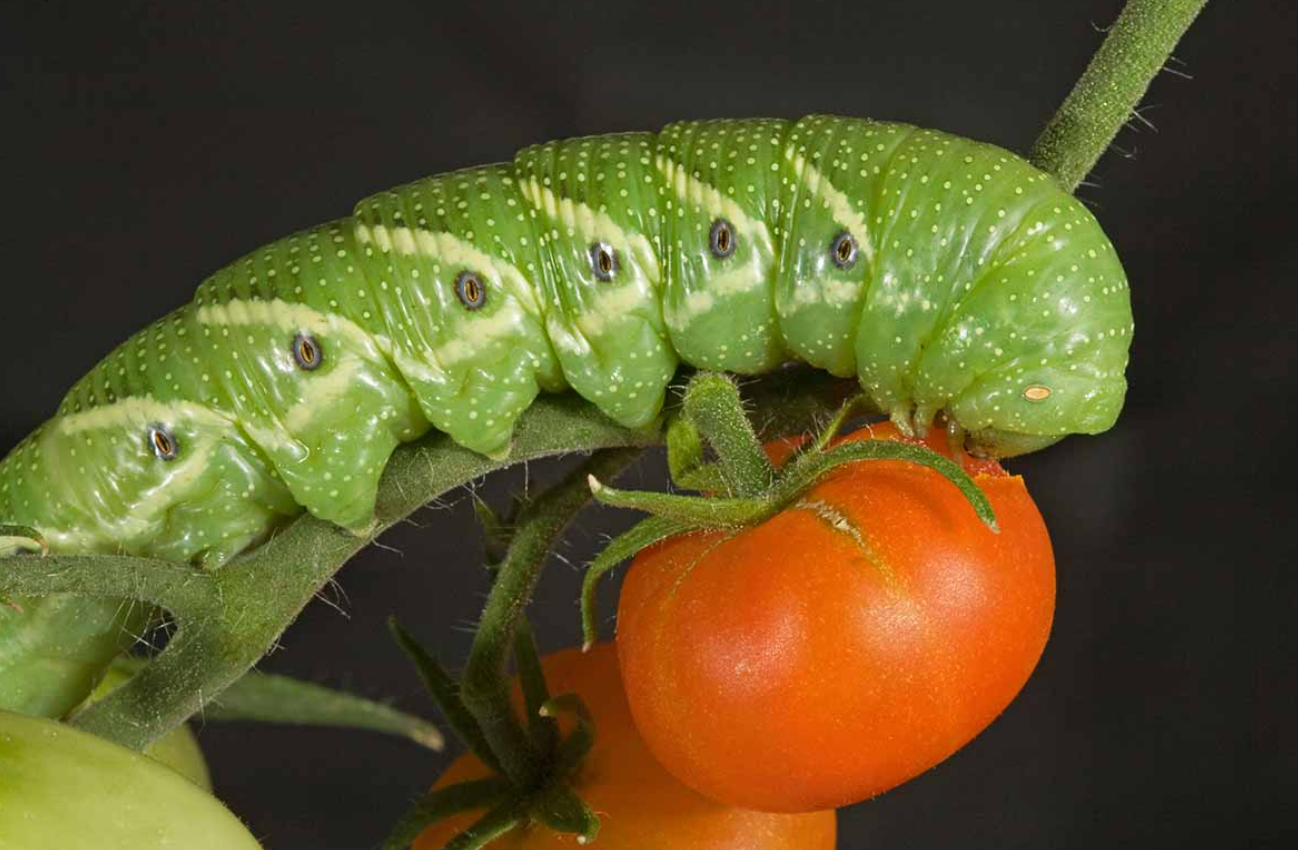
The tomato worm life cycle is one of the most interesting transformations in the garden. The insect people usually call a tomato worm is actually the tomato hornworm, the large green caterpillar of the five-spotted hawkmoth (Manduca quinquemaculata). It is famous for eating tomato leaves very quickly, especially during its final larval stage. The larva feeds mostly on plants from the nightshade family, including tomato, potato, pepper, eggplant, and tobacco.
Many gardeners first notice a horned tomato worm when tomato leaves suddenly disappear overnight. This happens because the caterpillar is well-camouflaged and usually feeds when the light is low. After feeding for several weeks, it drops to the ground, burrows into the soil, becomes a pupa, and later emerges as a large tomato worm moth, also called a hawk moth or sphinx moth.
Q: What does a tomato worm turn into?
A: A tomato worm turns into a five-spotted hawkmoth, a large night-flying moth.
Q: How long is the tomato worm life cycle?
A: In warm weather, the active cycle from egg to adult can take roughly 30 to 50 days, but timing changes with temperature, region, and season.
Q: Is a tomato worm harmful?
A: It is harmful to tomato plants during the caterpillar stage, but the adult moth can help pollinate flowers.
Quick Life Cycle Table
| Stage | What Happens | Usual Time | Easy Identification |
| Egg | A female moth lays eggs on tomato or other host leaves | A few days | Small, smooth, pale green eggs |
| Larva / Tomato worm | A caterpillar eats leaves and grows fast | About 3–4 weeks | Big green body, white V marks, rear horn |
| Pupa | Mature larvae burrow into the soil and transform | About 2 weeks or longer | Brown pupa underground |
| Adult moth | Hawk moth emerges, mates, and lays eggs | 2–3 weeks | Large gray-brown moth with five side spots |
| Overwintering | Cold-season survival happens as pupae in soil | Winter months | Hidden below the soil surface |
The tomato hornworm life cycle has four main stages: egg, larva, pupa, and adult moth. In many areas, there may be one or two generations per year, while warmer regions can support faster development.
The History of Their Scientific Naming
The tomato worm’s scientific name is Manduca quinquemaculata. It belongs to the family Sphingidae, a group of strong-flying moths commonly called hawk moths or sphinx moths. The adult form is known as the five-spotted hawkmoth because it usually has five pairs of yellow-orange markings along its abdomen.
The name Manduca quinquemaculata was formally linked with the species by Haworth in 1803. Older scientific names and synonyms have appeared in the taxonomic literature over time, but Manduca quinquemaculata is the accepted name used today.
The word quinquemaculata comes from Latin-style naming and means five-spotted. This directly describes the adult moth’s side markings. The common name tomato hornworm comes from two simple features: it often feeds on tomato plants, and the caterpillar has a horn-like projection on the back end of its body.
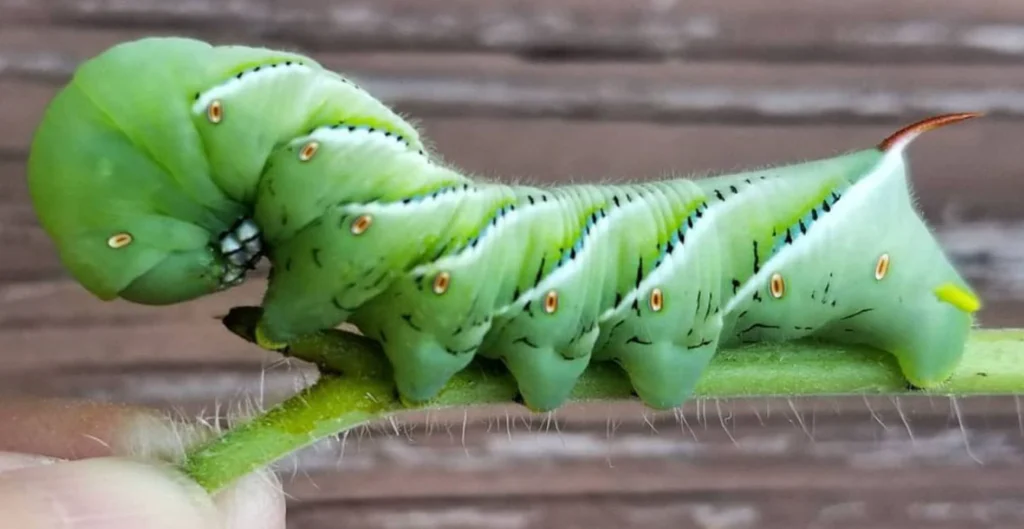
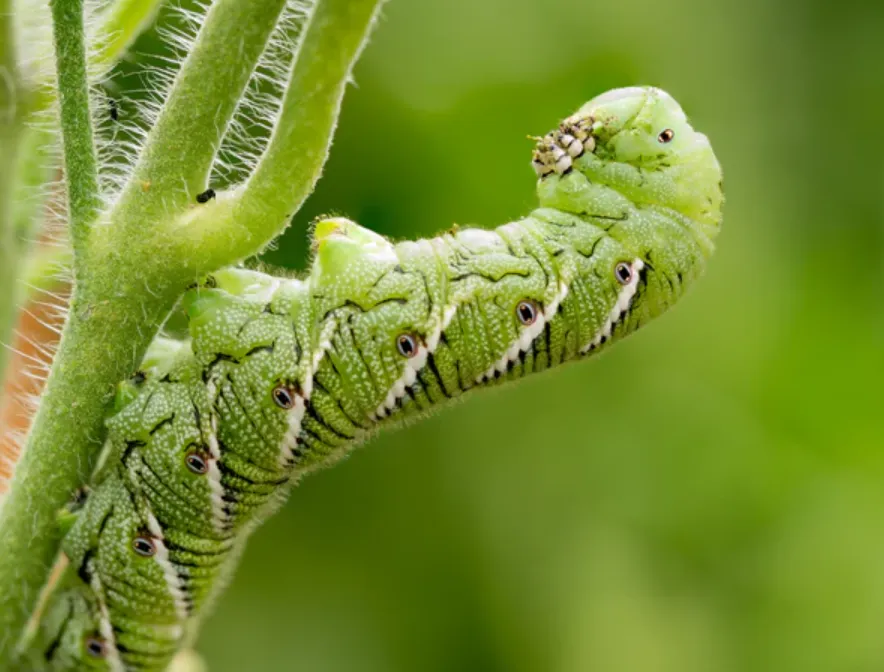
This insect is sometimes confused with the tobacco hornworm, or Manduca sexta. Both look similar, but the tomato hornworm usually has white V-shaped side markings and a dark rear horn, while the tobacco hornworm has more diagonal stripes and often a reddish horn.
Their Evolution And Their Origin
The tomato worm belongs to the insect order Lepidoptera, the same order that includes butterflies and moths. Its family, Sphingidae, is known for large-bodied moths, strong wings, and long feeding tubes called proboscises. These moths often hover near flowers while drinking nectar, almost like tiny hummingbirds.
The origin of the tomato hornworm is closely linked to the natural history of nightshade plants, also known as the family Solanaceae. This plant family includes wild tobacco, tomato, potato, eggplant, pepper, and many wild relatives. The caterpillar developed the ability to feed on these plants even though many nightshades contain strong chemical defenses.
This relationship shows a classic pattern in insect evolution. Plants develop defenses to avoid being eaten, while some insects slowly adapt to feed on those plants. Over many generations, the horned tomato worm became closely linked with nightshade hosts.
The adult moth also fits an important evolutionary role. Its long proboscis helps it feed from deep flowers that many smaller insects cannot reach. This makes some hawk moths useful nighttime pollinators.
The tomato worm’s face and body shape also help with survival. The green color blends with leaves, the side markings break up its body outline, and the rear horn may make predators hesitate. The horn looks dangerous, but it is not a stinger.
Today, Manduca quinquemaculata is mainly known from North America and is common in many gardens where tomatoes and related plants are grown. Its success stems from a powerful mix of camouflage, rapid growth, soil pupation, and flexible feeding on multiple host plants.
Their main food and its collection process
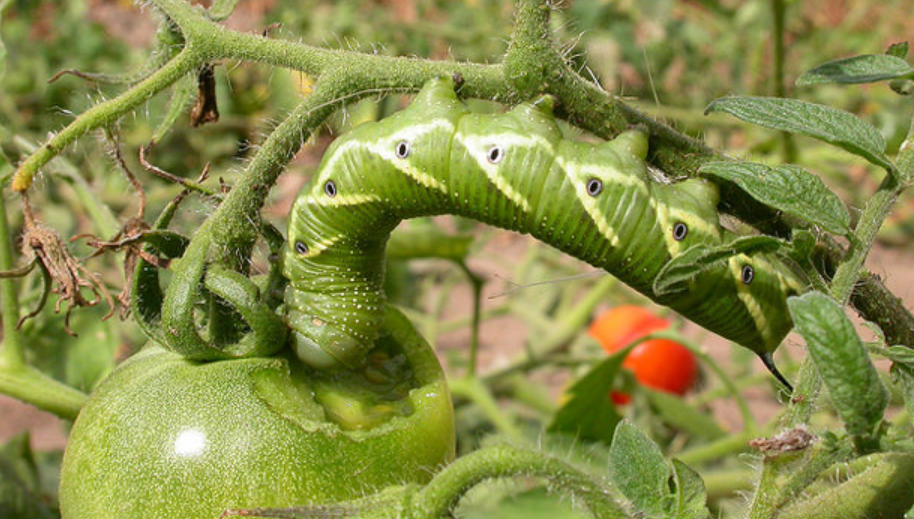
The main food of the tomato worm is the soft green tissue of nightshade plants. In gardens, its favorite host is usually the tomato plant, but it may also feed on potato, pepper, eggplant, and tobacco. These plants provide the caterpillar with enough moisture, energy, and plant protein to grow quickly.
The feeding process is simple but powerful.
- Egg placement: The female tomato worm moth lays eggs on host plant leaves, often on the underside or surface of leaves.
- Early feeding: After hatching, the tiny larva begins eating soft leaf tissue.
- Hidden feeding: Young caterpillars usually stay hidden under leaves or near stems.
- Fast growth: As the larva grows, it eats more each day and can remove large parts of leaves.
- Final-stage feeding: Mature hornworms can strip tomato branches quickly because their body size and appetite increase rapidly.
- Low-light activity: They often feed at night or early morning, which is why gardeners may miss them during the day.
A useful sign is dark green or black droppings, called frass, under damaged leaves. When you see missing leaves and frass, a large tomato hornworm is often nearby.
The adult moth has a different food habit. Instead of chewing leaves, it drinks flower nectar using a long proboscis. Adults are most active from dusk to dawn and may visit night-blooming flowers.
So, the caterpillar stage is a heavy plant eater, while the adult stage is a nectar-feeding moth.
Important Things That You Need To Know
The term “tomato worm” usually refers to the tomato hornworm, but many people search for it under different names. Understanding these names helps you identify the insect correctly and avoid confusion.
The tomato worm moth is the adult stage of the caterpillar. It is not a separate insect. The green worm you see on tomato plants later becomes a large gray-brown hawk moth known as the five-spotted hawkmoth.
The phrase “horned tomato worm” refers to the caterpillar’s rear horn. This horn can look scary, but it does not sting people. The real issue is plant damage, not human danger.
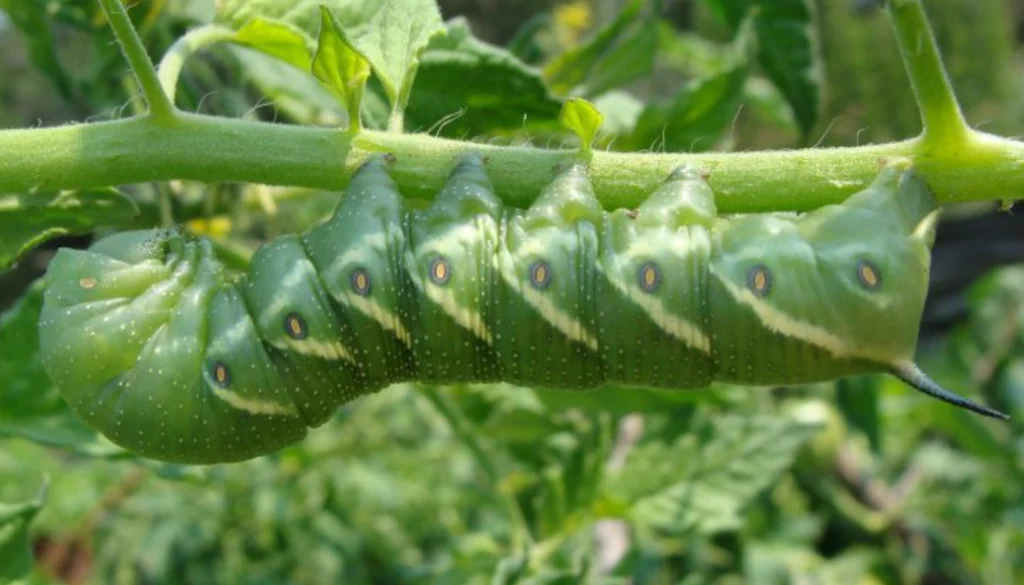
A tomato worm image is helpful for identification because this caterpillar blends into tomato leaves very well. Look for a large green body, white V-shaped marks, small false eye-like spots, and a dark horn at the rear.
The tomato worm face may look unusual in close-up photos because the caterpillar has chewing mouthparts, small eyes, and fleshy body folds. However, it is not aggressive toward humans.
The phrase “tomato worm life cycle” refers to the full life cycle from egg to caterpillar, then to pupa, and finally to the adult moth. The most damaging stage is the larva, while the most mobile stage is the moth.
Key identification points:
- Tomato worm: common name for the caterpillar
- Tomato hornworm: more accurate common name
- Manduca quinquemaculata: scientific name
- Tomato worm moth: adult five-spotted hawkmoth
- Horned tomato worm: describes the rear horn on the caterpillar
Knowing these terms makes pest control easier and helps gardeners protect plants without destroying every beneficial insect.
Their life cycle and ability to survive in nature
Egg Stage
The life cycle begins when a female five-spotted hawkmoth lays eggs on tomato or other host plant leaves. The eggs are usually small, smooth, and pale green. Female moths lay eggs at night after mating.
Larva Stage
After hatching, the larva becomes the familiar tomato hornworm. This is the most visible and destructive stage. The caterpillar feeds for around three to four weeks before becoming full-grown.
Pupa Stage
When mature, the larva drops from the plant and burrows into the soil. There, it changes into a brown pupa. This underground stage protects it from many predators and bad weather.
Adult Moth Stage
The adult tomato worm moth emerges from the soil. It flies mostly at dusk or night, feeds on nectar, mates, and starts the next generation.
Survival Ability
The tomato worm survives in nature through camouflage, fast growth, underground pupation, and seasonal timing. It can overwinter as a pupa in soil and return when warm weather and host plants become available.
Their Reproductive Process and raising their children
The reproductive process of the tomato worm moth begins after adult moths emerge from the soil. Males and females meet mainly during night activity. After mating, the female searches for suitable host plants where her larvae will have enough food.
Important points about reproduction:
- Mating happens after adult emergence: The adult moth comes out of the soil, expands its wings, becomes active, and mates.
- Egg laying occurs on host plants: Females lay eggs on tomato and other nightshade leaves.
- Eggs are placed near food: This helps the tiny caterpillars begin feeding immediately after hatching.
- One female can lay many eggs: Some extension sources note that females may lay very large numbers of eggs across plant visits.
- No parental care occurs: the moth neither guards the eggs nor feeds the young.
- Young larvae survive independently: Once hatched, the caterpillars must feed, hide, molt, and grow on their own.
- Molting supports growth: As the larva grows, it sheds its outer skin several times.
- Soil protects the final transformation: When feeding is complete, the mature larva burrows into soil and pupates.
So, tomato worms do not “raise children” like birds or mammals. Their survival strategy is different. The female lays eggs in the right place, and the young caterpillars survive through instinct, camouflage, and fast feeding.
This method works well because the host plant itself becomes the nursery. The leaf is both a shelter and a food source.
The importance of them in this Ecosystem
Food for Predators
The tomato hornworm is an important food source for birds, predatory insects, and parasitic wasps. Even though gardeners see it as a pest, many natural enemies depend on caterpillars like this for survival.
Host for Parasitic Wasps
One of the most important natural controls is the braconid wasp. These tiny wasps lay eggs inside hornworms. Their larvae later form white cocoons on the caterpillar’s body. If you see a hornworm covered with white cocoons, it is usually better to leave it because it can help produce more beneficial wasps.
Pollination by Adult Moths
The adult five-spotted hawkmoth feeds on nectar and can visit flowers at night. Hawk moths are known for hovering near flowers and using long proboscises to reach nectar. This helps move pollen between some flowers.
Part of Natural Balance
The tomato worm life cycle connects plants, insects, soil, predators, and flowers. The caterpillar feeds on plants, the pupa lives in soil, the adult moth drinks nectar, and predators control its population.
Soil and Seasonal Cycle
Because the pupa stays underground, the insect also connects garden plants to soil ecology. Its survival depends on soil conditions, seasonal temperature, and plant availability.
What to do to protect them in nature and save the system for the future
A balanced approach is better than killing every tomato worm you see. The goal is to protect crops while maintaining a healthy ecosystem.
- Handpick only heavy feeders: Remove hornworms that are actively destroying tomato plants, especially if they are not parasitized.
- Leave parasitized hornworms: If you see white wasp cocoons on the caterpillar, leave it in place to support beneficial wasps.
- Avoid broad chemical sprays: Strong insecticides can kill pollinators, predators, and helpful insects along with pests.
- Grow nectar plants: Flowers such as dill, parsley, marigold, alyssum, and other small-flowered plants can support beneficial insects.
- Check tomato plants regularly: Look under leaves, near stems, and around damaged branches.
- Protect soil life: Since pupae live underground, avoid unnecessary deep tilling in wildlife-friendly garden areas.
- Use organic controls carefully: Products like Bt can affect caterpillars, so use them only when needed and follow label directions.
- Encourage birds and natural predators: A diverse garden with shrubs, flowers, and water can attract them, helping control pests.
- Separate crop protection from ecosystem protection: In a vegetable bed, you may remove pests. In wild areas, let moths and caterpillars complete their role.
- Teach correct identification: Knowing the difference between tomato hornworm, tobacco hornworm, and other caterpillars prevents unnecessary killing.
This approach protects tomato plants without breaking the natural system that supports pollinators and pest-controlling insects.
Frequently Asked Questions (FAQs)
Q1: What is a tomato worm?
A: A tomato worm is usually the tomato hornworm, the green caterpillar of the five-spotted hawkmoth, Manduca quinquemaculata.
Q2: What does a tomato worm turn into?
A: It turns into a large gray-brown tomato worm moth, also called a five-spotted hawkmoth or sphinx moth.
Q3: How long does the tomato worm life cycle take?
A: In warm conditions, the cycle can take about 30 to 50 days, but it may be longer if the insect overwinters as a pupa.
Q4: Is the horned tomato worm poisonous?
A: No. The rear horn looks dangerous, but it does not sting. The main problem is damage to tomato plants.
Q5: What does a tomato worm eat?
A: It mainly eats leaves of tomato, potato, pepper, eggplant, tobacco, and other nightshade plants.
Q6: Why are tomato worms hard to find?
A: Their green bodies blend with tomato leaves. Look for missing leaves, chewed stems, and dark droppings called frass.
Q7: Should I kill tomato worms with white cocoons?
A: It is better to leave them. The white cocoons are usually from braconid wasps, which help naturally control hornworm populations.
Q8: What is the difference between the tomato hornworm and the tobacco hornworm?
A: The tomato hornworm usually has white V-shaped marks and a dark horn. The tobacco hornworm usually has diagonal white stripes and a reddish horn.
Conclusion
The tomato worm life cycle shows how one garden insect can be both a pest and an important part of nature. As a caterpillar, the tomato hornworm can damage tomato plants very quickly. It eats leaves, grows fast, and hides well among green stems. But this same insect later becomes the five-spotted hawkmoth, a strong night-flying moth that feeds on nectar and may help pollinate flowers.
Understanding the stages of egg, larva, pupa, and adult moth helps gardeners manage the problem wisely. Instead of using harsh methods, it is better to inspect plants, handpick harmful caterpillars, protect beneficial wasps, and support a healthy garden ecosystem.
The best solution is balance. Protect your tomatoes while also respecting the natural role of the tomato worm, its predators, and its adult moth form. A healthy garden is not insect-free; it is naturally controlled.
Also Read: life cycle of fungal





Leave a Reply