
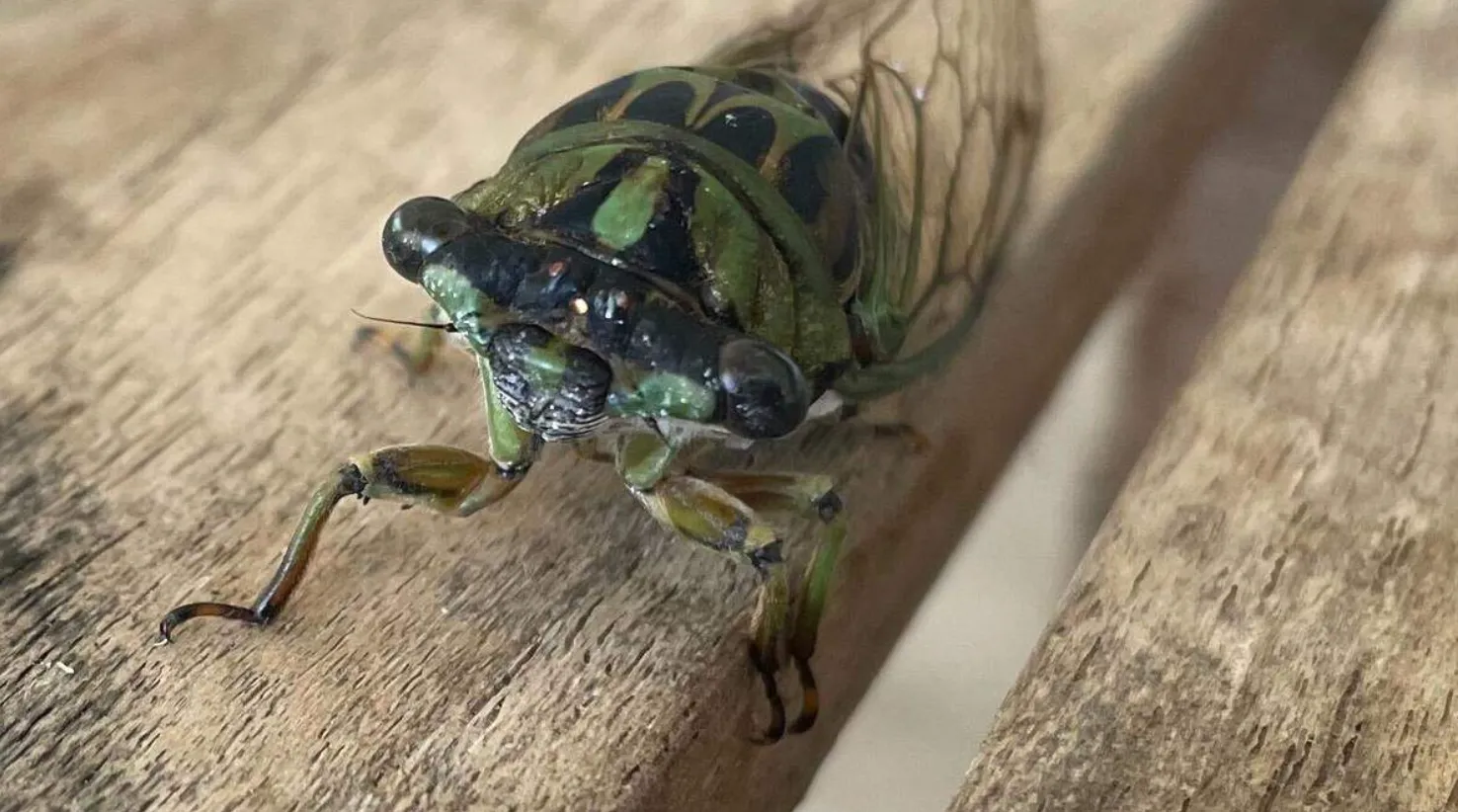
The cicada’s’s life cycle is one of the most fascinatine stories in the insect world. A cicada may look like a simple, noisy summer insect, but most of its life is spent hidden underground as a nymph, feeding slowly from tree roots before emerging into the open air as a winged adult. Cicadas belong to the insect family Cicadidae, and more than 3,000 species are known from tropical and temperate regions around the world. They live in forests, grasslands, deserts, gardens, and urban areas where suitable trees or shrubs are available.
Some cicadas appear every summer, while famous periodical cicadas emerge in huge numbers after 13 or 17 years underground. As of 2026, UConn’s Periodical Cicada Information Pages notes that no major U.S. periodical cicada emergence is expected in 2026, though off-cycle “stragglers” may still appear.
Q: What is the cicada bug’s life cycle?
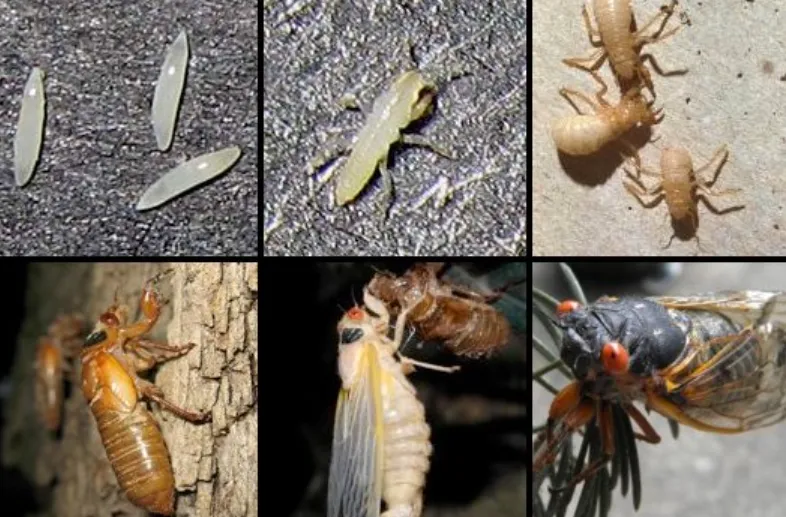
A: The cicada life cycle has three main stages: egg, nymph, and adult.
Q: How long does a cicada bug live?
A: Many annual cicadas develop underground for several years, while periodical cicadas live underground for 13 or 17 years before becoming adults.
Q: Why does a cicada bug make a sound?
A: Male cicadas make sound mainly to attract females for mating, using special sound organs called tymbals.
Quick Life Cycle Table
| Stage | What Happens | Time Frame | Easy Sign to Notice |
| Egg | Females lay eggs in small slits in twigs or branches | Usually 6–10 weeks | Tiny branch cuts or twig flagging |
| Young Nymph | Newly hatched nymph drops to the ground and burrows into the soil | Starts after hatching | Rarely seen above ground |
| Growing Nymph | Feeds on root fluids and molts through several stages | Often 2–5 years in many species; 13/17 years in periodical cicadas | Underground tunnels, rare surface holes |
| Final Nymph | Climbs out, attaches to a tree, fence, wall, or plant | Spring/summer emergence period | Brown shell left behind |
| Adult Cicada | Hardens wings, sings, mates, lays eggs, then dies | Usually, a few weeks | Loud buzzing sound and clear wings |
Cicadas go through incomplete metamorphosis, meaning they do not have a caterpillar-like larval stage or a pupal stage. Instead, the young cicada is a nymph that gradually grows and molts until it becomes a winged adult. Arizona State University’s Ask A Biologist notes that cicadas pass through five nymph stages before the final molt.
Important Things That You Need To Know
A cicada bug is not a beetle, fly, or locust. It is a true bug in the order Hemiptera, meaning it has piercing-sucking mouthparts designed for taking plant fluids. Cicadas do not chew leaves like caterpillars, and they do not bite people for food. Britannica notes that cicadas have sap-sucking mouthparts and lack the mandibles needed for biting.
The cicada bug sound is produced mostly by males. Their bodies act like natural sound chambers, amplifying the buzz, whine, click, or scream. In places such as Arizona, cicadas are strongly associated with hot weather, summer trees, and loud seasonal calling. The University of Arizona explains that the male’s mating call is amplified by air-filled spaces within the body, much like a musical instrument.
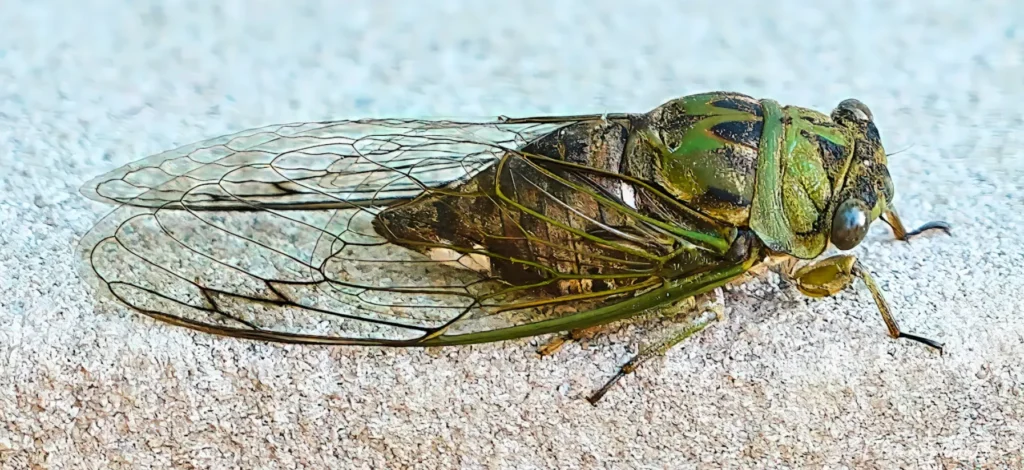
A green cicada bug is usually an annual or dog-day cicada, not a classic black-bodied, red-eyed periodical cicada. If someone asks, what does a cicada bug look like, the simple answer is: a sturdy insect with large eyes, short antennae, clear wings, and a wide body.
The phrase cicada Arizona cicada bug usually refers to the loud summer cicadas common in the American Southwest. They are part of the natural soundscape and are important food for birds, reptiles, mammals, and other wildlife.
The History of Their Scientific Naming
The scientific naming of cicadas is connected to both ancient language and modern taxonomy. The word cicada comes from Latin and is often considered an onomatopoeic term, meaning it imitates the insect’s sound. The group is scientifically placed in the superfamily Cicadoidea, with the most familiar cicadas belonging to the family Cicadidae.
Their broader classification is:
- Kingdom: Animalia
- Phylum: Arthropoda
- Class: Insecta
- Order: Hemiptera
- Family: Cicadidae
Modern scientists use these names to separate cicadas from other “true bugs” such as aphids, leafhoppers, and planthoppers. Britannica lists cicadas under Hemiptera and describes them as a family of sound-producing insects with short antennae, transparent wings, and prominent compound eyes.
The famous periodical cicadas belong to the genus Magicicada. UConn notes that periodical cicadas are found only in eastern North America and include seven species with either 13-year or 17-year life cycles.
Their Evolution And Their Origin
The origin of cicadas goes deep into Earth’s past. Modern research suggests that cicadas and their close relatives were already evolving during the Mesozoic Era, a time when dinosaurs, early birds, and ancient forests shaped many insect lineages. A 2024 Nature Communications study on cicada fossils from mid-Cretaceous amber suggests that the two main living cicada families, Cicadidae and Tettigarctidae, may have diverged by the Middle Jurassic.
This ancient origin helps explain why cicadas are so specialized. Their bodies are adapted to life both above and below ground. As nymphs, they have strong front legs for digging and mouthparts for feeding from roots. As adults, they have wings, large eyes, and powerful sound systems for finding mates.
The long underground stage likely helped cicadas survive seasonal change, predators, and environmental pressure. Periodical cicadas took this strategy even further by emerging together in massive numbers. Scientists often describe this as predator satiation: so many cicadas appear at once that predators can eat many, but still cannot consume enough to stop reproduction. UConn notes that high population densities and synchronized emergence make periodical cicadas very different from most other cicada species.
Cicadas also evolved alongside plants. Their nymphs depend on root fluids, and adults depend on woody plants for feeding, resting, singing, mating, and egg-laying. This close relationship with trees is why healthy forests and tree-rich habitats are essential for their survival.
Their main food and its collection process
Cicadas are plant-fluid feeders. Both nymphs and adults use a slender, straw-like mouthpart to draw fluids from plants. They do not chew leaves, fruits, wood, or human skin.
Main food sources include:
- Root fluids: Nymphs live underground and feed from tree and shrub roots.
- Xylem sap: This watery plant fluid contains minerals and small amounts of nutrients.
- Woody plant fluids: Adults may also feed from twigs and branches.
- Deciduous trees and shrubs: These are especially important for many periodical cicadas.
The feeding process is slow and specialized. The cicada inserts its mouthpart into plant tissue and draws fluid from it. Because plant sap is watery and low in nutrients, sap-feeding insects often need to process large amounts of fluid. Britannica explains that sap-feeding homopteran insects have digestive adaptations that help concentrate nutrients while removing excess water.
For nymphs, food collection happens underground. They use their digging legs to move through soil and reach suitable roots. This hidden feeding stage can last for years. In periodical cicadas, the underground nymph stage lasts 13 or 17 years, during which they grow through five juvenile stages.
Adult cicadas feed less actively than nymphs, but they are not completely non-feeding. UConn notes that adult Magicicada can feed on living woody vegetation and may die if not provided with suitable plant material.
Their life cycle and ability to survive in nature
Egg Stage
The life cycle begins when the female cicada places eggs inside small cuts in twigs or branches. This protects the eggs from many surface threats and provides young nymphs with a safe starting point.
After several weeks, the eggs hatch. The Smithsonian states that periodical cicada eggs hatch about 6 to 7 weeks after being laid, and the young nymphs then fall to the ground and enter the soil.
Nymph Stage
The nymph stage is the longest and most important part of the cicada bug’s life cycle. Once underground, the young cicada finds roots and begins feeding. It molts several times as it grows.
Arizona State University explains that cicadas have five nymph stages, and most species grow through these stages over 2–5 years, depending on food and environmental conditions.
Adult Stage
When the nymph is ready, it digs upward and emerges from the soil. Periodical cicadas often emerge when soil temperatures reach about 64°F at 7–8 inches deep.
The nymph climbs onto a vertical surface, sheds its final shell, and becomes a soft adult. After its body hardens, the adult begins singing, mating, and continuing the cycle.
Survival Ability
Cicadas survive by using timing, camouflage, underground protection, and mass emergence. Their long hidden stage protects them from many predators, while their sudden adult appearance helps them reproduce quickly before they die.
Their Reproductive Process and raising their children
Cicadas do not raise their young like birds or mammals. Their reproductive strategy is based on timing, sound, egg placement, and large numbers.
Key steps include:
- Male calling: Male cicadas gather in trees and produce species-specific songs.
- Female selection: Females locate males by sound and may respond with wing clicks in some species.
- Mating: After pairing, males transfer sperm to females.
- Egg-laying: The female uses her ovipositor to cut small slits in twigs.
- Egg clusters: UConn notes that mated female Magicicada can create Y-shaped egg nests and may lay up to 20 eggs per nest and as many as 600 eggs in total.
- Hatching: Eggs hatch after several weeks.
- Nymph drop: The tiny nymphs fall to the ground and burrow into the soil.
- Independent life: From that moment, the young cicadas survive on their own.
This process may seem risky, but it works because cicadas produce many eggs and choose woody plant tissue as a protected nursery. The adults usually die before the young nymphs begin their underground life.
Their “parental care” is therefore indirect. The mother does not feed or guard the young, but she improves survival chances by placing eggs in suitable plant tissue.
The importance of them in this Ecosystem
Food for Wildlife
Cicadas are a major food source for birds, mammals, reptiles, amphibians, fish, spiders, wasps, and many other animals. During a large emergence, wildlife can feed heavily on cicadas. The U.S. EPA describes cicadas as a valuable food source for birds and other predators.
Soil Health and Nutrient Cycling
Cicadas also support soil health. When nymphs tunnel underground, they help loosen soil. The EPA notes that cicadas can aerate lawns and improve water filtration into the ground. When adult cicadas die, their bodies decompose, returning nutrients to the soil.
Forest Connection
Cicadas are strongly tied to trees. Their nymphs feed from roots, adults rest and sing in trees, and females lay eggs in twigs. As a result, cicada populations can reflect the long-term condition of tree-rich habitats.
Natural Timing and Biodiversity
The synchronized emergence of periodical cicadas is one of nature’s most impressive timing systems. These events briefly alter local food webs, predator behavior, soil nutrient levels, and forest soundscapes. They remind us that insect life is not random; it is deeply connected to climate, soil temperature, tree growth, and seasonal rhythm.
What to do to protect them in nature and save the system for the future
Protecting cicadas means protecting the natural systems they depend on. Since most of their lives are underground, damage to soil and trees can affect them long before people notice.
- Avoid unnecessary pesticide spraying. Cicadas are generally harmless, and the EPA advises that spraying is not needed because pesticides may harm beneficial insects and animals that eat cicadas.
- Protect mature trees. Cicadas need trees for feeding, egg-laying, emergence, and mating.
- Use netting for young trees. If many cicadas are present, cover small saplings with fine netting instead of using chemicals.
- Do not remove every cicada shell. Shed skins are natural signs of emergence and do not harm the environment.
- Keep soil healthy. Avoid soil compaction, over-paving, and unnecessary digging around tree roots.
- Plant native trees and shrubs. Native vegetation supports local cicada species and other wildlife.
- Report unusual emergencies. In the U.S., off-cycle periodical cicadas can be reported through citizen-science platforms such as Cicada Safari or iNaturalist, as UConn suggests.
- Teach people that they are harmless. Cicadas may be loud, but they do not sting, are not venomous, and are not dangerous to humans.
Frequently Asked Questions (FAQs)
Q: What is a cicada bug?
A: A cicada bug is a sap-feeding insect from the family Cicadidae. It is known for its loud sound, clear wings, large eyes, and long underground nymph stage.
Q: What does a cicada bug look like?
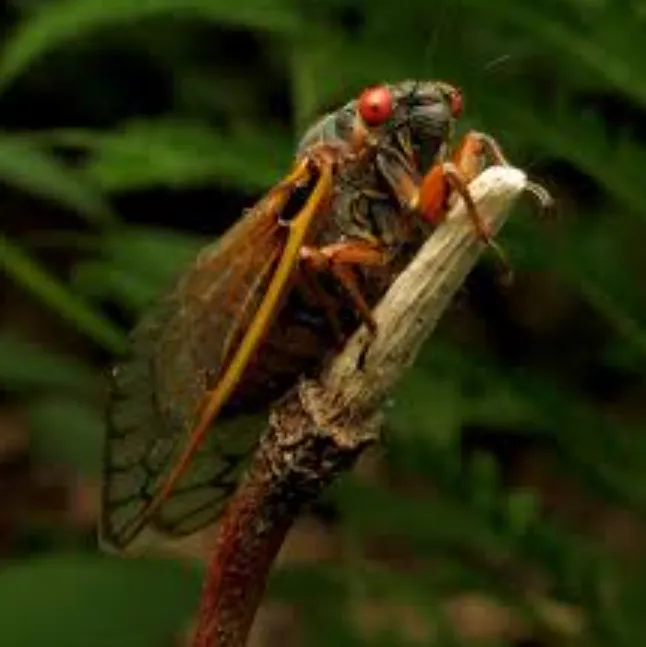
A: A cicada usually has a thick body, large compound eyes, short antennae, clear wings, and strong legs. Some are green, brown, black, or orange depending on the species.
Q: Why is the cicada bug’s sound so loud?
A: Male cicadas use tymbals, special vibrating membranes, to create sound. Their hollow body areas amplify the sound like a natural speaker.
Q: Is a green cicada bug dangerous?
A: No. A green cicada bug is not dangerous to people. Cicadas do not sting, are not venomous, and do not bite for food.
Q: How long does the cicada bug’s life cycle last?
A: Many cicadas develop underground for several years. Some periodical cicadas emerge after 13 or 17 years, while many annual cicadas appear above ground every year because different age groups overlap.
Q: Why do cicadas leave shells on trees?
A: The shell is the old nymph exoskeleton. When the nymph becomes an adult, it molts and leaves the empty shell attached to a tree, wall, fence, or plant.
Q: Are cicadas the same as locusts?
A: No. Cicadas are often wrongly called locusts, but true locusts are grasshoppers. Cicadas are sap-feeding true bugs.
Q: Are cicada Arizona cicada bugs different?
A: Arizona has many cicada species adapted to hot, dry, and seasonal environments. Many are famous for loud summer calls and are part of the natural desert and urban soundscape.
Conclusion
The cicada bug’s life cycle is a powerful example of patience, timing, and natural survival. From a tiny egg hidden in a twig to a root-feeding underground nymph, and finally to a loud-winged adult, every stage has a clear purpose. Cicadas may live quietly beneath the soil for years, but their short adult life brings sound, mating, food for wildlife, soil nutrients, and ecological balance.
They are not harmful pests in the usual sense. They are ancient insects with deep links to trees, soil, predators, and seasonal change. Understanding cicadas helps us appreciate how even a noisy summer insect can support a larger natural system. By protecting trees, avoiding unnecessary pesticides, and respecting their emergence cycles, we help preserve both cicadas and the Ecosystem that depends on them.
Also Read: tomato worm life cycle






Leave a Reply