
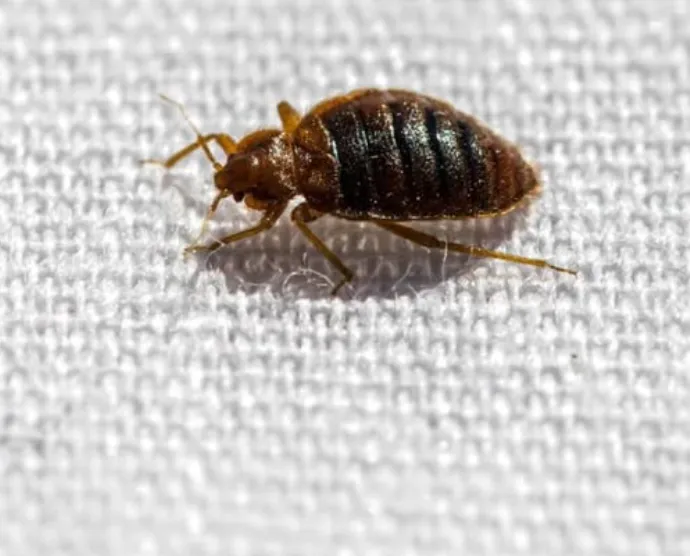
The life cycle of bed bugs is one of the main reasons these tiny insects are so difficult to control. Bed bugs are small, flat, wingless, blood-feeding insects that usually hide in mattress seams, bed frames, cracks, furniture joints, and other sheltered places during the day. At night, they come out to feed on warm-blooded hosts, especially humans.
The most common species linked with human homes is Cimex lectularius, also known as the common bed bug. Understanding their life cycle helps answer common questions, such as: Can you see bed bugs? What do bed bug bites look like? No signs of bed bugs, but I have bites. How to kill bed bugs.
Their development includes eggs, five nymph stages, and the adult stage. Each nymph usually needs a blood meal before it can molt into the next stage.
Bed bugs are not known to spread disease to people, but their bites may cause itching, sleep loss, anxiety, allergic reactions, and, in some cases, secondary skin infections from scratching. Because bite marks alone are not enough to confirm bed bugs, proper inspection is essential.
Q: Can you see bed bugs?
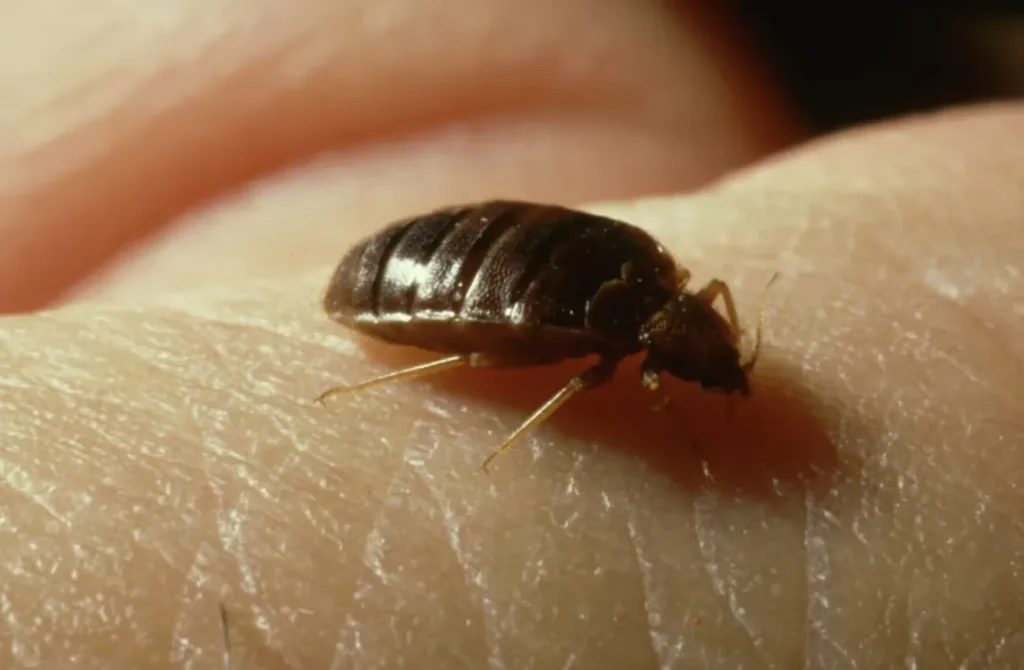
A: Yes. Adult bed bugs are visible to the naked eye. They are usually reddish-brown, flat, oval, and about the size of an apple seed when unfed.
Q: No signs of bed bugs, but I have bites — does that mean I have bed bugs?
A: Not always. Bed bug bites can look similar to mosquito, flea, or mite bites, or to allergy-related skin reactions. Confirmation is best done by finding live bugs, nymphs, eggs, shed skins, or dark fecal spots near sleeping areas.
Q: What kills bed bugs instantly?
A: Direct heat, steam, and some properly labeled insecticides can kill bed bugs on contact, but “instant killing” does not mean the infestation is gone. Eggs and hidden bugs often survive unless the whole area is treated with an integrated pest management approach.
Important Things That You Need To Know
Before learning the full life cycle of bed bugs, it is important to understand a few practical facts. Bed bugs are not a sign of poor hygiene. They can travel through luggage, second-hand furniture, clothing, shared housing, hotels, buses, and apartments.
Once inside a room, they hide close to where people sleep or rest. Many people ask, ” Can you see bed bugs? The answer is yes, but young nymphs and eggs are harder to notice. Eggs are tiny and pale, while newly hatched nymphs can be very small and light-colored. After feeding, nymphs become easier to see because their bodies turn reddish.
Another common concern is that there are no signs of bed bugs, but I have bites. This situation can happen because bed bugs hide very well, but it can also mean the bites are from another insect or skin condition. Bites alone are not a reliable diagnosis.
People also search for bugs that look like bed bugs. Carpet beetles, bat bugs, spider beetles, booklice, and small cockroach nymphs are often confused with bed bugs. Correct identification is important because each pest requires a different control method.
Finally, what kills bed bugs instantly is not the same as complete control. Heat, steam, and direct insecticide contact may kill exposed bugs, but hidden eggs and nymphs can restart the infestation. For long-term results, you need inspection, cleaning, heat, encasements, monitoring, and careful treatment.
Quick Life Cycle Table
| Stage | Size/Appearance | What Happens | Key Survival Point |
| Egg | About 1 mm, pale/white | Females lay eggs in hidden cracks, seams, and protected areas | Eggs are hard to see and may survive casual cleaning |
| 1st Stage Nymph | About 1.5 mm | Newly hatched young bed bug seeks a blood meal | Needs blood to molt |
| 2nd Stage Nymph | About 2 mm | Grows after feeding and molting | Still small and easy to miss |
| 3rd Stage Nymph | About 2.5 mm | Becomes more visible after feeding | Hides between meals |
| 4th Stage Nymph | About 3 mm | Continues feeding and molting | Can survive for a period without feeding |
| 5th Stage Nymph | About 4.5 mm | Final immature stage before adult | Needs another blood meal before adulthood |
| Adult Bed Bug | Around 5–7 mm, reddish-brown, oval | Feeds, mates, and reproduces | Adults can live for months under normal conditions |
The History of Their Scientific Naming
The scientific name of the common bed bug is Cimex lectularius. The name was formally associated with Linnaeus, 1758, and it remains the accepted scientific name in modern taxonomy.
Key points about the naming history:
- Cimex is the genus name. It is linked with true bugs in the family Cimicidae.
- Lectularius is the species name. It is historically connected with beds or couches, reflecting the insect’s close relationship with human sleeping places.
- The full scientific name is written as Cimex lectularius Linnaeus, 1758.
- Bed bugs belong to the order Hemiptera, meaning they are “true bugs” with piercing-sucking mouthparts.
- The family Cimicidae includes blood-feeding bugs that are often associated with birds, bats, and mammals.
The name is important because not all insects called “bed bugs” are the same. The two major species associated with human infestations are Cimex lectularius and Cimex hemipterus. C. lectularius is commonly linked with temperate regions, while C. Hemipterus is more common in tropical and subtropical areas.
Their Evolution And Their Origin
The origin of bed bugs is closely linked with blood-feeding insects that lived with animals long before modern human homes existed. Scientists place bed bugs in the family Cimicidae, a group of insects adapted to feeding on the blood of warm-blooded hosts such as bats, birds, and humans.
A major theory holds that ancient bed bug ancestors lived in caves with bats. As early humans used caves or cave-like shelters, some bed bug lineages may have shifted from bat hosts to humans. Over time, these insects became highly adapted to human sleeping spaces, especially because humans usually rest for long periods in one location at night.
Their bodies show strong evolutionary specialization. Bed bugs are flat, which helps them hide in narrow cracks. They are wingless, which suits a lifestyle of hiding rather than active flying. Their piercing-sucking mouthparts allow them to feed quickly on blood.
Their behavior is also adapted to survival. They hide during the day, feed mostly at night, and return to protected areas after feeding. Modern research also shows that bed bug populations linked with bats and humans can have independent evolutionary histories.
This suggests that bed bug evolution is not a simple single-line story, but a complex pattern of host association, separation, and adaptation. The recent global importance of bed bugs is connected with travel, dense housing, insecticide resistance, and the movement of infested objects.
They are now considered a global urban pest challenge, not because they are strong disease vectors, but because they are difficult to detect, hard to remove, and emotionally stressful to manage.
Their main food and its collection process
The main food of bed bugs is blood. Both nymphs and adults feed on warm-blooded hosts. Humans are common hosts in homes, hotels, dormitories, hospitals, and shelters, but bed bugs may also feed on other mammals or birds when available.
Their feeding process is highly specialized:
- Host detection: Bed bugs are attracted by body heat, carbon dioxide, and human scent cues. These signals help them locate a sleeping or resting host.
- Night feeding: They usually feed at night because the hosts are still and sleeping. However, hungry bed bugs may feed during the day if conditions allow.
- Piercing the skin: A bed bug uses its piercing-sucking mouthparts to reach blood vessels under the skin.
- Saliva injection: During feeding, saliva enters the skin. This saliva can trigger itching, swelling, or an allergic reaction in sensitive people.
- Blood meal duration: Nymphs and adults may take 5–10 minutes to complete a blood meal.
- Returning to shelter: After feeding, bed bugs usually retreat to cracks, mattress seams, box springs, bed frames, furniture joints, wall gaps, or clutter near the bed.
Their feeding is not random. A nymph usually needs a blood meal before molting to the next stage. Adult females also need blood meals to produce eggs. This is why food access directly controls their growth, reproduction, and population size.
This blood-feeding process explains why infestations can grow silently. A few bugs can hide, feed briefly, return to shelter, and reproduce before the homeowner realizes there is a problem.
Their life cycle and ability to survive in nature
Egg Stage
The egg stage begins when a female bed bug lays tiny pale eggs in hidden places. These eggs are often placed in mattress seams, furniture cracks, behind headboards, along baseboards, or inside small gaps.
Eggs are difficult to find because they are about 1 mm long and pale in color. This makes them among the biggest challenges in bed bug control.
Nymph Stage
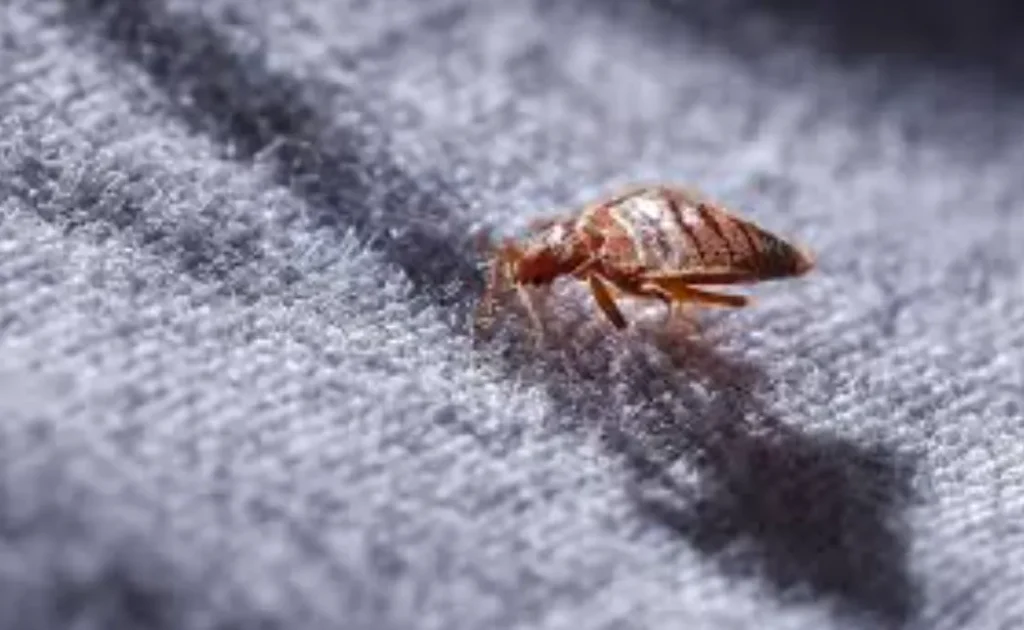
After hatching, the young bed bug is called a nymph. Nymphs look like smaller versions of adults. They pass through five nymphal instars before becoming adults.
Each nymph normally needs a blood meal before it can molt. As it grows, it sheds its outer skin. These shed skins are one of the signs people may find during inspection.
Adult Stage
Adult bed bugs are flat, oval, reddish-brown insects. They are visible to the naked eye and are often compared in size to an apple seed. Adults continue feeding and mating when hosts are available.
Survival Ability
Bed bugs are powerful survivors. Under normal conditions, adults may live for 2–4 months, while older nymphs and adults can survive much longer without food under favorable conditions.
Their flat bodies, hidden behavior, slow starvation tolerance, and repeated reproduction make them persistent pests in human environments.
Their Reproductive Process and raising their children
Bed bugs reproduce in a very unusual way called traumatic insemination. In this process, the male does not use the female’s normal reproductive opening. Instead, he pierces the female’s abdominal wall and transfers sperm into her body cavity.
Important points about their reproduction:
- Blood meals support egg production: Female bed bugs need blood meals to lay eggs. Without blood, egg production slows or stops.
- Females can lay many eggs: A female bed bug may lay multiple eggs over time, and under favorable conditions, she can produce many offspring during her lifetime.
- Eggs are hidden: Females place eggs in protected cracks and crevices where they are safer from disturbance.
- No parental care: Bed bugs do not raise their young like mammals or birds. After eggs are laid, nymphs hatch and survive independently.
- Young nymphs feed for themselves: Newly hatched nymphs must find a blood meal to grow.
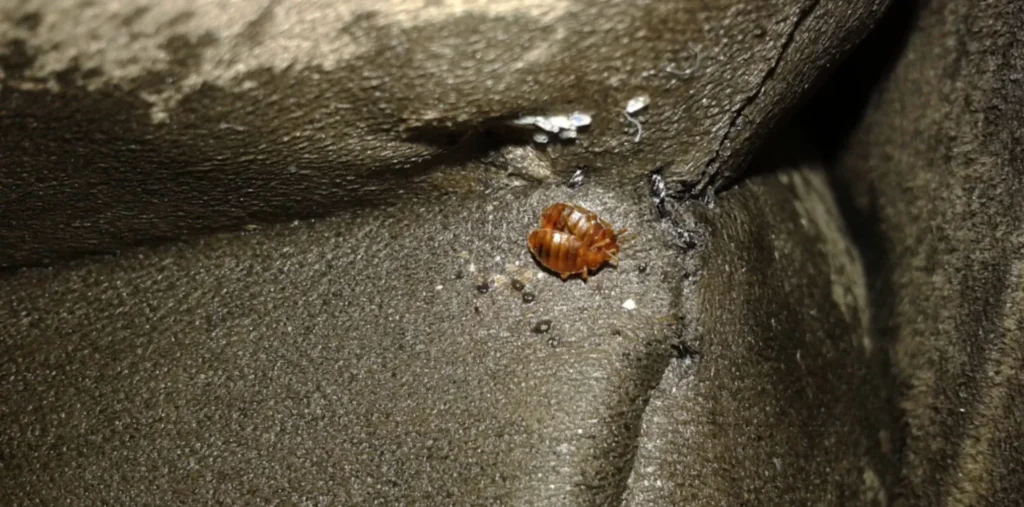
- Population builds quietly: Because eggs, nymphs, and adults hide together, all stages may be present in an active infestation.
The phrase “raising their children” does not fully apply to bed bugs because they do not feed, guard, teach, or protect their offspring. Their strategy is to hide eggs in safe places and produce enough offspring to maintain the population.
This reproductive system helps explain why early control matters. If only adults are removed but eggs remain, new nymphs can hatch and restart the infestation.
The importance of them in this Ecosystem
Role in Food Webs
Although bed bugs are unwanted pests in human homes, they are still part of the broader food web. Small predators such as spiders, ants, mites, and some insects may feed on them when they encounter them.
However, bed bugs are not considered a major beneficial species in household ecosystems. Their close association with human sleeping areas makes their negative impact much greater than any small food-web benefit.
Scientific Importance
Bed bugs are important in science because they help researchers study insect behavior, blood-feeding adaptation, insecticide resistance, urban pest ecology, and reproductive biology. Their unusual mating system, hiding behavior, and resistance patterns make them useful subjects for entomological research.
Public Health Importance
Bed bugs do not spread disease to people, but they are still considered a public health concern because they can cause itching, sleep loss, stress, allergic reactions, and secondary infections from scratching.
Environmental Management Importance
The existence of bed bugs also reminds us that pest control must be balanced. Overuse of insecticides can harm people, pets, and non-target organisms. This is why integrated pest management is recommended: it combines inspection, cleaning, heat, monitoring, and careful pesticide use when needed.
So, their ecosystem importance is limited in homes, but their scientific and public health relevance is significant.
What to do to protect them in nature and save the system for the future
When it comes to bed bugs, “protection” should be understood carefully. Bed bugs are not a species people need to protect inside homes, beds, hotels, hospitals, or public spaces. They are pests that should be controlled safely.
However, we can protect the broader Ecosystem by managing bed bugs responsibly:
- Use integrated pest management rather than relying solely on heavy pesticide use.
- Avoid spraying random chemicals on beds, pillows, clothing, or skin.
- Use only properly labeled products and follow label directions carefully.
- Prefer non-chemical methods such as heat treatment, steam, vacuuming, laundering, mattress encasements, and monitoring traps where suitable.
- Do not throw infested furniture outside without marking it, as others may pick it up and spread the infestation.
- Reduce clutter to give bed bugs fewer hiding places.
- Inspect second-hand furniture before bringing it indoors.
- Wash and dry infested fabrics on high heat when the fabric allows it.
- Seal cracks and gaps near sleeping areas to reduce hiding spaces.
- Call trained pest professionals when infestations are heavy or repeated.
- Protect beneficial insects outdoors by avoiding unnecessary broad-spectrum insecticide use.
- Support research on safer pest control methods, insecticide resistance, and urban pest prevention.
The goal is not to save bed bugs in your home. The real goal is to protect people, reduce the spread of infestation, and avoid harming the wider environment through careless chemical use.
Frequently Asked Questions (FAQs)
Q1: What is the life cycle of bed bugs?
A: The life cycle of bed bugs includes egg, five nymph stages, and adult. Nymphs usually require a blood meal before each molt, and adults continue feeding and reproducing as long as hosts are available.
Q2: Can you see bed bugs with your eyes?
A: Yes. Adult bed bugs are visible to the naked eye. They are flat, oval, reddish-brown, and roughly apple-seed-sized. Eggs and young nymphs are harder to see because they are tiny and pale.
Q3: No signs of bed bugs, but I have bites — what should I do?
A: Do not rely on bites alone. Check mattress seams, bed frames, headboards, baseboards, nearby furniture, and cracks for live bugs, shed skins, eggs, or dark fecal stains. Bite reactions are not diagnostic by themselves.
Q4: What do bed bug bites look like?
A: Bed bug bites may appear as itchy red bumps, small welts, clusters, or lines on exposed skin such as arms, neck, face, hands, or legs. Some people show little or no reaction, while others may experience more pronounced swelling or itching.
Q5: What kills bed bugs instantly?
A: Direct steam, high heat, and certain contact insecticides may kill exposed bed bugs quickly. However, hidden eggs and bugs may survive, so complete control requires a full treatment plan rather than just instant contact killing.
Q6: What bugs look like bed bugs?
A: Bugs that look like bed bugs include bat bugs, carpet beetles, spider beetles, small cockroach nymphs, booklice, and fleas. A correct identification is important because treatment methods differ.
Q7: How to kill bed bugs effectively?
A: Use a combined plan: inspect carefully, reduce clutter, vacuum, wash and dry fabrics with heat, use mattress encasements, apply steam or heat where safe, monitor regularly, and use labeled pesticides only when needed. Professional help is often best for heavy infestations.
Q8: Are bed bugs dangerous?
A: Bed bugs are not known to spread disease, but they can cause itching, sleep loss, stress, allergic reactions, and secondary infection from scratching. Severe reactions should be discussed with a healthcare provider.
Conclusion
The life cycle of bed bugs explains why these insects are so persistent. From tiny hidden eggs to five active nymph stages and reproducing adults, every stage is designed for survival near sleeping hosts. Their flat bodies help them hide, their blood-feeding habit supports growth, and their reproductive process allows populations to increase rapidly when unchecked.
For homeowners, the most important lesson is simple: bites alone are not enough to confirm the presence of bed bugs. Look for real signs such as live insects, shed skins, eggs, and dark spots. For control, do not rely on a single “instant kill” method. Use a complete plan that includes inspection, heat, cleaning, monitoring, and safe treatment.
Bed bugs are not known disease spreaders, but they can seriously affect comfort, sleep, and mental peace. Early action, correct identification, and responsible pest management are the best ways to stop them.
Also Read: life cycle of axolotl





Leave a Reply