
The moss life cycle is one of the most fascinating processes in the plant kingdom. Unlike flowering plants, mosses follow a unique reproductive system that depends heavily on water and alternates between two distinct generations. These small, non-vascular plants are found almost everywhere—from damp forests to rocky surfaces—playing a vital role in maintaining ecological balance.
Understanding the moss life cycle helps explain how these simple plants survive, reproduce, and spread across various environments. Whether you’re studying biology or simply curious about nature, moss offers a perfect example of adaptation and resilience.
Quick Answers (Most Common Questions)
1. What are the stages of the moss life cycle?
The moss life cycle includes four main stages: spore, protonema, gametophyte, and sporophyte.
2. Does moss reproduce sexually or asexually?
Moss reproduces both sexually (through gametes) and asexually (via spores).
3. Why does moss need water for reproduction?
Water is essential because sperm must swim to reach the egg for fertilization.
Quick Life Cycle Table
| Stage | Description | Function |
| Spore | Single-celled reproductive unit | Dispersal and germination |
| Protonema | Thread-like early growth stage | Develops into a gametophyte |
| Gametophyte | Leafy green plant stage | Produces gametes (sex cells) |
| Sporophyte | Stalk with a capsule attached to the gametophyte | Produces spores |
The History Of Their Scientific Naming
The scientific classification of moss dates back to early botanical studies when scientists began categorizing plants based on structure and reproduction.
- Mosses belong to the division Bryophyta, derived from Greek words:
- Bryon meaning moss
- Phyton meaning plant
- Early botanists like Johann Hedwig are considered pioneers in moss taxonomy.
- Mosses were initially grouped with other simple plants because they lack vascular tissue.
- Over time, scientists identified unique reproductive features, especially their alternation of generations, which set them apart.
- Modern classification divides mosses into classes such as:
- Bryopsida
- Sphagnopsida
- Andreaeopsida
This scientific naming reflects both their evolutionary history and structural simplicity.
Their Evolution And Their Origin
Mosses are among the oldest land plants, with origins tracing back over 450 million years. They are believed to have evolved from green algae, making them crucial in understanding plant evolution.
During the transition from aquatic to terrestrial life, early plants needed adaptations to survive outside water. Mosses developed simple structures that allowed them to thrive in moist environments.
Unlike vascular plants, mosses lack:
- True roots (they have rhizoids)
- Stems and vascular tissues
However, their simplicity became an advantage. Mosses could colonize bare rocks and soil, helping form soil and paving the way for more complex plants.
Fossil evidence suggests that early bryophytes played a major role in shaping Earth’s ecosystems by:
- Stabilizing soil
- Retaining moisture
- Supporting microbial life
Their evolutionary success lies in their ability to survive in harsh and diverse environments. Even today, mosses are found in tundras, rainforests, and urban areas.
Their Main Food and Its Collection Process
Mosses lack roots and vascular systems like those of higher plants. Instead, they rely on simple yet effective methods to obtain nutrients.
How Moss Gets Its Food
- Photosynthesis: Moss uses sunlight, carbon dioxide, and water to produce food.
- Absorption through surfaces: Water and nutrients are absorbed directly through leaves and stems.
- Rhizoids: These anchor the plant and absorb minimal nutrients.
Nutrient Collection Process
- Moss absorbs rainwater, dew, and humidity.
- Dissolved minerals are taken in through the plant surface.
- Nutrients from decaying organic matter are also absorbed.
Key Features
- No need for soil nutrients like vascular plants.
- It can survive in nutrient-poor environments.
- Efficient at retaining moisture.
This simple feeding system allows moss to grow on rocks, tree bark, and even walls.
Important Things That You Need To Know
Understanding related terms helps deepen your knowledge of the moss life cycle.
Key LSI Concepts
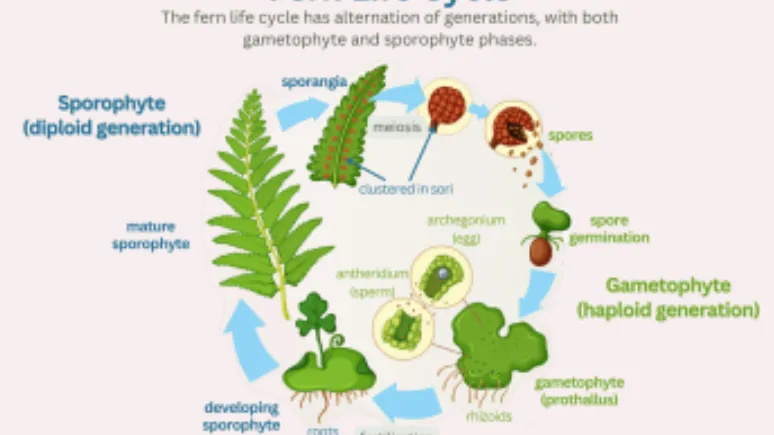
The moss life cycle diagram, the moss life cycle diagram labelled, the moss life cycle labelled, and even comparisons like the Spanish moss life cycle are essential tools for visualizing this process.
A moss life cycle diagram typically shows the alternation between gametophyte and sporophyte stages. The labelled versions help students identify structures such as:
- Antheridia (male organs)
- Archegonia (female organs)
- Capsule (spore-producing part)
Interestingly, Spanish moss is not a true moss but a flowering plant, yet it’s often mistaken for one due to its appearance.
Why These Matter
- Diagrams simplify complex biological processes.
- Labelled versions improve learning and retention.
- Help with exams and academic understanding.
In biology education, these diagrams are essential for understanding plant reproduction.
Their Life Cycle and Ability to Survive in Nature
The moss life cycle is a perfect example of alternation of generations.
H3: Spore Stage
Spores are released from the capsule and dispersed by wind.
They are lightweight and can travel long distances.
H3: Protonema Stage
Spores germinate into a thread-like structure called protonema.
This stage helps establish the plant.
H3: Gametophyte Stage
This is the dominant, green, leafy stage.
It produces reproductive organs.
H3: Sporophyte Stage
After fertilization, a sporophyte grows from the gametophyte.
It produces spores, completing the cycle.
Survival Ability
- Can tolerate dehydration
- Revive quickly after water exposure
- Grow in extreme environments
This resilience makes moss a key ecological species.
Their Reproductive Process and Raising Their Children
Moss reproduction is both fascinating and complex.
Sexual Reproduction
- Male structures (antheridia) produce sperm.
- Female structures (archegonia) produce eggs.
- Water allows sperm to swim to the egg.
Fertilization Process
- Fertilization occurs inside the archegonium.
- A zygote forms and develops into a sporophyte.
Asexual Reproduction
- Fragmentation: pieces grow into new plants
- Spores: produced in capsules
Raising New Moss
- Spores germinate into protonema
- Develop into new gametophytes
This cycle ensures continuous growth and survival.
Importance of Them in this Ecosystem
H3: Soil Formation
Moss helps break down rocks into soil, supporting plant growth.
H3: Water Retention
Acts like a sponge, holding water and preventing erosion.
H3: Habitat Provider
Provides shelter for insects and microorganisms.
H3: Climate Regulation
Helps regulate humidity and temperature in ecosystems.
Moss plays a silent yet powerful role in maintaining ecological balance.
What to Do to Protect Them in Nature and Save the System for the Future
- Avoid removing moss from natural habitats
- Reduce pollution and chemical use
- Protect forest ecosystems
- Maintain humidity in green spaces
- Support conservation programs
- Avoid deforestation
- Educate others about the importance of moss
- Encourage sustainable gardening practices
Protecting moss means protecting entire ecosystems.
Frequently Asked Questions (FAQs)
1. What is the main stage of the moss life cycle?
The gametophyte stage is dominant.
2. How long does the moss life cycle take?
It varies but can take weeks to months.
3. Can moss grow without soil?
Yes, it can grow on rocks and surfaces.
4. Why is water important for moss?
Water enables fertilization.
5. What is a protonema?
It is the early growth stage from spores.
6. Is moss a flowering plant?
No, it is a non-vascular plant.
7. What is the function of the sporophyte?
To produce spores.
8. Is Spanish moss a true moss?
No, it is actually a flowering plant.
Conclusion
The moss life cycle is a remarkable example of nature’s simplicity and efficiency. From tiny spores to fully developed gametophytes, moss demonstrates how life can thrive without complexity. Its reliance on water, ability to survive harsh conditions, and ecological importance make it one of the most essential plant groups on Earth.
Understanding moss provides insights into plant evolution, ecosystem balance, and environmental sustainability. Despite its small size, moss plays a massive role in maintaining life on our planet. Protecting it ensures a healthier and more stable environment for future generations.
Also Read: life cycle of head lice






Leave a Reply