
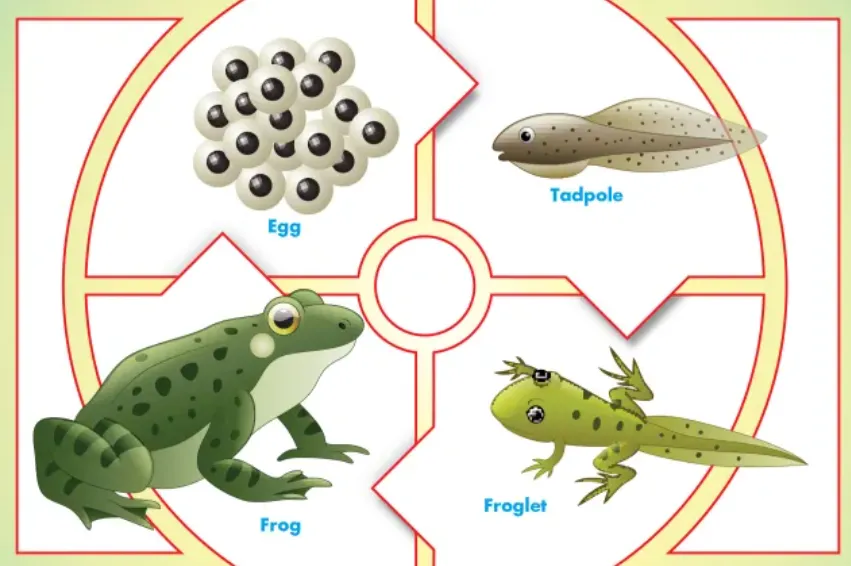
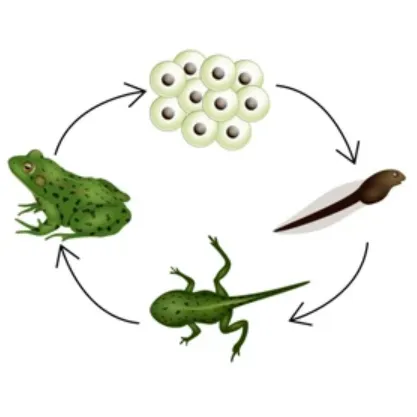
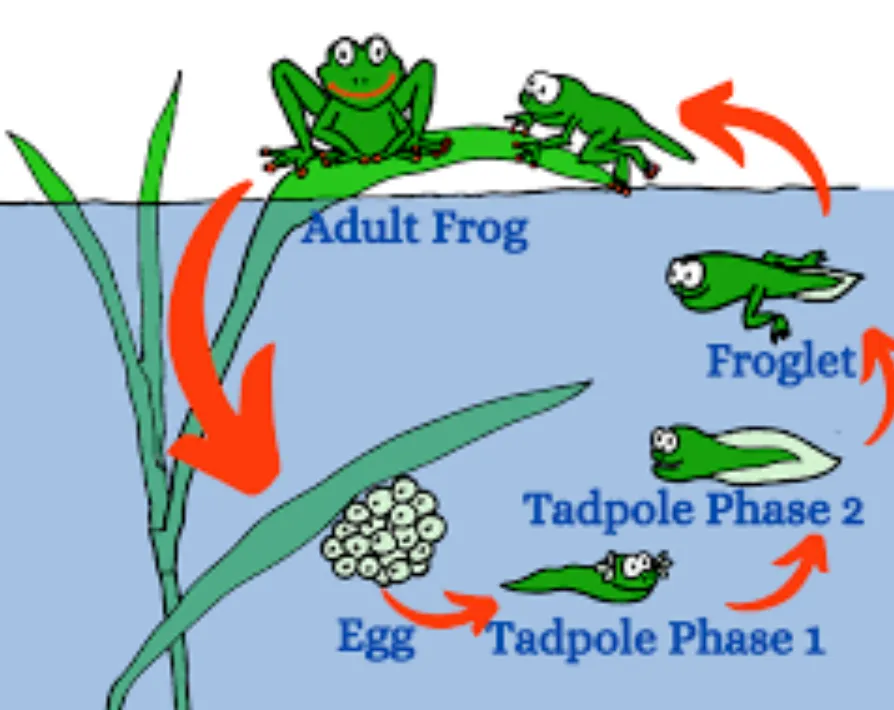
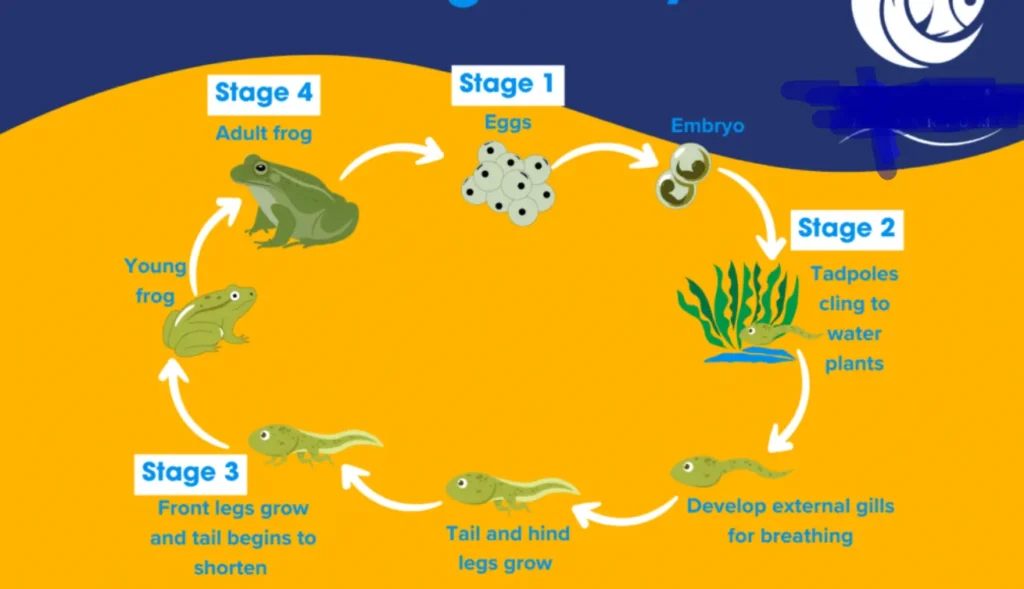
The life cycle of a frog is one of nature’s most fascinating examples of metamorphosis. A frog begins life as a tiny jelly-covered egg, becomes an aquatic tadpole, develops legs as a froglet, and finally grows into an adult frog that can live on land and in water. This transformation is not only beautiful but also important for understanding how amphibians survive in changing environments.
Frogs belong to the amphibian order Anura, a word linked with the idea of being “tailless.” Adult frogs usually have strong hind legs, moist skin, no tails, and a lifestyle associated with water or damp habitats. Their life cycle shows how one animal can shift from a water-breathing larva to an air-breathing adult through hormonal and physical changes.
Today, frogs are also important because many amphibians are declining worldwide. Many frog species are threatened by habitat loss, climate change, disease, pollution, and invasive species. For this reason, learning about the life cycle of a frog is not only useful for students but also important for nature conservation.
Q: What are the main stages in the life cycle of a frog?
A: The main stages are egg, tadpole, froglet, and adult frog.
Q: How long does a frog’s life cycle take?
A: Many frogs complete their life cycle in a few weeks to a few months, but the timing depends on species, temperature, food, water, and predators.
Q: Why is frog metamorphosis important?
A: It allows frogs to begin life in water and later survive on land, giving them access to different food sources and habitats.
Quick Life Cycle Table
| Life Cycle Stage | Main Features | Habitat | Food Source | Key Change |
| Egg | Jelly-like eggs are laid in clusters or strings | Water or moist places | Uses the yolk inside the egg | Embryo develops |
| Tadpole | Has a tail, gills, and a fish-like body | Water | Mostly algae, plant matter, and tiny organic particles | Grows quickly |
| Growing Tadpole | Hind legs appear first, then front legs | Water | Algae, plants, and sometimes tiny animals | Lungs begin forming |
| Froglet | Small frog with shrinking tail | Water edge and land | Small insects and soft prey | Tail is absorbed |
| Adult Frog | Strong legs, lungs, no tail | Wetlands, forests, ponds, fields | Insects, worms, spiders, small animals | Reproduces and starts the cycle again |
The History of Their Scientific Naming
The scientific naming of frogs is connected to taxonomy, the system scientists use to classify living things.
- Frogs are placed in the class Amphibia, which includes frogs, toads, salamanders, newts, and caecilians.
- Most frogs and toads belong to the order Anura. This name is commonly explained as meaning “without tail,” because adult frogs generally lack tails.
- The word frog is a common name, not a single scientific name. There are thousands of frog species, and each species has its own scientific name.
- For example, many “true frogs” have historically been grouped under the genus Rana, although modern taxonomy has revised many classifications as scientists study DNA and anatomy more deeply.
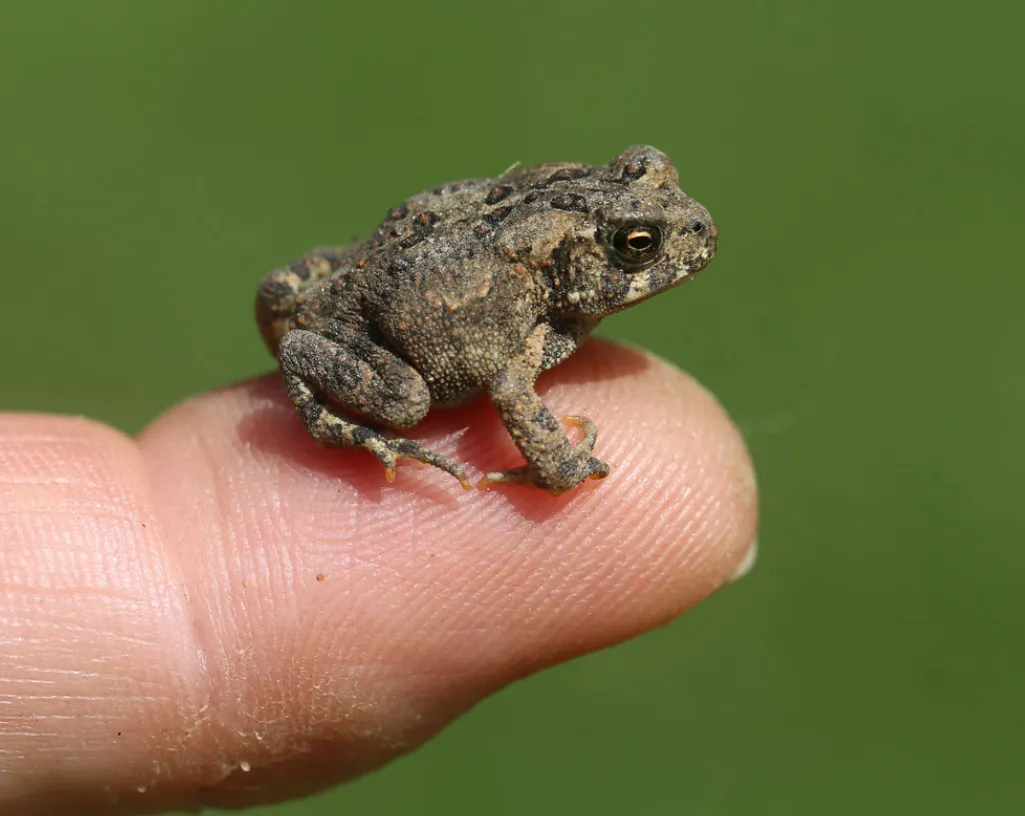
- The terms frog and toad are often used differently in everyday language. Frogs are usually described as smoother and more aquatic, while toads are often rougher and more land-based, but this difference is not always strict in science.
Scientific naming helps researchers avoid confusion because common names can change between regions, languages, and cultures. It also helps scientists accurately identify species, study their relationships, and protect endangered frogs more effectively.
Their Evolution And Their Origin
The origin of frogs goes back deep into Earth’s history. Frogs are part of the amphibian lineage, which evolved from ancient vertebrates that gradually adapted to living between water and land. Their bodies clearly show this mixed lifestyle: they often lay eggs in water, begin life as aquatic larvae, and later become adults capable of moving on land.
Fossil evidence shows that frog relatives were already present more than 200 million years ago. These ancient fossils help scientists understand the early history of the group that includes living frogs and their closest fossil relatives.
Over time, frogs evolved strong hind legs for jumping, wide mouths for catching prey, specialized skin for moisture exchange, and powerful vocal systems for mating calls. These features helped them spread into forests, wetlands, grasslands, mountains, and even dry regions where some species survive by hiding underground during harsh seasons.
Their life cycle also became a major evolutionary advantage. The tadpole stage allows young frogs to use aquatic resources, while the adult stage allows them to hunt on land or near water. This reduces competition between young and adult frogs because they often eat different foods and occupy slightly different habitats.
Modern frogs are extremely diverse. Some, like tree frogs, climb vegetation. Some, like glass frogs, live near forest streams. Others, like burrowing frogs, remain hidden underground for long periods. Their long evolutionary history explains why frogs are found in so many shapes, colors, and survival strategies.
Their main food and its collection process
The food of frogs changes greatly as they grow. This is one reason the life cycle of a frog is so interesting.
- Tadpoles usually feed on algae and plant matter. Many tadpoles scrape algae from rocks, leaves, and pond surfaces. This helps them grow rapidly before metamorphosis.
- Some tadpoles are omnivorous. Depending on species and food availability, they may eat tiny organic particles, dead plant material, microorganisms, or even small animal matter.
- Adult frogs are mostly carnivorous. They commonly eat insects, worms, spiders, snails, slugs, moths, flies, and other small animals.
- Larger frogs can eat larger prey. Some big frogs may catch small fish, smaller frogs, small reptiles, or even small mammals when available.
- Frogs collect food mainly through hunting. Many frogs sit quietly and wait for prey to come close. This is called ambush feeding.
- The tongue is a powerful tool. Many frogs use a fast, sticky tongue to catch moving prey. The tongue shoots out quickly, sticks to the prey, and pulls it into the mouth.
- Some frogs use direct mouth capture. Large-mouthed frogs, such as the pacman frog, may lunge forward and grab prey directly.
- Vision helps them detect movement. Frogs are especially good at noticing moving insects. Still objects may be ignored, but moving prey quickly triggers a feeding response.
This feeding process makes frogs valuable natural pest controllers. In gardens, wetlands, and agricultural fields, frogs can help reduce insect and other small pest populations as part of the food web.
Their life cycle and ability to survive in nature
Egg Stage
The frog life cycle begins when eggs are laid in water or moist environments. Frog eggs are usually soft and covered with a jelly-like layer that helps keep them moist and offers some protection.
Unlike reptiles and birds, amphibians do not produce hard-shelled eggs, so water is very important for early development. Without enough moisture, frog eggs can dry out and fail to hatch.
Tadpole Stage
After hatching, the young frog becomes a tadpole. Tadpoles look more like small fish than adult frogs. They have tails, live in water, and breathe mainly through gills during early development.
At this stage, survival depends on clean water, enough food, and protection from predators such as fish, aquatic insects, birds, and larger tadpoles.
Froglet Stage
As the tadpole grows, it develops hind legs first, then front legs. Lungs begin to work, the mouth changes, and the digestive system adjusts for a more carnivorous adult diet.
During metamorphosis, the tail gradually shrinks and is absorbed into the body. This stage is called the froglet stage, where the young frog begins moving between water and land.
Adult Frog Stage
The adult frog can breathe air through its lungs and also exchange gases through its moist skin. This skin helps survival, but also makes frogs sensitive to pollution, drought, and chemical contamination.
Their ability to live both in water and on land gives them flexibility, but it also means they need healthy wetlands, clean ponds, shaded vegetation, and safe breeding sites.
Their Reproductive Process and raising their children
Frog reproduction is strongly connected to water, sound, and seasonal changes.
- Mating calls attract partners. Male frogs usually call to attract females. Each species has a unique call that helps females identify suitable mates.
- Breeding often happens during rainy seasons. Rain creates ponds, puddles, and wetlands where eggs can stay moist, and tadpoles can develop.
- The male holds the female in amplexus. In many species, the male grips the female from behind. This position is called amplexus.
- Fertilization is usually external. In most frogs, the female releases eggs while the male releases sperm over them. This allows fertilization to happen outside the body.
- Egg numbers vary by species. Some frogs lay hundreds or thousands of eggs, while others lay fewer eggs and provide more care.
- Most frogs do not raise young like mammals. Many species lay eggs and then leave them, but this does not mean they are careless. Producing many eggs increases the chance that at least some tadpoles survive.
- Some frogs show parental care. Certain species guard eggs, carry tadpoles, keep eggs moist, or transport young to small water pools.
- Tadpoles grow independently. They feed, hide, and develop until metamorphosis prepares them for adult life.
This reproductive strategy is successful, but it depends heavily on clean water and safe breeding habitats.
The importance of them in this Ecosystem
Natural Pest Control
Frogs are important predators of insects and other small animals. By eating mosquitoes, flies, moths, beetles, slugs, and agricultural pests, they help balance insect populations naturally.
This role is especially valuable in gardens, farms, wetlands, and forest edges. Frogs reduce the number of many insects without the need for chemical pesticides.
Food for Other Animals
Frogs are also prey. Birds, snakes, fish, mammals, larger frogs, and many reptiles depend on frogs as food. Tadpoles also feed aquatic predators.
Because frogs are both predators and prey, they connect different levels of the food chain. If frogs disappear, many other animals can be affected.
Environmental Indicators
Frogs are often called bioindicators because their moist, permeable skin and water-based life stages make them sensitive to pollution, habitat change, disease, and climate stress.
When frogs disappear from an area, it may signal that the Ecosystem is becoming unhealthy. Their decline can warn humans about environmental problems before they become worse.
Nutrient Cycling
Tadpoles help recycle nutrients in ponds by feeding on algae, plant material, and organic particles. Adult frogs move nutrients between water and land as they feed, grow, reproduce, and become food for other animals.
Important Things That You Need To Know
When people search for the life cycle of a frog, they often also search for related terms such as frog, tree frog, glass frog, pacman frog, frog drawing, and even pop-culture phrases like Crazy Frog or the Princess and the Frog cast. These keywords show that frogs are not only studied in biology but also appear in art, as pets, in cartoons, in movies, and in online culture.
A tree frog is a frog adapted for climbing, often with sticky toe pads that help it hold onto leaves and branches. These frogs are usually found in forests, gardens, wetlands, and areas with plenty of plants. Their climbing ability helps them escape predators and find insects.
A glass frog is famous for its translucent body. In some species, internal organs can be seen through the skin. This unique feature makes glass frogs one of the most interesting amphibians in nature.
A pacman frog is a popular pet frog known for its round body, wide mouth, and ambush-feeding style. It waits quietly and catches prey when it comes close.
The phrase frog butt is not a scientific term. Online, people may use it when talking about the back part of a frog or a froglet’s changing body. Biologically, this area becomes noticeable during metamorphosis because the tadpole’s tail shrinks and is absorbed as the froglet develops.
A frog drawing can help students understand the stages of egg, tadpole, froglet, and adult frog development. Meanwhile, terms like Crazy Frog and Princess and the Frog are entertainment-related, not biological. Still, they show how frogs remain familiar and memorable in human culture.
What to do to protect them in nature and save the system for the future
Protecting frogs means protecting water, land, insects, and the natural balance. Since many amphibians are threatened, local action can make a real difference.
- Protect wetlands and ponds because frogs need safe water bodies for breeding and tadpole growth.
- Avoid pesticides and harmful chemicals in gardens, farms, and near water sources.
- Plant native vegetation around ponds and gardens to provide shade, insects, shelter, and natural humidity.
- Keep water clean by reducing plastic waste, oil, detergents, and agricultural runoff.
- Do not collect frog eggs or tadpoles from the wild unless guided by local conservation rules.
- Create frog-friendly garden spaces with leaf litter, logs, shallow water, and chemical-free plants.
- Protect forest and stream habitats where species like tree frogs and glass frogs depend on clean, shaded environments.
- Reduce unnecessary night lighting near breeding areas, as artificial light can disrupt frog behavior and alter insect availability.
- Support conservation groups and local awareness programs that protect amphibian habitats.
- Teach children about the frog life cycle through observation, safe learning, and simple drawing activities, rather than disturbing wild frogs.
Saving frogs is not only about one animal group. It is about protecting the health of the entire Ecosystem.
Frequently Asked Questions (FAQs)
Q: What is the life cycle of a frog?
A: The life cycle of a frog includes four main stages: egg, tadpole, froglet, and adult frog. The frog undergoes metamorphosis from an aquatic larva to an adult.
Q: What is frog metamorphosis?
A: Metamorphosis is the transformation from tadpole to frog. During this process, the tadpole grows legs, develops lungs, loses its tail, and changes its diet and body structure.
Q: Where do frogs lay eggs?
A: Most frogs lay eggs in water, such as ponds, wetlands, ditches, rice fields, streams, or temporary rain pools. Some species lay eggs on leaves or moist ground near water.
Q: What do tadpoles eat?
A: Tadpoles usually eat algae, plant material, and tiny organic particles. Some species may also eat small animal matter, depending on food availability.
Q: What do adult frogs eat?
A: Adult frogs mostly eat insects, worms, spiders, slugs, snails, and other small animals. Larger frogs may eat small fish, small reptiles, or even smaller frogs.
Q: How long does it take for a tadpole to become a frog?
A: It depends on species and environment. Many tadpoles become frogs within several weeks to a few months, but cold weather, low food, or species differences can slow development.
Q: Are frogs and toads the same?
A: Frogs and toads are both amphibians within the order Anura. In everyday language, frogs are often smoother and more aquatic, while toads are rougher and more terrestrial, but the distinction is not always strictly scientific.
Q: Why are frogs important to humans?
A: Frogs help control insects, support food chains, indicate environmental health, and contribute to biodiversity. Their decline can warn humans about pollution, habitat loss, and climate-related ecosystem stress.
Conclusion
The life cycle of a frog is a powerful example of transformation, survival, and ecological balance. From jelly-like eggs to swimming tadpoles, from delicate froglets to fully developed adult frogs, every stage has a purpose in nature. Frogs control pests, feed many animals, recycle nutrients, and warn us when the environment is in danger.
Their scientific identity under Anura, their ancient evolutionary history, and their unique connection to both land and water make them one of the most important amphibian groups on Earth. Yet frogs are facing serious threats from habitat destruction, pollution, climate change, disease, and human disturbance.
Protecting frogs means protecting wetlands, forests, clean water, and natural food webs. By protecting habitats and reducing the use of harmful chemicals, we help frogs complete their life cycles and preserve a healthier ecosystem for the future.
Also Read: lady bug cycle of life





Leave a Reply