
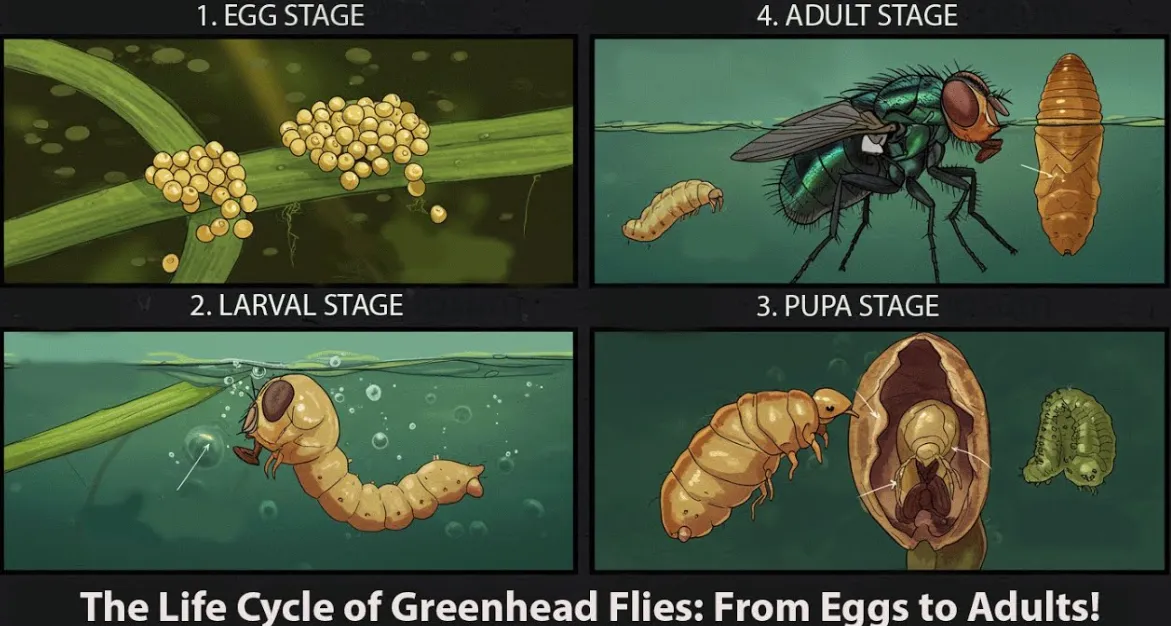
The horse fly larva life cycle is a fascinating process that reveals how these insects transform from tiny eggs into aggressive adult flies. Horse flies belong to the family Tabanidae, and their larvae are quite different from the adults most people recognize. While adult horse flies are known for their painful bites, their larvae live hidden lives in moist soil, mud, or aquatic environments.
Understanding the horse fly larva stage is essential because it plays a crucial role in their development and survival. These larvae are predatory and help control other small organisms in their habitat. Their life cycle includes four main stages: egg, larva, pupa, and adult. Each stage has unique characteristics and survival strategies.
Quick Answers (Most Common Questions)
1. What does a horse fly larva look like?
Horse fly larvae are elongated, cylindrical, and segmented. They are usually white, cream, or brownish and lack visible legs.
2. Where do horse fly larvae live?
They typically live in wet environments such as marshes, muddy soil, ponds, and damp vegetation.
3. How long does the horse fly larva stage last?
The larval stage can last several months to over a year, depending on environmental conditions.
Quick Life Cycle Table
| Stage | Duration | Key Characteristics |
| Egg | 5–12 days | Laid in clusters near water or moist soil |
| Larva | Several months–1 year+ | Predatory, lives in mud or water |
| Pupa | 1–3 weeks | The transformation stage in dry soil |
| Adult | Few weeks | Flying insect, females bite for blood |
The History Of Their Scientific Naming
The scientific classification of horse flies has evolved over centuries as entomologists studied their behavior and structure.
- Horse flies belong to the family Tabanidae, named after the Latin word Tabanus, meaning “gadfly.”
- Early naturalists, such as Carl Linnaeus, first categorized these insects in the 18th century.
- The term “Tabanidae” reflects their biting behavior, as documented in historical texts.
- Scientists later refined classifications based on larval and adult morphology.
- Modern taxonomy uses genetic studies to more accurately distinguish species.
- Over 4,000 species of horse flies have been identified worldwide.
- Their naming also reflects their habitat preferences and physical traits.
- Subfamilies within Tabanidae help classify different larval behaviors and environments.
This historical record of scientific naming shows how our understanding of the horse fly larva’s life cycle has deepened over time.
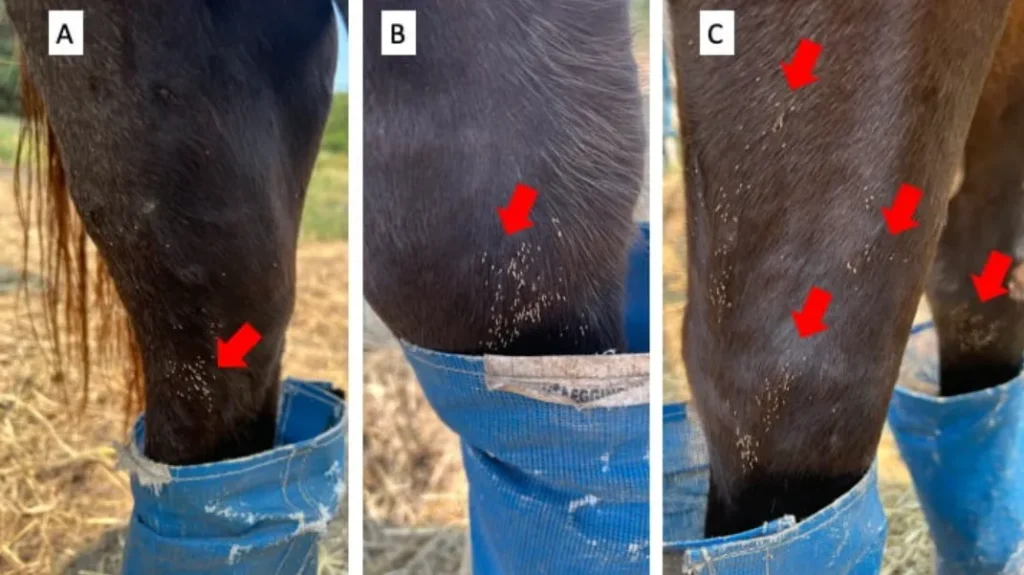
Their Evolution And Their Origin
Horse flies are ancient insects with a long evolutionary history dating back millions of years. Fossil evidence suggests that early members of the Tabanidae family existed during the Jurassic period.
These insects evolved alongside mammals, which later became their primary blood sources. Their biting mouthparts developed as an adaptation for feeding on vertebrate blood, particularly in females. This adaptation increased their reproductive success.
The larval stage also evolved to suit diverse environments. Horse fly larvae became highly adaptable predators, capable of surviving in aquatic, semi-aquatic, and even damp terrestrial habitats. This versatility helped them spread across continents.
Over time, natural selection favored larvae that could tolerate low oxygen conditions and variable moisture levels. Their elongated bodies and lack of legs allowed them to move efficiently through mud and sediment.
Geographically, horse flies originated in tropical and temperate regions but now exist worldwide. Their distribution is closely tied to water availability, which is essential for larval development.
Today, the horse fly larva life cycle reflects millions of years of adaptation. From egg-laying strategies to larval predation, every stage has evolved to maximize survival in changing environments.
Their Main Food and Its Collection Process
Horse fly larvae are active predators, unlike many other insect larvae.
Primary Food Sources
- Small insects
- Worms
- Crustaceans
- Other larvae (including cannibalism)
- Organic debris
Food Collection Process
- Larvae use their sharp mouth hooks to capture prey.
- They remain hidden in mud or water, waiting for movement.
- Once prey is detected, they strike quickly and inject digestive enzymes.
- These enzymes break down the prey’s tissues externally.
- The larva then consumes the liquefied nutrients.
Feeding Behavior
- Mostly nocturnal or low-light feeders
- Opportunistic predators
- Can survive long periods without food
Adaptations for Feeding
- Strong mandibles for gripping prey
- Flexible body for movement in tight spaces
- Sensory organs to detect vibrations
This predatory behavior makes the horse fly larva an important regulator of small aquatic populations.
Important Things That You Need To Know
The larval stage of horse flies includes several unique anatomical features that are often searched online.
The horse fly larva does not have true legs; instead, it has structures that help it move.
Key Facts About Prolegs and Structure
- The number of prolegs in a horse fly larva is actually zero.
- Unlike caterpillars, horse fly larvae do not possess true prolegs.
- Instead, they have small body segments with bristles that aid movement.
- The question of how many prolegs a horse fly larva has often confuses.
- The correct answer: none—they rely on muscular contractions.
Detailed Insights
- The horse fly larva’s prolegs are technically absent.
- There are no pairs of prolegs on horse fly larvae, as seen in other insect larvae.
- Even in species like the black horse fly larva, this remains consistent.
- Movement is achieved through contraction and expansion of the body.
Why This Matters
Understanding larval anatomy helps identify species and study their ecological roles. It also clarifies misconceptions about their structure compared to other insects.
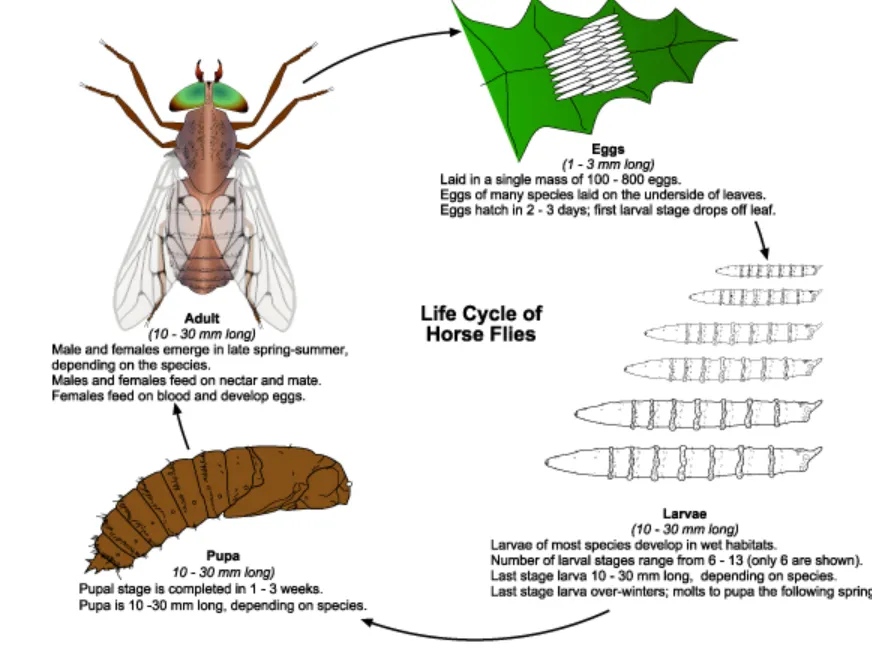
Their Life Cycle and Ability to Survive in Nature
Egg Stage
Female horse flies lay eggs in clusters on vegetation near water. Moisture is essential for hatching.
Larval Stage
The larval stage is the longest and most critical phase. Larvae live in mud or water and are highly adaptable.
They can:
- Survive low oxygen environments
- Tolerate temperature fluctuations
- Move efficiently without legs
Pupal Stage
After months of feeding, larvae move to drier soil to pupate. This stage involves complete transformation.
Adult Stage
Adults emerge fully formed and ready to reproduce. Females require blood meals for egg development.
Survival Abilities
- Camouflage in muddy environments
- Resistance to environmental stress
- Predatory instincts for food security
The horse fly larva life cycle is designed for resilience, ensuring survival in diverse habitats.
Their Reproductive Process and Raising Their Children
Horse flies reproduce through a well-organized process that ensures the continuation of the species.
Reproductive Process
- Mating occurs in flight or on vegetation.
- Females seek blood meals to develop eggs.
- Eggs are laid in clusters near water sources.
Egg Development
- Eggs hatch within days, depending on temperature.
- Moisture is crucial for survival.
Larval Care (Indirect)
- No parental care after egg-laying.
- Larvae are independent from birth.
Growth Strategy
- A high number of eggs increases survival chances.
- Larvae develop quickly in favorable conditions.
Adaptations
- Strategic egg placement near food-rich environments
- Timing reproduction during warm seasons
This efficient reproductive system supports the continuation of the horse fly larva life cycle.
Importance of Them in this Ecosystem
Natural Population Control
Horse fly larvae regulate populations of smaller organisms by preying on them.
Nutrient Recycling
They contribute to decomposition by consuming organic matter.
Food Source for Other Animals
Larvae serve as food for fish, birds, and amphibians.
Indicator Species
Their presence indicates healthy wetland ecosystems.
Biodiversity Support
They play a role in maintaining ecological balance.
Despite their negative reputation as adults, the larval stage is highly beneficial to ecosystems.
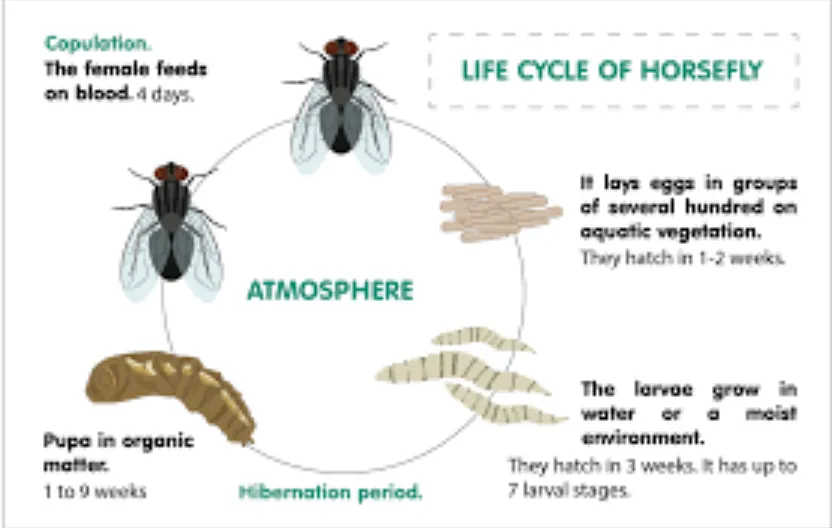
What to Do to Protect Them in Nature and Save the System for the Future
- Preserve wetlands and natural water bodies
- Avoid excessive pesticide use
- Maintain ecological balance in aquatic environments
- Protect natural vegetation near water sources
- Support conservation programs for wetlands
- Reduce pollution in rivers and ponds
- Encourage biodiversity-friendly farming practices
- Educate communities about insect ecological roles
Protecting the horse fly larva life cycle helps maintain a balanced ecosystem.
Frequently Asked Questions (FAQs)
1. What is the main habitat of horse fly larvae?
Wet environments like marshes, ponds, and muddy soil.
2. Are horse fly larvae harmful to humans?
No, they do not harm humans during the larval stage.
3. How do horse fly larvae move without legs?
They use muscular contractions and body segments.
4. What do horse fly larvae eat?
They feed on small insects, worms, and organic matter.
5. How long do horse fly larvae live?
Several months to over a year, depending on conditions.
6. Do horse fly larvae have prolegs?
No, they do not have prolegs.
7. Can horse fly larvae survive in dry environments?
They prefer moist conditions but can tolerate slight dryness.
8. Why are horse fly larvae important?
They help control pest populations and support ecosystems.
Conclusion
The horse fly larva life cycle is a complex and fascinating journey that highlights the adaptability and ecological importance of these insects. While adult horse flies are often viewed negatively due to their biting behavior, their larval stage plays a vital role in maintaining environmental balance.
From their predatory feeding habits to their ability to survive in challenging conditions, horse fly larvae demonstrate remarkable resilience. Their contribution to nutrient recycling and population control makes them essential components of wetland ecosystems.
Understanding their life cycle not only helps in scientific research but also encourages better conservation practices. By protecting their habitats and promoting ecological awareness, we can ensure that these often-overlooked organisms continue to thrive.
Ultimately, appreciating the horse fly larva stage provides a deeper insight into the interconnectedness of nature and the importance of every species within it.
Also Read About: hornworm life cycle





Leave a Reply