
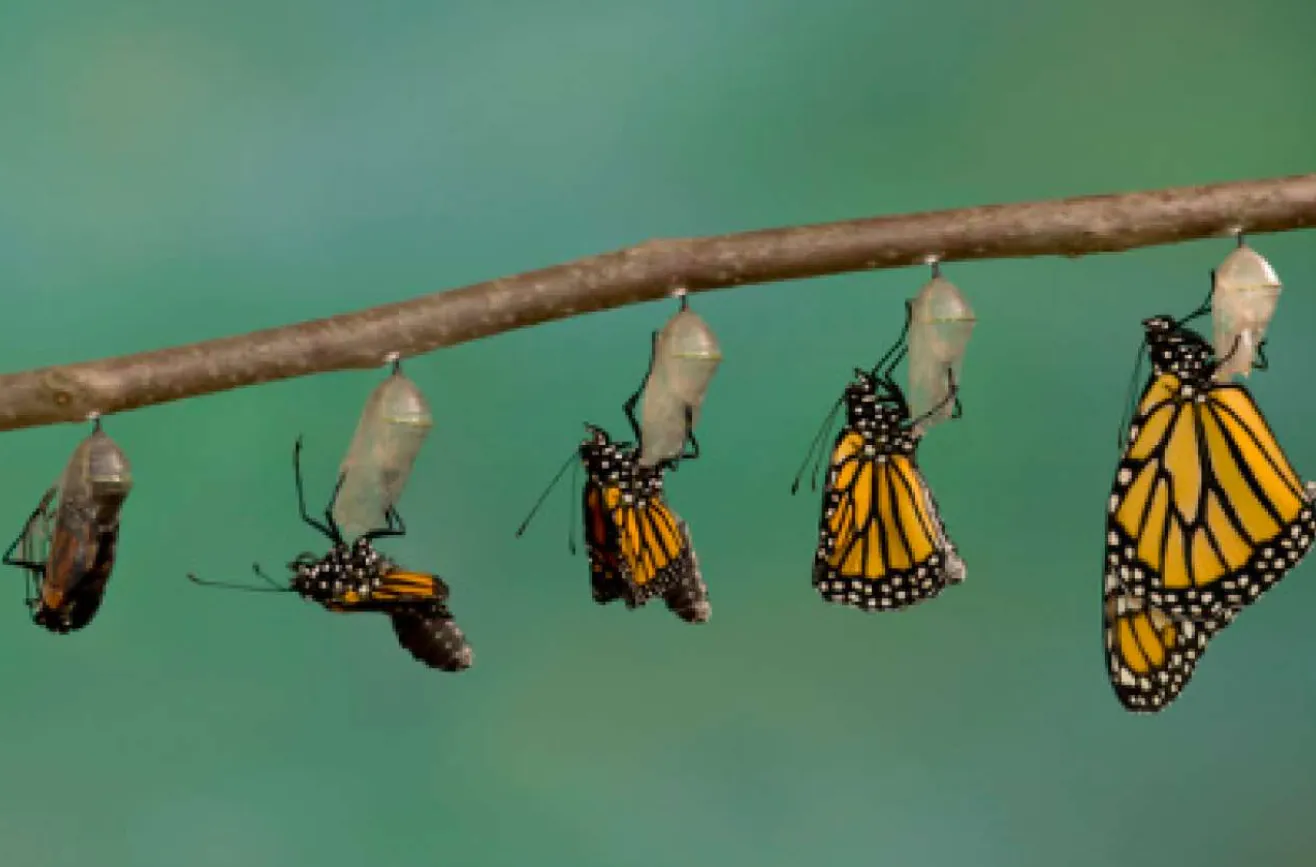
The monarch life cycle is one of the most fascinating transformations in the natural world. From a tiny egg to a vibrant monarch butterfly, this species undergoes a complete metamorphosis that captivates scientists and nature lovers alike. Monarchs are not just beautiful—they play a critical role in ecosystems and are known for their incredible migration journeys spanning thousands of miles.
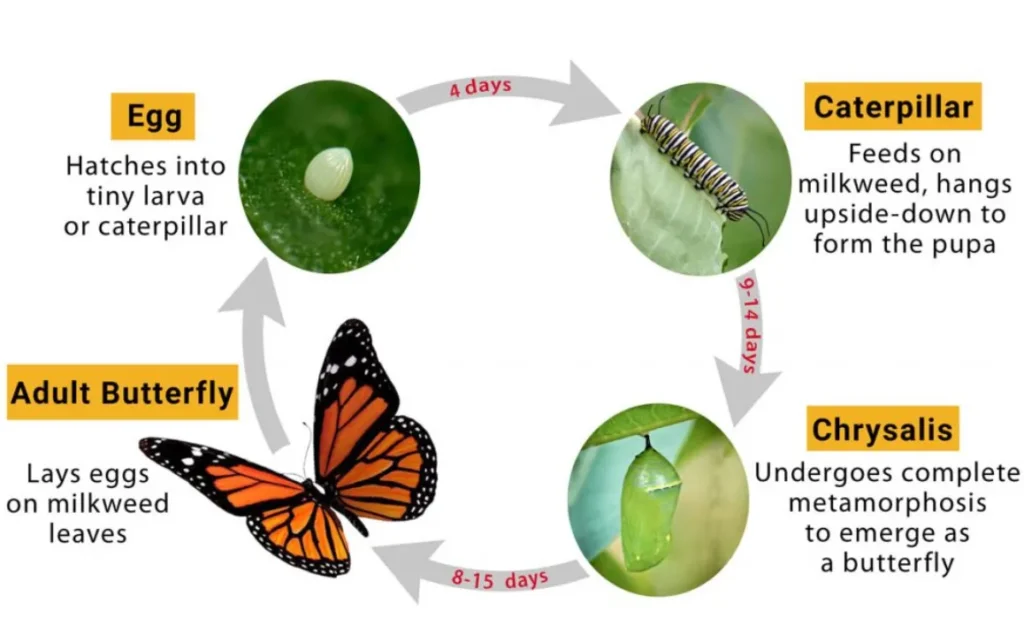
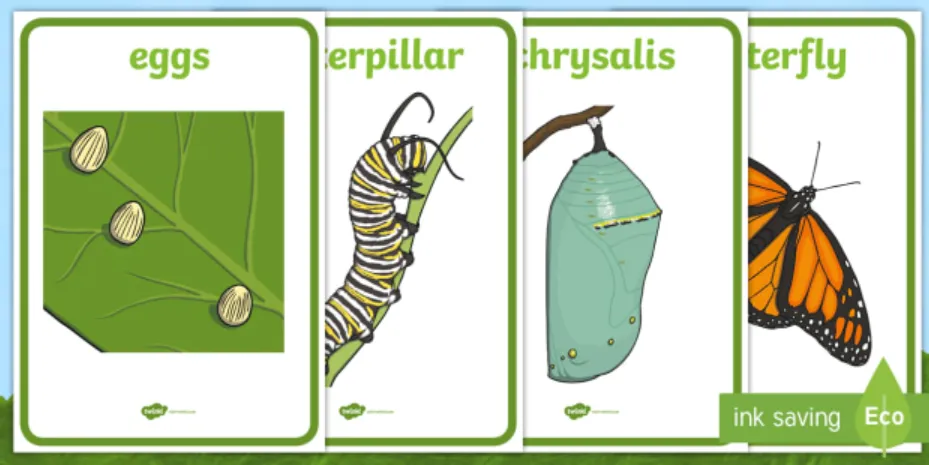
Understanding the life cycle of monarchs helps us appreciate their survival strategies and the delicate balance they maintain with nature. Each stage—egg, larva (caterpillar), pupa (chrysalis), and adult—serves a unique purpose and requires specific environmental conditions to thrive.
Quick Answers (Most Common Questions)
- How long is the monarch’s life cycle?
- The full life cycle typically takes 4–6 weeks, though it can vary depending on the climate.
- What do monarch caterpillars eat?
- Monarch caterpillars feed exclusively on milkweed plants.
- Why are monarch butterflies important?
- They are essential pollinators and indicators of environmental health.
Quick Life Cycle Table
| Stage | Description | Duration |
| Egg | Tiny, oval-shaped eggs are laid on milkweed leaves | 3–5 days |
| Larva (Caterpillar) | Striped monarch caterpillar feeds and grows rapidly | 10–14 days |
| Pupa (Chrysalis) | Transformation stage inside a green chrysalis | 10–14 days |
| Adult Butterfly | Fully developed monarch butterfly capable of flight and reproduction | 2–8 weeks (or longer in migration generation) |
The History Of Their Scientific Naming
The monarch butterfly is scientifically known as Danaus plexippus. Its naming has an interesting historical background tied to early scientific classification.
- The genus name Danaus derives from Greek mythology, referring to the descendants of Danaus and symbolising transformation and migration.
- The species name plexippus was given by Carl Linnaeus in the 18th century, inspired by Greek heroes.
- Monarch butterflies belong to the family Nymphalidae, commonly known as brush-footed butterflies.
- Early naturalists were fascinated by their large size and striking orange-and-black wing patterns, which made them easy to identify.
- Over time, scientists studied their migration patterns, which contributed significantly to entomology and ecological research.
Today, the monarch is one of the most studied butterfly species in the world due to its unique life cycle and long-distance migration.
Their Evolution And Their Origin
The evolution of the monarch butterfly is a story of adaptation and survival. Monarchs are believed to have originated in North America millions of years ago, gradually evolving traits that allowed them to thrive across diverse climates.
One of the most remarkable evolutionary features is their relationship with milkweed plants. Milkweed contains toxic compounds called cardenolides. Monarch caterpillars have evolved the ability to consume these toxins without harm, storing them in their bodies. This makes both the caterpillar and adult butterfly toxic to predators.
Over time, monarchs developed bright warning colours—orange and black—to signal their toxicity. This evolutionary strategy, known as aposematism, helps deter predators such as birds.
Another key evolutionary trait is their migration behaviour. Monarch butterflies are the only butterflies known to travel thousands of kilometres during seasonal migration. This ability likely evolved as a response to changing climates and food availability.
Monarch populations spread to South America, Australia, and other regions, adapting to local conditions. However, North American monarchs remain the most famous due to their annual migration to Mexico.
Their evolution highlights resilience, adaptability, and a deep connection with their environment.
Their Main Food and Its Collection Process
Monarch butterflies and caterpillars have very specific dietary needs that are essential for their survival.
Food Sources
- Milkweed (Primary food source):
- Monarch caterpillars rely entirely on milkweed plants for nutrition.
- Nectar from flowers:
- Adult butterflies feed on nectar from a variety of flowering plants.
Food Collection Process
- Female monarchs lay eggs directly on milkweed leaves to ensure immediate access to food.
- Once hatched, the monarch caterpillar begins eating the leaf on which it was born.
- Caterpillars consume large amounts of milkweed, growing rapidly and shedding their skin multiple times.
- Adult monarchs use their long proboscis to extract nectar from flowers.
- They visit multiple flowers daily, aiding in pollination while feeding.
Key Points
- Milkweed is not just food—it protects against toxins.
- Nectar fuels energy for flight and migration.
- Food availability directly impacts monarch survival and reproduction.
Important Things That You Need To Know
The monarch life cycle is closely tied to several essential concepts and keywords that help us understand their behaviour and survival.
The monarch butterfly is famous for its long-distance migration, travelling from North America to Mexico. This journey can span over 3,000 miles and is completed over multiple generations.
The monarch caterpillar is easily recognizable by its black, white, and yellow stripes. It plays a crucial role in storing toxins from milkweed, making it unappealing to predators.
The term “monarch” symbolises royalty, reflecting the butterfly’s striking appearance and graceful flight. Their wings are bright orange with black veins and white spots, making them one of the most iconic butterflies.
Another important aspect is their dependence on milkweed. Without it, monarch populations cannot survive. Habitat loss and pesticide use have significantly reduced milkweed availability.
Monarch butterflies are also indicators of environmental health. A decline in their population often signals ecological imbalance.
Their Life Cycle and Ability to Survive in Nature
Egg Stage
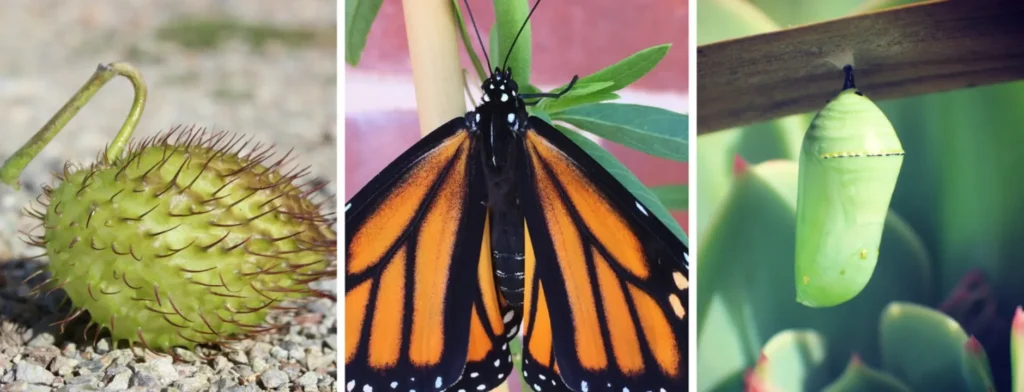
Monarchs begin life as tiny eggs laid on milkweed leaves. These eggs are carefully placed to ensure immediate access to food after hatching.
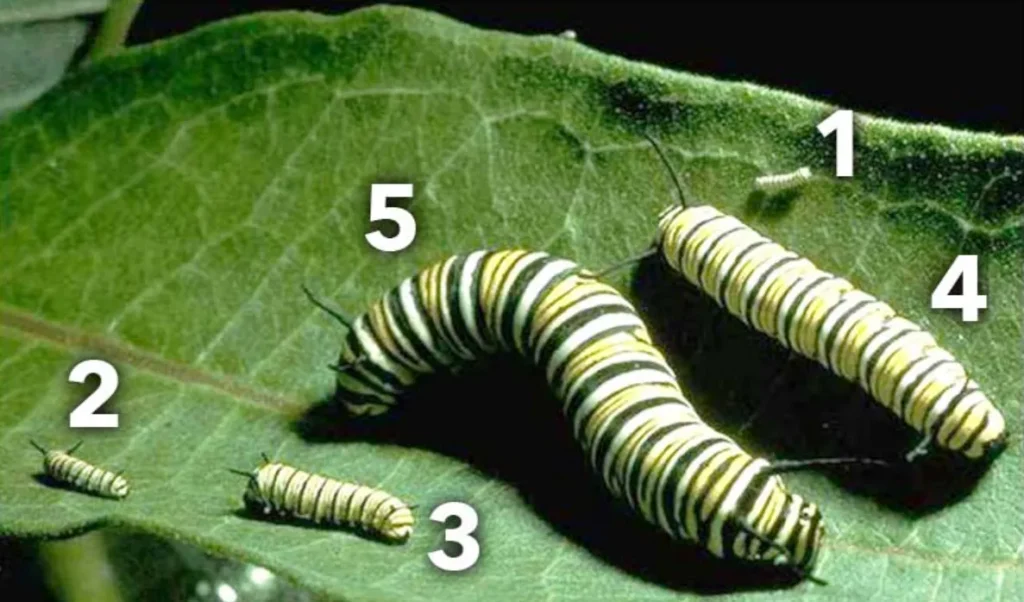
Larva (Caterpillar Stage)
The caterpillar eats constantly and grows rapidly. It sheds its skin multiple times and stores toxins to protect itself.
Pupa (Chrysalis Stage)
Inside the chrysalis, the caterpillar undergoes a complete transformation. This stage is critical and highly vulnerable.
Adult Butterfly Stage
The adult emerges with fully developed wings. It focuses on feeding, mating, and migration.
Survival Strategies
- Toxic defence from milkweed consumption
- Bright warning colouration
- Migration to avoid harsh climates
- High reproduction rate
These strategies ensure monarchs survive despite environmental challenges.
Their Reproductive Process and Raising Their Children
Monarch butterflies have a fascinating reproductive cycle that ensures the continuation of their species.
Reproductive Process
- Male monarchs use pheromones to attract females.
- Mating occurs in the air or on vegetation.
- After mating, females search for milkweed plants.
Egg Laying
- Females lay eggs one at a time on milkweed leaves.
- Each female can lay hundreds of eggs during her lifetime.
Raising Their Young
- Monarchs do not provide parental care after laying eggs.
- Survival depends on properly placing eggs on milkweed.
- Caterpillars must fend for themselves immediately after hatching.
Key Points
- Strategic egg placement increases survival chances
- High egg production compensates for natural losses
- Environmental conditions greatly affect offspring survival
Importance of Them in this Ecosystem
Pollination
Monarch butterflies help pollinate flowers while feeding on nectar.
Food Chain Role
They serve as food for some predators, contributing to ecological balance.
Environmental Indicators
A decline in monarch populations signals environmental issues.
Biodiversity Support
They promote plant diversity by aiding reproduction.
Monarchs are vital to maintaining a healthy ecosystem and supporting biodiversity.
What to Do to Protect Them in Nature and Save the System for the Future
- Plant Milkweed:
- Grow native milkweed plants to support caterpillars.
- Create Butterfly Gardens:
- Include nectar-rich flowers for adult monarchs.
- Avoid Pesticides:
- Chemicals can harm both caterpillars and butterflies.
- Support Conservation Efforts:
- Donate or participate in monarch conservation programs.
- Protect Migration Routes:
- Preserve habitats along migration paths.
- Educate Others:
- Spread awareness about monarch conservation.
- Reduce Habitat Destruction:
- Support sustainable land-use practices.
- Encourage Organic Farming:
- Helps maintain natural ecosystems.
Frequently Asked Questions (FAQs)
- What is the monarch’s life cycle?
- It includes four stages: egg, larva, pupa, and adult butterfly.
- How long does a monarch butterfly live?
- Typically 2–8 weeks, but migratory monarchs can live up to 8 months.
- What do monarch caterpillars eat?
- Only milkweed plants.
- Why are monarch butterflies endangered?
- Habitat loss, climate change, and pesticides.
- Where do monarch butterflies migrate?
- Mainly from North America to Mexico.
- How many eggs does a monarch lay?
- Around 300–500 eggs in her lifetime.
- What is a monarch chrysalis?
- The pupa stage, where transformation occurs.
- How can I help monarch butterflies?
- Plant milkweed and avoid pesticides.
Conclusion
The monarch life cycle is a remarkable example of nature’s complexity and beauty. From a tiny egg to a vibrant butterfly, each stage plays a crucial role in the survival of this iconic species. Monarchs are not only visually stunning but also essential contributors to ecosystems through pollination and biodiversity support.
However, their survival is increasingly threatened by habitat loss, climate change, and human activities. Understanding their life cycle helps us take meaningful steps to protect them. By planting milkweed, reducing pesticide use, and supporting conservation efforts, we can ensure that future generations continue to witness the monarch butterfly’s incredible journey.
Preserving monarchs means preserving nature itself.
Also Read: life cycle of monarch butterfly





Leave a Reply