
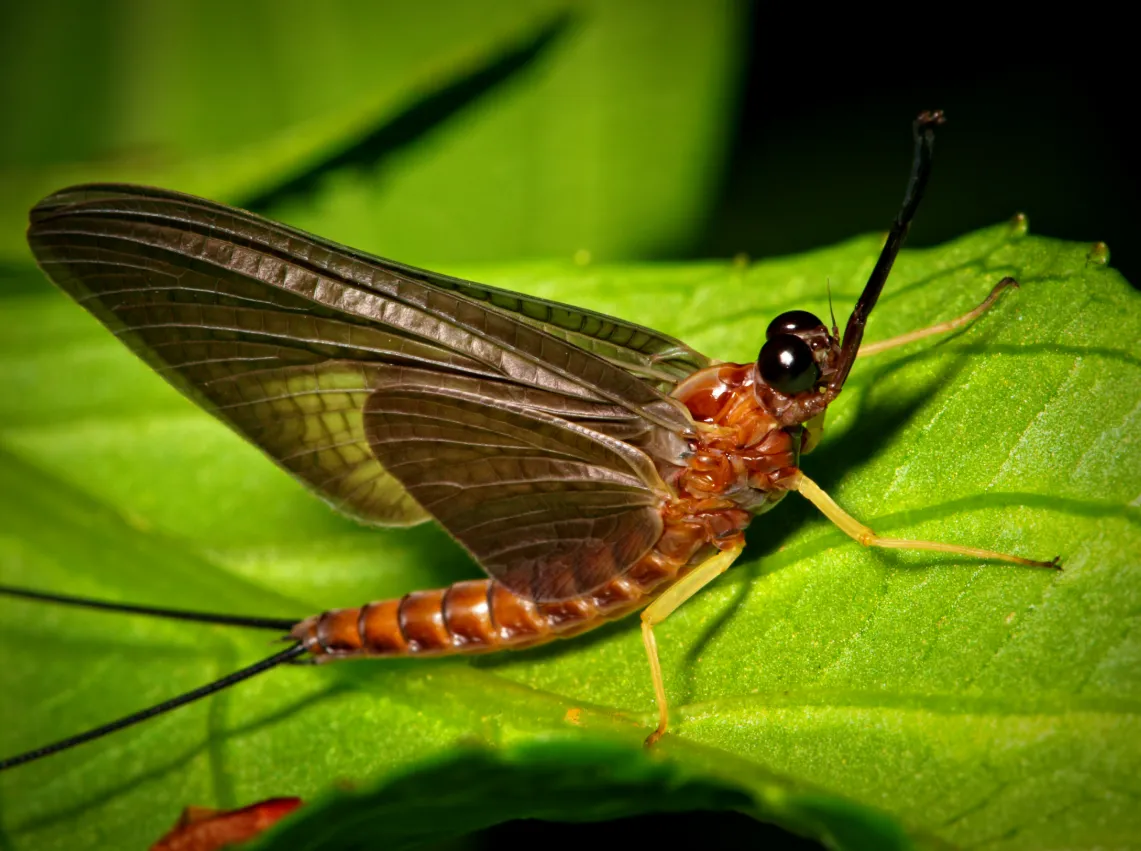
The mayfly life cycle is one of the most fascinating processes in the insect world, known for its unique stages and extremely short adult lifespan. A mayfly spends most of its life underwater as a nymph, only emerging briefly as an adult to reproduce. This unusual transformation makes the mayfly a key subject in ecological studies and a vital part of freshwater ecosystems.
Many people often ask simple but important questions about mayflies. Here are three quick answers:
- What is a mayfly?
- A mayfly is a delicate aquatic insect belonging to the order Ephemeroptera, known for its short-lived adult stage.
- How long does a mayfly live?
- The adult mayfly lifespan can be as short as a few hours to a couple of days, although the nymph stage lasts months or even years.
- Why do mayflies swarm?
- Mayfly swarms occur during mating season, where large groups gather to reproduce in a synchronised event.
Understanding the mayfly life cycle helps explain their ecological role, especially in water quality and food chains. Their presence often indicates a healthy aquatic environment.
Quick Life Cycle Table
| Stage | Duration | Habitat | Key Characteristics |
| Egg | 1–3 weeks | Water | Eggs laid on the water surface |
| Nymph (Larvae) | Several months to 2 years | Freshwater | Aquatic, moults multiple times |
| Subimago | A few hours to 1 day | Near the water surface | Winged but immature |
| Adult (Imago) | A few hours to 2 days | Air/near water | Reproduction-focused, no feeding |
The History Of Their Scientific Naming
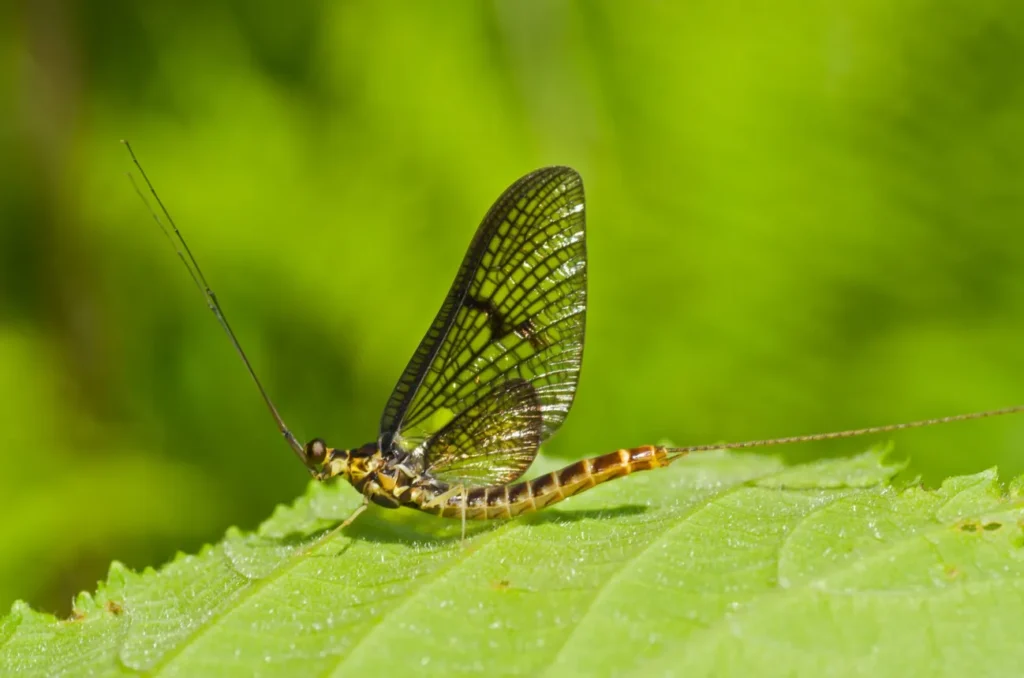
The scientific classification of mayflies reflects their ancient origins and unique biological traits. Their order name, Ephemeroptera, comes from Greek words meaning “short-lived wings.”
Key points about their scientific naming:
- The term Ephemeroptera was first used in early entomological studies to describe insects with extremely short adult lives.
- “Ephemeral” highlights their brief adult existence, often lasting less than 24 hours.
- Mayflies belong to one of the oldest insect groups, with fossils dating back over 300 million years.
- Early naturalists classified them based on wing structure and aquatic development.
- Their distinct subimago stage (a winged but immature phase) makes them unique among insects.
Over time, scientists have refined their classification into multiple families and genera. Today, thousands of mayfly species are recognised worldwide, each adapted to specific freshwater environments.
Their Evolution And Their Origin
Mayflies are among the most ancient winged insects on Earth. Their evolutionary history dates back to the Carboniferous period, over 300 million years ago.
During this time, the planet was dominated by vast wetlands and freshwater systems, ideal for early aquatic insects. Mayflies evolved to thrive in these environments, developing features that have remained largely unchanged.
One of their most significant evolutionary traits is incomplete metamorphosis. Unlike butterflies, mayflies do not undergo a pupal stage. Instead, they transition directly from nymph to winged form.
Another remarkable feature is the subimago stage, a transitional winged phase not seen in most insects. This adaptation may have evolved to reduce predation risk during emergence.
Mayflies also developed:
- Long tail filaments for balance
- Sensitive gills for underwater respiration
- Synchronised emergence behaviour to overwhelm predators
Fossil evidence shows that ancient mayflies were much larger than modern ones. Despite environmental changes, they have survived multiple mass extinctions.
Their persistence highlights their adaptability and ecological importance. Today, they remain a key indicator of freshwater health.
Their Main Food and Its Collection Process
The feeding habits of mayflies vary with life stage. While adult mayflies do not eat, the nymph stage is highly active in feeding.
Feeding Behaviour of Mayfly Nymphs
- Feed on algae, detritus, and organic matter
- Scrape the surfaces of rocks and plants
- Consume microscopic organisms in water
- Play a role in nutrient recycling
Food Collection Process
- Use specialised mouthparts to gather food
- Drift in currents to capture organic particles
- Attach to substrates to feed efficiently
- Filter fine materials from water
Adult Mayflies
- Do not have functional mouthparts
- Do not feed during their short lifespan
- Rely on energy stored during the nymph stage
This feeding strategy ensures that mayflies contribute significantly to aquatic ecosystems by breaking down organic material and supporting other species.
Important Things That You Need To Know
Understanding Key Aspects of Mayflies
The mayfly life cycle includes several fascinating elements that are essential for understanding their behaviour and ecological role.
The mayfly lifespan is one of the shortest among insects, especially in the adult stage. However, the nymph stage can last for years, making their overall life surprisingly long.
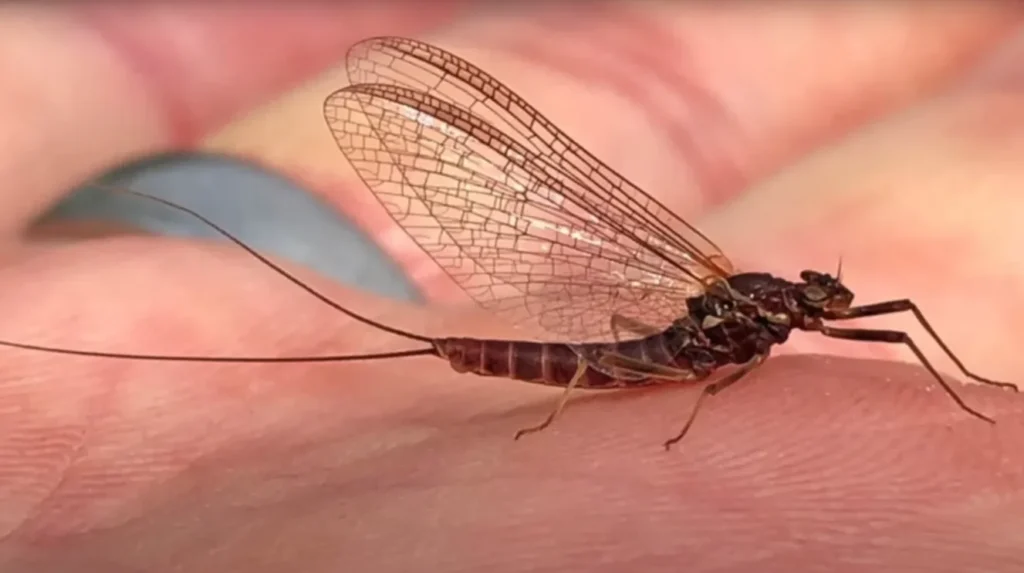
A mayfly nymph lives underwater and resembles a small aquatic creature with gills and a segmented body. This stage is crucial for growth and development.
The term mayfly larvae is often used interchangeably with nymph, though they undergo an incomplete metamorphosis.
Many people wonder what a mayfly is, and the answer lies in its unique dual life—a long aquatic phase and a brief aerial existence.
During mating season, a mayfly swarm forms, creating spectacular natural events that can cover large areas.
These characteristics make mayflies not only fascinating but also essential indicators of environmental health.
Their Life Cycle and Ability to Survive in Nature
Egg Stage
Mayflies begin their life as eggs laid on water surfaces. These eggs sink to the bottom and attach to substrates, ensuring safety.
Nymph Stage
This is the longest stage. Nymphs live underwater, moulting many times as they grow. They develop gills and adapt to currents.
Subimago Stage
A rare transitional phase where the insect has wings but is not yet fully mature.
Adult Stage
Adults emerge, mate, and die within a short time. Their main goal is reproduction.
Mayflies survive through:
- High reproductive rates
- Synchronised emergence
- Adaptation to freshwater habitats
Their Reproductive Process and Raising Their Children
Mayflies have a unique reproductive system focused on efficiency and timing.
Mating Behavior
- Occurs in large swarms
- Males perform aerial displays
- Females select mates mid-air
Egg Laying
- Females deposit eggs in water
- Some dive below the surface
- Eggs stick to rocks or sediment
Parental Care
- No parental care after egg laying
- Survival depends on the environment
Survival Strategy
- High egg production
- Rapid development
- Synchronised hatching
This process ensures the continuation of the species despite their short adult life.
Importance of Them in this Ecosystem
Indicator of Water Quality
Mayflies are highly sensitive to pollution, making them excellent indicators of clean water.
Food Source
They serve as a major food source for fish, birds, and other wildlife.
Nutrient Cycling
Nymphs help break down organic material, enriching aquatic ecosystems.
Biodiversity Support
Their presence supports diverse aquatic life.
Mayflies play a crucial role in maintaining ecological balance.
What to do to protect them in nature and save the system for the future
- Reduce water pollution by limiting chemical runoff
- Protect freshwater habitats like rivers and streams
- Avoid overuse of pesticides
- Support conservation programs
- Promote sustainable agriculture
- Maintain natural vegetation near water bodies
- Reduce plastic waste in aquatic environments
- Educate communities about the ecological importance
Frequently Asked Questions (FAQs)
- What is the average mayfly life cycle duration?
- It ranges from a few months to over two years, depending on the species.
- Why do mayflies live only one day?
- Only the adult stage is short; most of the life is spent as a nymph.
- Where do mayflies live?
- Primarily in freshwater environments, such as rivers and lakes.
- Are mayflies harmful to humans?
- No, they do not bite or sting.
- What do mayfly nymphs eat?
- Algae, detritus, and organic matter.
- Why do mayflies swarm?
- For mating purposes during reproduction.
- How can you identify a mayfly?
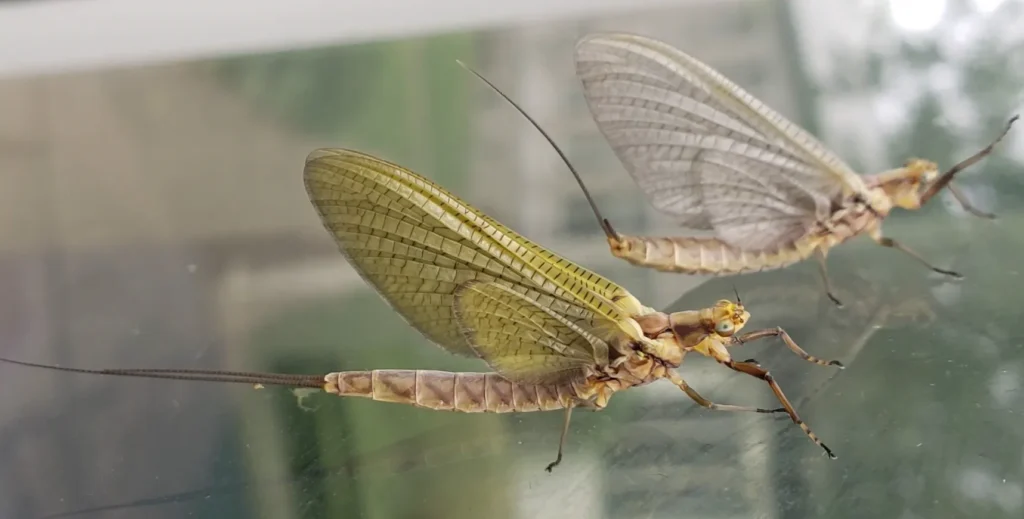
- By their slender body, long tails, and upright wings.
- Do mayflies indicate clean water?
- Yes, they are strong indicators of good water quality.
Conclusion
The mayfly life cycle is a remarkable example of nature’s balance between survival and reproduction. Despite their extremely short adult lifespan, mayflies play a vital role in freshwater ecosystems.
Their long nymph stage allows them to contribute to nutrient cycling and serve as a food source for many species. At the same time, their sensitivity to pollution makes them essential indicators of environmental health.
Understanding their life cycle helps us appreciate the importance of preserving clean water habitats. Protecting mayflies means protecting entire ecosystems.
By taking simple conservation steps, we can ensure that these ancient insects continue to thrive. Their presence is not just a sign of life but also of a healthy, balanced natural world.
Also Read: life mosquito cycle





Leave a Reply