
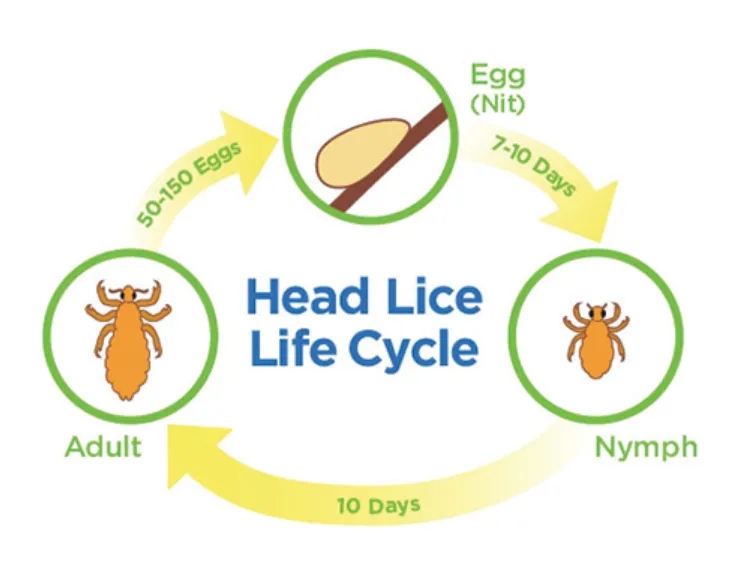
Head lice are tiny parasitic insects that live on the human scalp and feed on blood. Understanding the life cycle of head lice is essential for proper treatment, prevention, and control. These insects spread easily, especially among children, making them a common global concern.
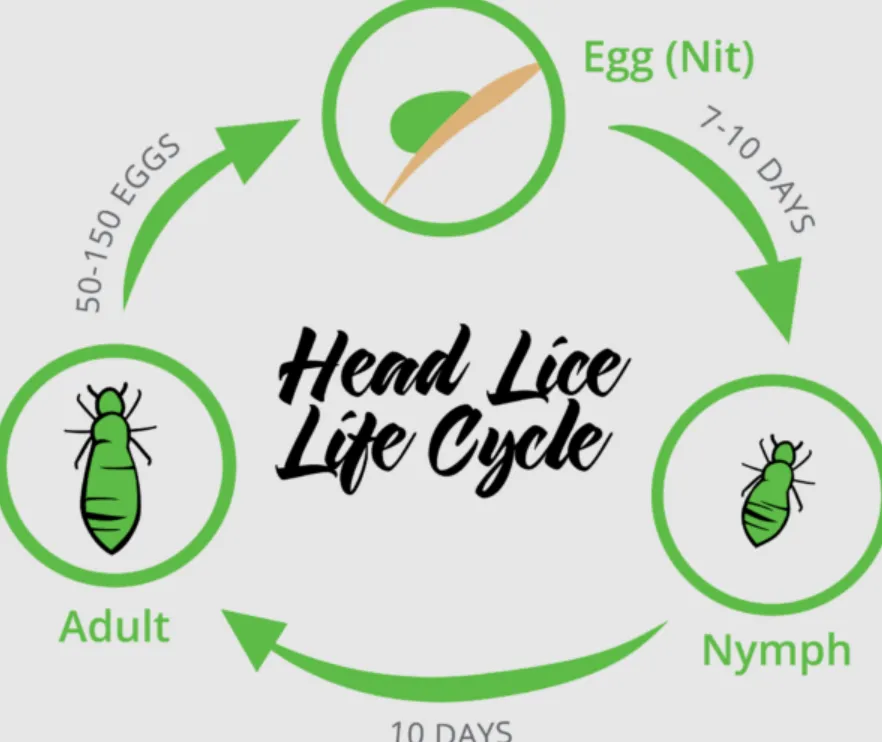
The life cycle of Head lice includes three main stages: eggs (nits), nymphs, and adult lice. Each stage plays a critical role in the infestation’s growth. Knowing how these stages work helps you break the cycle effectively using proper treatments and hygiene practices.
Despite being harmless in terms of disease transmission, head lice can cause itching, discomfort, and social stress. Early detection and accurate treatment are key to managing them.
Quick Answers (Most Common Questions)
1. How long does the life cycle of head lice last?
The complete life cycle typically lasts about 21–30 days, from egg to adult.
2. Can head lice survive off the scalp?
Head lice can only survive 24–48 hours without a human host, as they depend on blood for survival.
3. What kills head lice fastest?
Medicated head lice shampoo and proper combing are the most effective treatments.
Quick Life Cycle Table
| Stage | Duration | Description |
| Eggs (Nits) | 6–10 days | Tiny oval eggs are attached to hair shafts near the scalp |
| Nymphs | 7–10 days | Immature lice that grow and molt into adults |
| Adults | Up to 30 days | Fully grown lice are capable of reproduction |
| Total Cycle | 21–30 days | Complete life cycle from egg to adult |
The History Of Their Scientific Naming
The scientific classification of head lice has evolved as researchers studied their biology and relationship with humans.
- The scientific name of head lice is Pediculus humanus capitis.
- The term “Pediculus” comes from Latin and means “louse.”
- “Humanus” refers to their exclusive relationship with humans.
- “Capitis” indicates their preference for the scalp.
Key Historical Points:
- Early records of lice date back thousands of years, including ancient Egyptian mummies.
- Scientists initially grouped lice species, but later distinguished between head lice and body lice.
- Modern taxonomy uses genetic studies to confirm differences between lice types.
- The naming reflects their host-specific adaptation, meaning they cannot survive on animals.
This scientific classification helps researchers better understand their behavior, reproduction, and treatment strategies.
Their Evolution And Their Origin
Head lice have coexisted with humans for millions of years. Their evolution is closely tied to human development and migration.
Scientists believe that lice originated from primitive parasitic insects that adapted to mammals. Over time, they evolved to specialize in human hosts.
Evolutionary Insights:
- Genetic studies show lice evolved alongside early humans around 5–7 million years ago.
- They adapted specifically to human hair and scalp conditions.
- As humans spread across continents, lice traveled with them, leading to global distribution.
- Differences in lice types (head vs body lice) emerged due to changes in clothing and lifestyle.
Interestingly, lice provide clues about human history. Scientists use lice genetics to study human migration patterns.
Their evolution demonstrates remarkable adaptation:
- Strong claws for gripping hair
- Flattened bodies for moving between strands
- Mouthparts designed for blood feeding
Despite modern hygiene, lice remain common due to their efficient transmission and rapid reproduction.
Their Main Food and Its Collection Process
Head lice feed exclusively on human blood, making them obligate parasites. They cannot survive without their host.
Feeding Process:
- Lice use specialized mouthparts to pierce the scalp.
- They inject saliva that prevents blood clotting.
- Blood is sucked directly into their digestive system.
Key Facts About Their Food:
- They feed multiple times a day (every 3–6 hours).
- Each feeding lasts only a few minutes.
- Their saliva causes itching and irritation.
Collection Mechanism:
- Lice detect body heat and chemical signals.
- They stay close to the scalp for easy access to blood.
- Their claws help them hold on while feeding.
Survival Dependence:
- Without blood, lice die quickly within 1–2 days.
- This dependence explains why they rarely survive off the human head.
Understanding their feeding behavior helps in designing effective head lice treatments and prevention methods.
Their Life Cycle and Ability to Survive in Nature
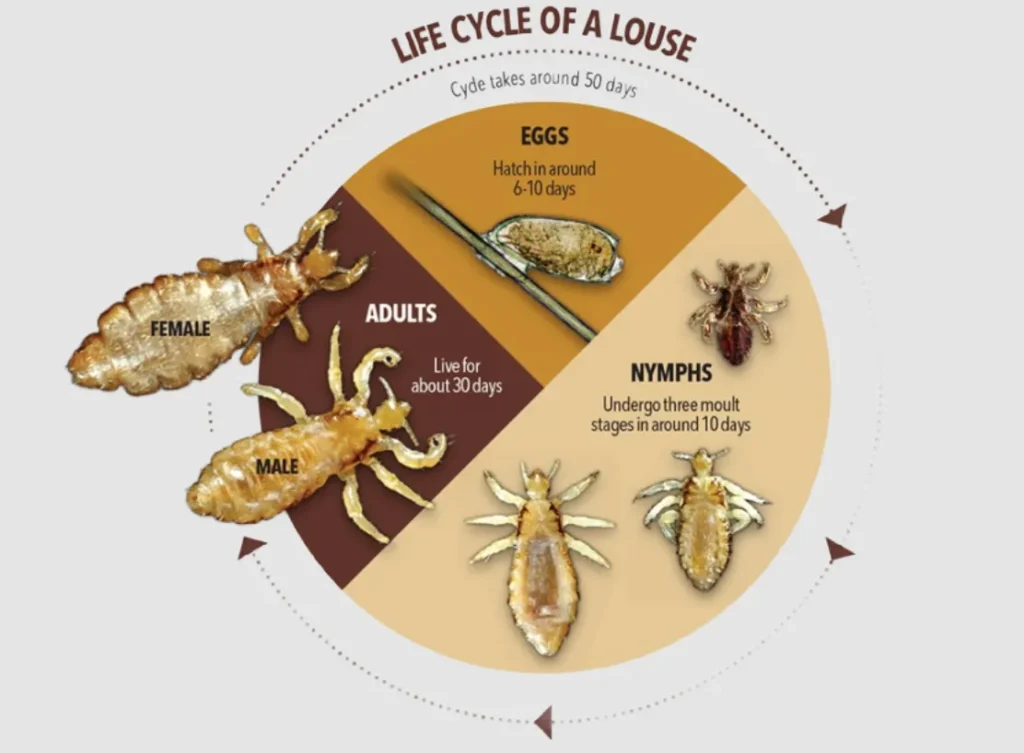
Egg Stage (Nits)
Eggs are laid near the scalp and firmly attached to hair strands. They hatch within 6–10 days.
Nymph Stage
Nymphs resemble small adults and go through several molts over 7–10 days.
Adult Stage
Adults are fully grown and begin reproducing immediately. A female can lay up to 6–10 eggs daily.
Survival Ability
- Lice thrive in warm environments, like the human scalp.
- They cannot jump or fly but crawl quickly.
- Transmission occurs through direct head-to-head contact.
Their survival strategy depends on:
- Constant access to blood
- Rapid reproduction
- Strong attachment to hair
This can lead to persistent infestations if not treated properly.
Their Reproductive Process and Raising Their Children
Head lice reproduce rapidly, which is why infestations grow quickly.
Reproductive Process:
- Mating occurs soon after reaching adulthood.
- Female lice lay eggs (nits) daily.
- Eggs are glued to hair shafts for protection.
Raising Offspring:
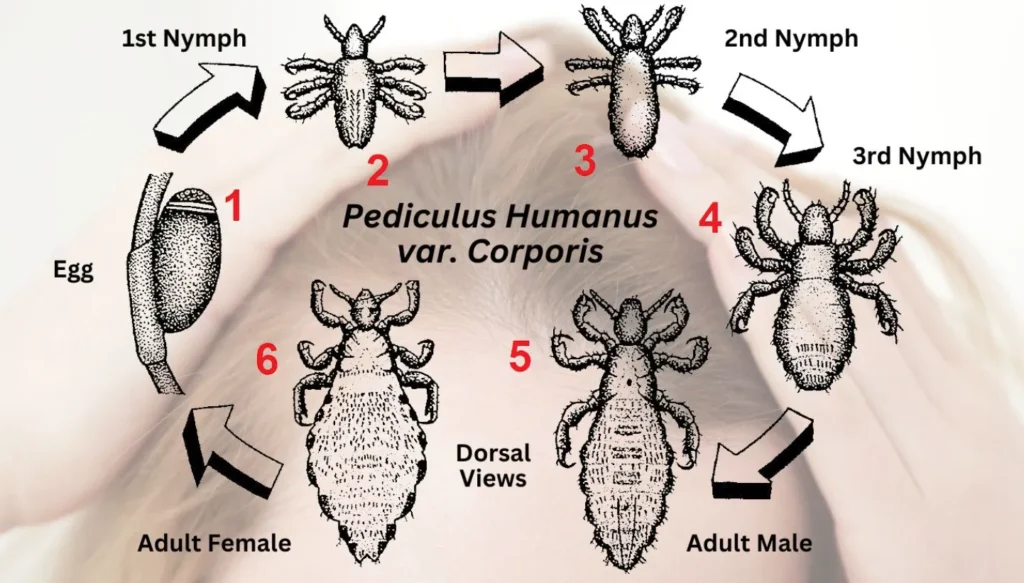
- Eggs hatch into nymphs within 6–10 days.
- Nymphs feed immediately after hatching.
- They molt three times before becoming adults.
Key Points:
- A single female can produce hundreds of eggs in her lifetime.
- Eggs are resistant to many treatments, requiring repeated care.
- Warm scalp conditions are associated with higher survival rates.
This rapid reproductive cycle makes early detection crucial.
Importance of Them in this Ecosystem
Role in Nature
Although often seen as pests, head lice play a role in ecological balance.
Scientific Importance
- Used in studies of parasitism and evolution
- Help understand human migration patterns
Biological Role
- Part of the food chain for microscopic organisms
- Contribute to biodiversity
Human Impact
- Highlight the importance of hygiene
- Drive research in medicine and parasitology
While not beneficial in daily life, they hold scientific value.
Important Things That You Need To Know
Understanding lice requires awareness of related terms and treatments.
Head lice infestations are common worldwide, especially in children. Recognizing symptoms early can prevent spreading.
Head lice pictures help identify lice correctly. They appear as small, grayish insects moving on the scalp.
Head lice eggs (nits) are tiny and stick firmly to hair shafts, often mistaken for dandruff.
Effective treatment includes medicated head lice shampoo, which kills live lice but may require repeated use.
There are also head lice treatments, such as fine-tooth combing and prescription medications.
Many people try home remedies for head lice, such as oils or vinegar, but these may not always be as effective as medical solutions.
Looking at pictures of head lice can help distinguish them from other scalp conditions.
Key Takeaways:
- Early detection is crucial
- Proper treatment must target all life stages
- Rechecking after treatment prevents reinfestation
What to Do to Protect Them in Nature and Save the System for the Future
While lice are pests, maintaining ecological balance is important.
- Avoid excessive chemical use that harms other organisms
- Use targeted treatments instead of broad pesticides
- Educate communities about proper hygiene
- Promote safe and effective lice management
- Encourage scientific research on parasites
- Avoid stigma and misinformation
- Support environmentally friendly treatment options
Balanced approaches ensure both human health and ecological stability.
Frequently Asked Questions (FAQs)
1. What is the life cycle of head lice?
It includes egg, nymph, and adult stages lasting about 3–4 weeks.
2. How do head lice spread?
Through direct head-to-head contact.
3. Can lice live on pillows?
They may survive briefly, but cannot live long without a host.
4. What do head lice eggs look like?
Small, oval, and attached near the scalp.
5. Are home remedies effective for lice?
Some may help, but medical treatments are more reliable.
6. How often should I use head lice shampoo?
Usually twice, 7–10 days apart.
7. Can adults get head lice?
Yes, but children are more commonly affected.
8. Do lice carry diseases?
No, head lice do not transmit diseases.
Conclusion
The life cycle of head lice is a fascinating yet challenging process that directly impacts human health and hygiene. From eggs to adults, lice grow quickly and reproduce efficiently, making infestations difficult to control without proper knowledge.
Understanding each stage of their life cycle allows for more effective treatment and prevention. Whether using medicated shampoos, combing techniques, or preventive measures, breaking the cycle is key.
Although head lice are often viewed negatively, they are scientifically important for studying evolution and parasitism. With proper awareness, early detection, and responsible treatment, managing lice becomes much easier.
Also Read About: life cycle a mosquito





Leave a Reply