
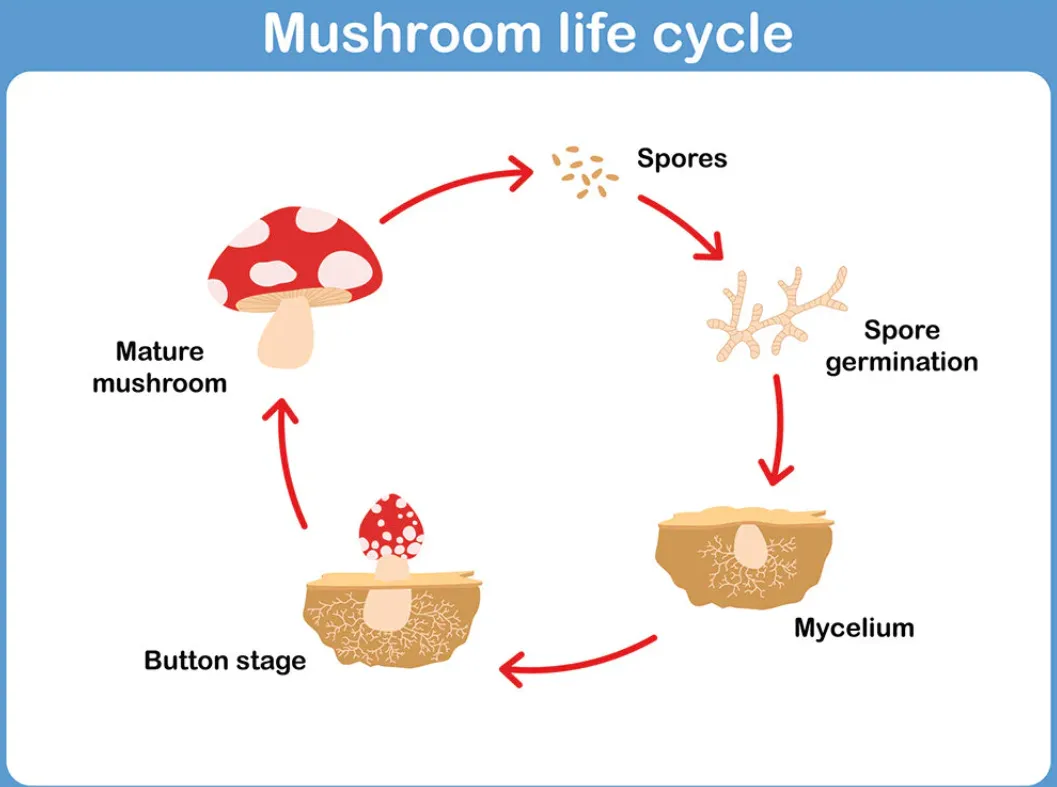
Mushrooms are a fascinating part of nature, known for their variety and roles in the ecosystem. They are neither plants nor animals; they belong to the kingdom Fungi. The life cycle of mushrooms is a complex and intriguing process that begins with microscopic spores and culminates in a mature mushroom. There are many types of Mushrooms, from the common shiitake and enoki mushrooms to the medicinal turkey tail mushroom. But what exactly is the life cycle of mushrooms, and how do they grow?
Quick Answers:
- How do mushrooms reproduce? Mushrooms reproduce through spores, which germinate and grow into mycelium, a network of fungal threads.
- What is the lifespan of a mushroom? The lifespan of a mushroom varies by species, but the fruiting body (the mushroom itself) typically lasts a few days to a few weeks.
- How are mushrooms important to ecosystems? Mushrooms play vital roles in decomposing organic matter, aiding in nutrient cycling, and even forming symbiotic relationships with plants.
Quick Life Cycle Table
| Life Cycle Stage | Description |
| Spore | The reproductive unit of mushrooms is released into the air. |
| Germination | Spores germinate in suitable conditions, forming mycelium. |
| Mycelium Growth | The mycelium expands underground, absorbing nutrients. |
| Fruiting Body Development | The mycelium forms the mushroom, which serves as the fruiting body. |
| Mature Mushroom | The mushroom reaches full size and releases new spores. |
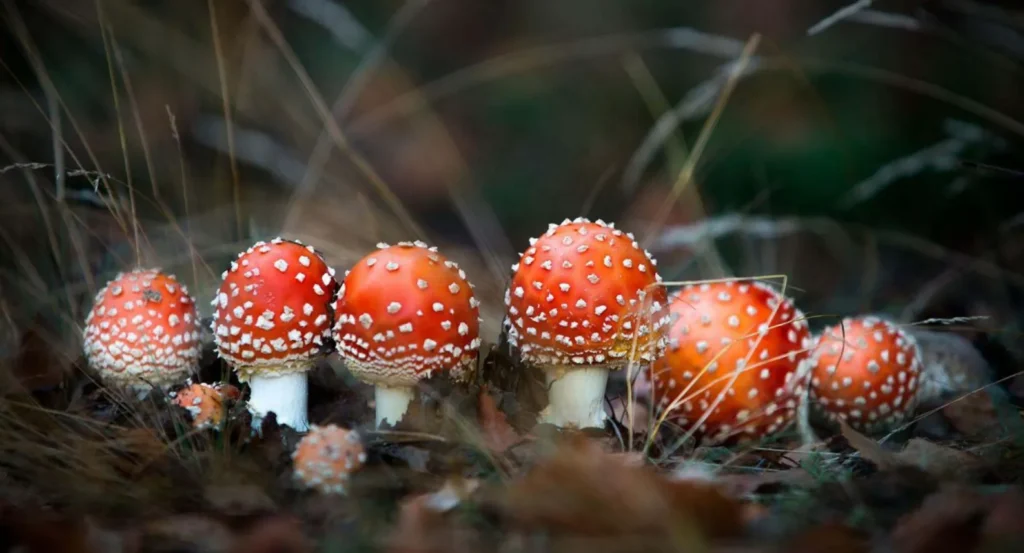
The History Of Their Scientific Naming
The scientific names of mushrooms come from the binomial nomenclature system introduced by Carl Linnaeus. Mushrooms are classified in the Fungi kingdom, within various phyla such as Basidiomycota and Ascomycota.
Species like Agaricus bisporus (common button mushroom) and Lentinula edodes (shiitake mushroom) were given these names based on their morphology and reproductive structures. The naming system helps identify and categorize mushrooms scientifically, ensuring that each species is known worldwide under a single standard name.
Their Evolution And Their Origin
Mushrooms have been around for millions of years, evolving from simple fungal ancestors into the diverse group we know today. Their origin dates back over 500 million years, with early fungal species existing alongside plants in ancient environments. The first mushrooms were small, simple organisms, but over time, they developed specialized structures, such as fruiting bodies, to aid reproduction.
The evolution of mushrooms is closely tied to their role in ecosystems. Early fungi were decomposers, breaking down dead organic material and recycling nutrients into the soil. This role became increasingly crucial as plants evolved, forming symbiotic relationships with fungi, such as mycorrhizal associations.
These relationships allowed plants to obtain nutrients from the soil more efficiently, benefiting both organisms. Over time, the variety of mushroom species expanded as they adapted to various habitats and environmental conditions, from tropical forests to temperate woodlands.
Their Main Food and Its Collection Process
Mushrooms are saprotrophic, meaning they feed on decaying organic matter, such as fallen leaves, trees, and other plant material. They use enzymes to break down complex organic compounds into simpler nutrients that they can absorb. The collection of these nutrients is crucial to the mushroom’s growth. Here’s how the process works:
- Decomposition: Fungi break down organic matter into simpler compounds.
- Mycelium Expansion: The mycelium spreads out in search of more food sources, absorbing nutrients through its threads.
- Symbiosis: In some cases, mushrooms form symbiotic relationships with plant roots (mycorrhiza), exchanging nutrients for sugars.
The nutrient absorption process is vital not only for the mushroom’s growth but also for the health of the ecosystem, as it recycles nutrients back into the soil.
Their Life Cycle and Ability to Survive in Nature
Mushrooms possess unique survival mechanisms that enable them to thrive in diverse environments. Their ability to survive and complete their life cycle is based on a combination of biological factors:
- Spore Dispersal: Spores, the reproductive units of mushrooms, can travel vast distances through wind, water, or by attaching to animals. This dispersal helps the species spread into new environments.
- Dormancy: In unfavorable conditions, mycelium can enter a dormant state, awaiting the right conditions to resume growth.
- Resistance to Dehydration: Many mushrooms are resistant to dehydration and can survive prolonged periods of dryness.
These strategies allow mushrooms to survive across seasons, thriving in conditions ranging from moist, dark forests to arid environments.
Their Reproductive Process and Raising Their Children
Mushrooms reproduce through a fascinating process that involves spores, mycelium, and fruiting bodies. Here’s a breakdown of their reproductive process:
- Spore Release: The mature mushroom releases spores into the environment.
- Germination: Spores land in a suitable environment, where they germinate and form mycelium.
- Mycelium Growth: The mycelium expands and spreads throughout the substrate, gathering nutrients.
- Fruiting Body Formation: Once the mycelium is mature and environmental conditions are right, it forms a fruiting body (the mushroom), which will eventually release more spores.
This process is essential for the continuation of the species, as the mycelium serves as the “parent,” supporting the next generation of spores.
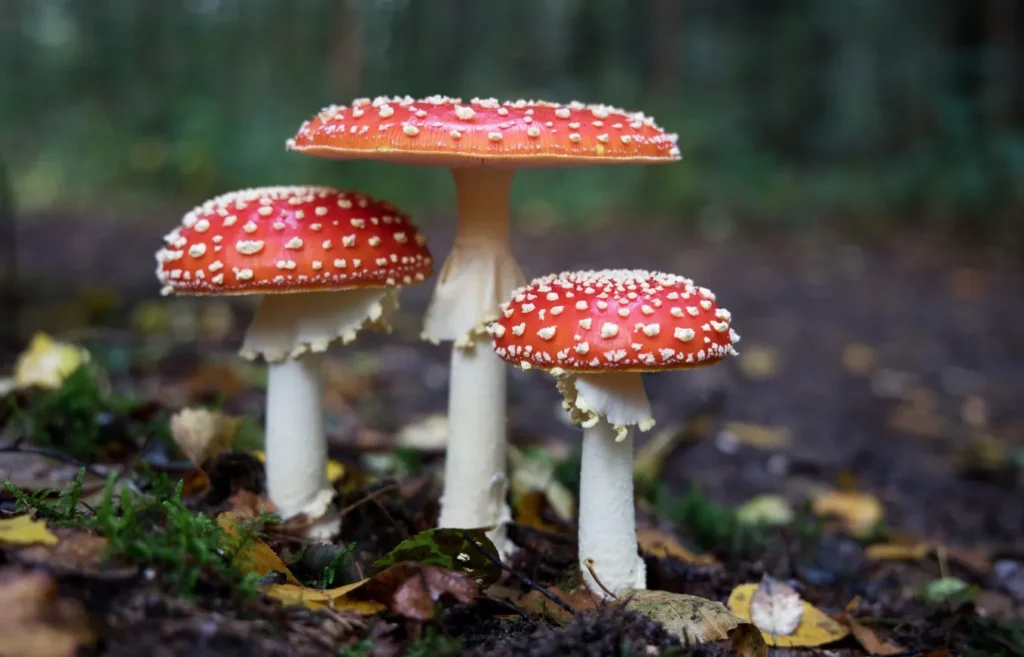
Importance of Mushrooms in this Ecosystem
Mushrooms play an essential role in ecosystems by recycling nutrients and improving soil health. Here are key reasons why they are vital:
- Decomposers: Mushrooms break down dead organic matter, recycling nutrients back into the soil, enriching it for other organisms.
- Symbiotic Relationships: Many mushrooms, particularly mycorrhizal fungi, form beneficial relationships with plants, aiding in nutrient exchange and supporting plant growth.
- Biodiversity Support: As a food source for various organisms, mushrooms contribute to the food web in many ecosystems.
In essence, mushrooms are foundational to the health and sustainability of ecosystems, helping maintain biodiversity and nutrient cycling.
What to Do to Protect Mushrooms in Nature and Save the System for the Future
Protecting mushrooms and their habitats is crucial for maintaining ecological balance. Here are key actions we can take:
- Preserve Forest Habitats: Protecting forests and woodlands from deforestation helps maintain mushroom habitats.
- Avoid Overharvesting: Sustainable harvesting practices help maintain healthy mushroom populations.
- Promote Fungal Education: Raise awareness of the importance of mushrooms to encourage conservation efforts.
- Support Research: Supporting fungal research can provide insights into sustainable practices and the conservation of endangered species.
These actions are crucial in safeguarding mushroom populations and the vital roles they play in ecosystems.
Important Things That You Need To Know About Mushrooms
Mushrooms, including popular varieties such as shiitake and enoki, are an essential part of ecosystems, aiding nutrient recycling and supporting biodiversity. These mushrooms, along with medicinal varieties like turkey tail and mellow mushrooms, offer not only ecological benefits but also health benefits, often consumed as food or supplements (e.g., mushroom gummies).
Understanding their life cycle and the importance of protecting them in the wild is crucial for future conservation efforts. By preserving mushroom habitats and avoiding overharvesting, we ensure these beneficial fungi remain a thriving part of nature’s intricate web.
Frequently Asked Questions (FAQs)
- What are the main stages in the mushroom life cycle? The main stages include spore release, germination, mycelium growth, and fruiting body formation.
- How do mushrooms reproduce? Mushrooms reproduce by releasing spores that germinate into mycelium, which eventually forms the fruiting body (mushroom).
- What is mycelium? Mycelium is a network of fungal threads that absorb nutrients from organic material, forming the vegetative body of the fungus.
- Can mushrooms survive in dry conditions? Yes, many species can enter a dormant state during dry conditions and resume growth when moisture is available.
- How do mushrooms benefit ecosystems? Mushrooms act as decomposers, breaking down organic matter and recycling nutrients into the soil.
- What are mycorrhizal fungi? These fungi form symbiotic relationships with plant roots, aiding nutrient absorption for both the fungus and the plant.
- What is the lifespan of a mushroom? The fruiting body of a mushroom typically lasts for a few days to a few weeks, depending on the species and environmental conditions.
- Are mushrooms edible? Some mushrooms are edible, while others are toxic. It’s essential to know which species are safe to consume.
Conclusion
Mushrooms are not only fascinating organisms with unique life cycles but also crucial for maintaining the balance of natural ecosystems. Their role in decomposition, nutrient recycling, and symbiosis with plants makes them indispensable to the environment. By understanding and protecting their life cycle and habitats, we can help ensure that these extraordinary fungi continue to thrive for generations to come.
Also Read: life cycle of monarch butterfly





Leave a Reply