
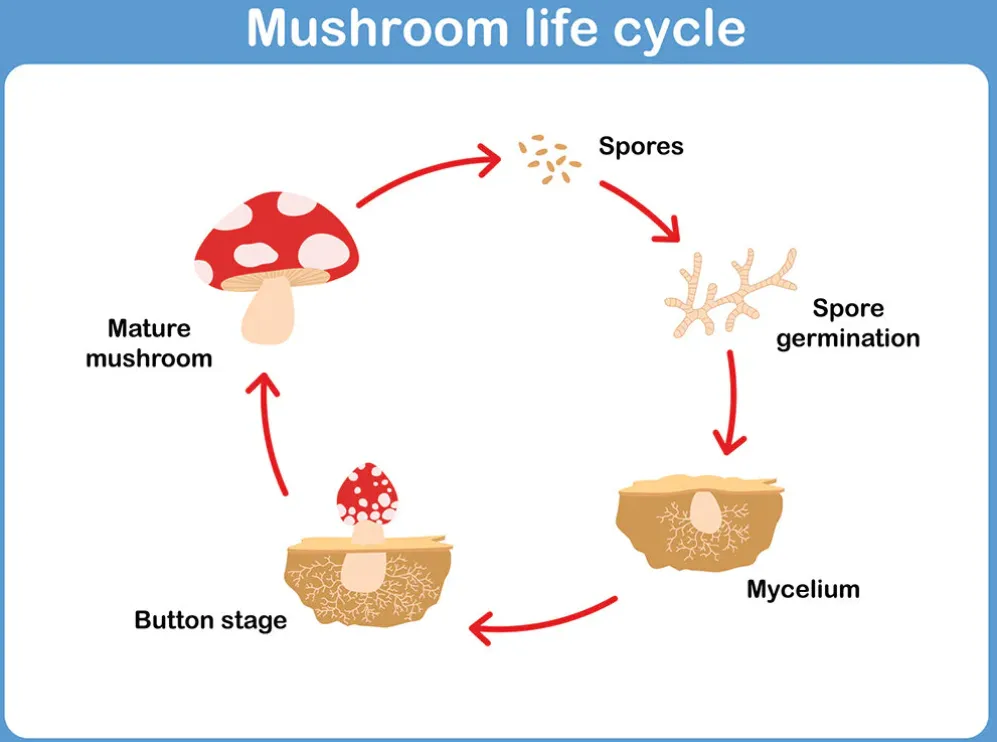
The life cycle of fungi is one of the most fascinating biological processes in nature. Fungi are unique organisms that play a vital role in ecosystems, yet many people still ask, “What is a fungus, and how does it survive and reproduce?”What do they survive to reproduce
Fungi are neither plants nor animals—they belong to their own kingdom. They include mushrooms, molds, and yeasts. Their life cycle involves spores, growth stages, and complex reproduction strategies that help them thrive in almost every environment on Earth.
Understanding fungi is important because they contribute to nutrient cycling, medicine, and even food production. Their ability to adapt and survive makes them essential for maintaining ecological balance.
🔍 Quick Answers (Most Common Questions)
1. What is fungi?
Fungi are living organisms that absorb nutrients from organic matter and reproduce through spores.
2. What is the life cycle of fungi?
The life cycle includes spore germination, hyphae growth, mycelium formation, and reproduction.
3. Why are fungi important?
They decompose organic material, recycle nutrients, and support plant growth.
Quick Life Cycle Table
| Stage | Description |
| Spore Release | Fungi release spores into the environment |
| Germination | Spores grow into hyphae under favorable conditions |
| Hyphae Growth | Thread-like structures expand and form networks |
| Mycelium Formation | Hyphae form a dense mass called mycelium |
| Reproduction | Sexual or asexual reproduction occurs |
| Spore Formation | New spores are produced and released |
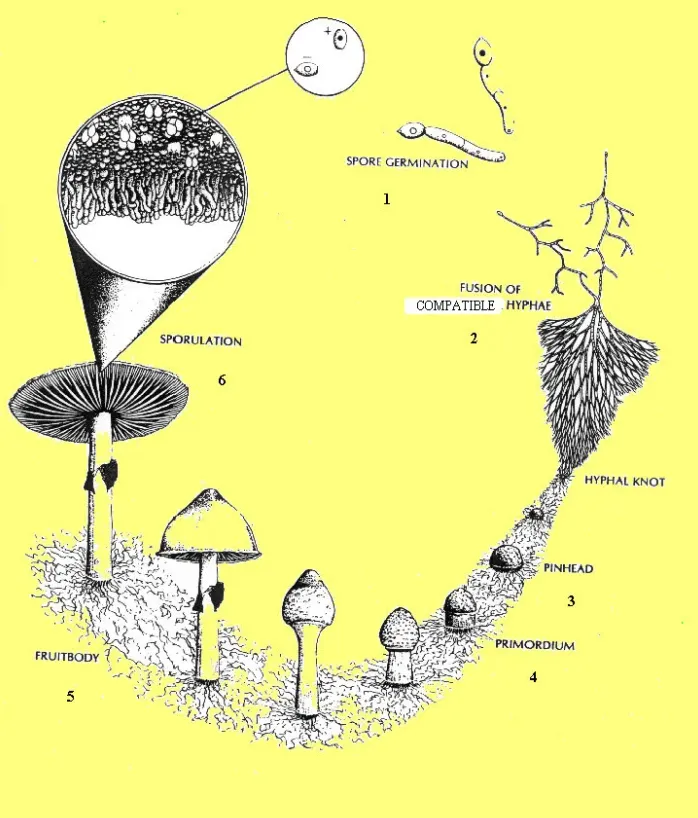
Important Things That You Need To Know
Understanding fungi goes beyond just knowing their life cycle. Here are essential insights into fungi and their unique characteristics.
Fungi are eukaryotic organisms, meaning their cells have a nucleus. Unlike plants, they do not perform photosynthesis. Instead, they absorb nutrients from their surroundings. This makes them crucial decomposers in ecosystems.
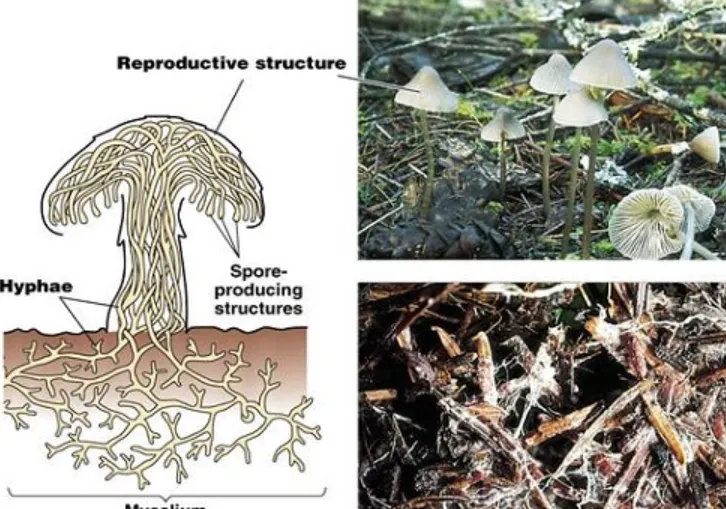
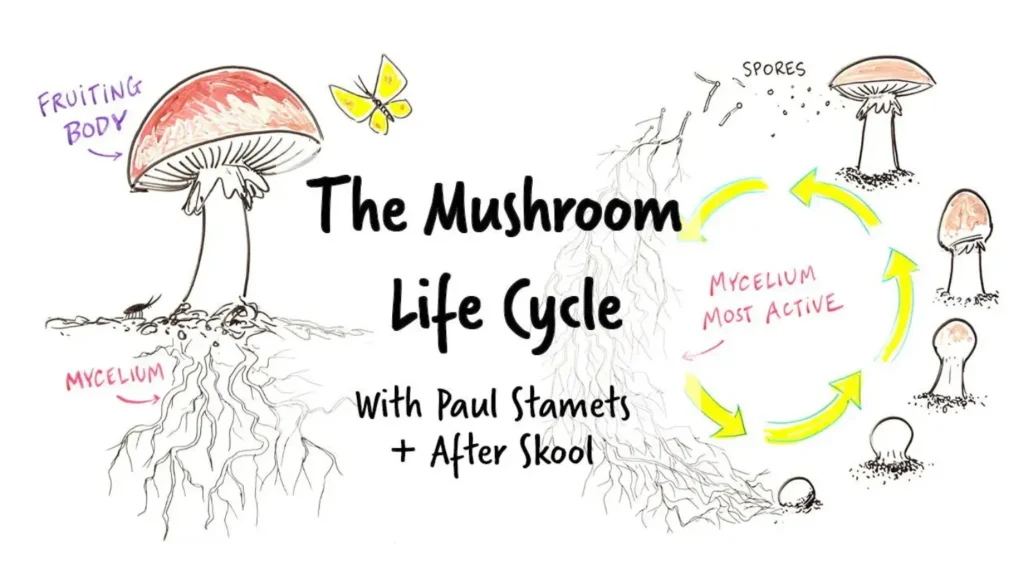
One key feature of fungi is their structure. They consist of hyphae, which are microscopic filaments. These hyphae form a network called mycelium, the main body of the fungus. The visible mushroom is only the reproductive part.
Fungi can be found everywhere—from soil and water to human bodies. Some are beneficial, while others can cause diseases. For example, yeast is used in baking, while certain fungi cause infections.
Another interesting fact is their adaptability. Fungi can survive in extreme conditions, including low oxygen environments. This makes them one of the most resilient life forms.
🔑 Key Highlights:
- Fungi are neither plants nor animals
- What are fungi: organisms that absorb nutrients
- They grow using hyphae and mycelium
- They reproduce through spores
- Found in almost every Ecosystem
The History Of Their Scientific Naming
The scientific naming of fungi has evolved significantly over time. Early scientists often classified fungi as plants due to their immobility and growth patterns.
Key Historical Points:
- Ancient Classification: Fungi were grouped with plants because they grow in soil and lack movement.
- 18th-Century Advances: Carl Linnaeus included fungi in his plant classification system but recognized their distinct characteristics.
- 19th-Century Discovery: Scientists realized that fungi lack chlorophyll, distinguishing them from plants.
- Modern Taxonomy: Fungi are now classified in their own kingdom—Kingdom Fungi.
- DNA Analysis Era: Molecular studies have refined fungal classification, revealing their closer relation to animals than plants.
Today, fungi are categorized based on genetic data, reproductive structures, and morphology. This scientific naming helps researchers better understand their diversity and ecological roles.
Their Evolution And Their Origin
Fungi have a long evolutionary history that dates back over a billion years. Scientists believe fungi evolved from aquatic organisms similar to modern-day protists.
Early fungi likely lived in water before adapting to land. This transition played a crucial role in shaping Earth’s ecosystems. Fossil evidence suggests fungi existed alongside early plants, forming symbiotic relationships that helped plants colonize land.
One of the most important evolutionary developments was the formation of mycorrhizal relationships. These partnerships between fungi and plant roots allowed plants to absorb nutrients more efficiently. In return, fungi received sugars from plants.
Fungi also evolved unique reproductive strategies. Their ability to produce spores enabled them to spread across vast distances. This adaptability helped them survive environmental changes and mass extinctions.
Over time, fungi diversified into thousands of species. Today, they exist in various forms, from microscopic yeasts to large mushrooms.
Their evolution highlights their importance in shaping ecosystems. Without fungi, nutrient recycling and plant growth would be severely limited.
Their main food and its collection process
Fungi are heterotrophic organisms, meaning they cannot produce their own food. Instead, they absorb nutrients from external sources.
🍄 Main Food Sources:
- Dead organic matter (leaves, wood, animals)
- Living hosts (parasitic fungi)
- Symbiotic partners (plants and algae)
🔄 Food Collection Process:
- Secretion of Enzymes: Fungi release enzymes that break down complex organic materials.
- External Digestion: Food is digested outside the body.
- Absorption: Nutrients are absorbed through the cell walls of hyphae.
- Distribution: Nutrients are transported through the mycelium network.
This process makes fungi excellent decomposers. They recycle nutrients back into the soil, supporting plant growth and maintaining ecosystem balance.
Their life cycle and ability to survive in nature
🌿 Stages of the Fungal Life Cycle
The life cycle of fungi begins with spores. These microscopic structures are released into the environment and can travel through air, water, or animals.
When conditions are favorable, spores germinate into hyphae. These hyphae grow and form a network called mycelium. The mycelium serves as the fungus’s feeding structure.
🧬 Adaptation and Survival
Fungi have remarkable survival abilities:
- They can remain dormant for long periods
- Thrive in extreme environments
- Reproduce rapidly
Their ability to produce millions of spores increases their chances of survival. Even in harsh conditions, some spores remain viable until conditions improve.
🌍 Environmental Role
Fungi play a crucial role in ecosystems by decomposing organic matter. This process returns nutrients to the soil, supporting plant growth and maintaining ecological balance.
Their Reproductive Process and raising their children
Fungi reproduce through both sexual and asexual methods.
🔁 Asexual Reproduction:
- Produces identical offspring
- Uses spores or budding (in yeast)
- Fast and efficient
🔄 Sexual Reproduction:
- It involves the fusion of two compatible cells
- Produces genetically diverse spores
- Enhances adaptability
👶 Raising Their “Children”:
- Spores are released into the environment
- Carried by wind, water, or animals
- Germinate into new fungi
Unlike animals, fungi do not care for their offspring. However, their reproductive strategy ensures widespread distribution and survival.
The importance of them in this Ecosystem
🌱 Nutrient Recycling
Fungi break down dead organic matter, returning nutrients to the soil. This supports plant growth and ecosystem health.
🌿 Symbiotic Relationships
Many fungi form partnerships with plants. These relationships improve nutrient absorption and plant survival.
💊 Medical Contributions
Fungi produce antibiotics like penicillin. They are also used in biotechnology and the pharmaceutical industry.
🍞 Food Industry
Fungi are essential in making bread, cheese, and alcohol.
🌍 Environmental Balance
Without fungi, ecosystems would collapse due to the accumulation of dead organic matter.
What to do to protect them in nature and save the system for the future
Protecting fungi is essential for maintaining ecological balance.
✅ Key Actions:
- Preserve natural habitats like forests and wetlands
- Avoid excessive pesticide use that harms fungi
- Promote sustainable agriculture
- Support biodiversity conservation programs
- Educate people about the importance of fungi
- Reduce pollution to protect soil ecosystems
- Encourage research on fungal biodiversity
By protecting fungi, we protect the entire Ecosystem.
Frequently Asked Questions (FAQs)
1. What is a fungus in simple terms?
Fungi are organisms that absorb nutrients from organic matter.
2. What are examples of fungi?
Mushrooms, molds, and yeast.
3. How do fungi reproduce?
Through spores via sexual and asexual methods.
4. Where do fungi live?
In soil, water, air, and even inside living organisms.
5. Are fungi harmful or beneficial?
Both—some cause diseases, others are beneficial.
6. What is mycelium?
The network of hyphae that forms the body of fungi.
7. Why are fungi important?
They recycle nutrients and support ecosystems.
8. Can fungi survive extreme conditions?
Yes, many fungi are highly adaptable.
Conclusion
The life cycle of fungi reveals a complex and highly efficient system that ensures survival and ecological balance. From spore germination to reproduction, fungi demonstrate incredible adaptability and resilience.
Understanding what fungi do helps us appreciate their vital role in nature. They are not just decomposers but key contributors to nutrient cycling, plant health, and even human industries.
As environmental challenges grow, protecting fungi becomes more important than ever. By preserving their habitats and supporting biodiversity, we ensure a healthier planet for future generations.
Fungi may be hidden beneath the surface, but their impact is enormous. Recognizing their value is the first step toward sustainable living and ecological harmony.
Also Read About: a life cycle of a hen







Leave a Reply